 July 2008 in “Hair transplant forum international”
 This piece marks the tenth anniversary of the American Board of Hair Restoration Surgery and highlights the addition of 14 new diplomates from diverse countries, while reporting no new clinical findings.
 September 2004 in “Hair transplant forum international”
 This article summarizes a meeting of the American Board of Hair Restoration Surgery's Board of Directors to discuss future plans, but does not report new experimental results.
 1 citations
,
January 2021
1 citations
,
January 2021 In this study, CD4+ non-haematopoietic, skin-resident stem cell-like populations were identified in both murine and human epidermis, suggesting they may serve as potential basal cell carcinoma precursors.
 January 2024 in “Hair transplant forum international”
 This source describes the American Board of Hair Restoration Surgery's mission to set standards and evaluate skills in hair restoration surgery, but does not report any specific study results.
CaBP1 and 2 are necessary for maintaining calcium currents and hearing in inner ear cells.
 16 citations
,
May 2000 in “Endocrinology”
16 citations
,
May 2000 in “Endocrinology” This study identified a new gene, mrp4, in mice, which suggests it may have a unique role in the growth and development of hair follicles in the ears and tails.
 41 citations
,
April 2016 in “Journal of experimental botany”
41 citations
,
April 2016 in “Journal of experimental botany” This research suggests that the barley protein RACB supports cell polarity functions rather than interfering with immunity, as it aids nucleus positioning during fungal attack rather than affecting early immune responses.
 July 2023 in “Hair transplant forum international”
 This abstract provides information about the American Board of Hair Restoration Surgery as the only internationally accepted certifying body for hair restoration surgeons, but it reports no new research results.
 September 2023 in “Hair transplant forum international”
 This announcement from the American Board of Hair Restoration Surgery details the establishment of two oral examinations for 2024, with the first taking place at the Italian/European Congress in Milan, Italy, in May.
 January 2011 in “Journal of Human Genetics”
 This study found a severe MBTPS2 gene mutation in a Japanese IFAP syndrome patient, suggesting other factors may influence the syndrome's clinical features compared to previously studied patients.
 November 2005 in “Journal of Investigative Dermatology Symposium Proceedings”
 This review discusses the latest findings presented at the 4th Intercontinental Meeting of Hair Research Societies, covering advances in hair follicle biology, genetic bases for hair disorders, and potential new therapeutic approaches, but it reports no original study results.
 March 2026 in “European journal of ecology, biology and agriculture.”
 This study found significantly higher levels of Toll-Like Receptor 4, interferon gamma, and interleukin-17 in Iraqi patients with alopecia areata compared to controls, suggesting these immune markers play a crucial role in the disease's development and could be targets for future treatments.
 2 citations
,
December 2022 in “PNAS nexus”
2 citations
,
December 2022 in “PNAS nexus” In laboratory experiments, this study found that the topical prodrug SCD-153, a derivative of 4-methyl itaconate, reduced inflammation-related gene expression and induced significant hair growth in mice, suggesting it as a promising treatment candidate for alopecia areata.
 September 2024 in “Journal of the American Academy of Dermatology”
 In this study, patients with severe alopecia areata treated with baricitinib showed continued improvement in scalp hair regrowth from weeks 52 to 152, particularly among those initially responding with eyelash or eyebrow regrowth but not scalp hair, with 39% achieving substantial regrowth by week 104.
 November 2025 in “SKIN The Journal of Cutaneous Medicine”
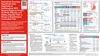
 This phase 3 trial found that over 50% of adolescents with severe alopecia areata achieved successful hair regrowth after 52 weeks on baricitinib 4-mg, with no new safety concerns reported compared to existing safety profiles.
September 2025 in “Journal of the American Academy of Dermatology” Ritlecitinib may help treat alopecia areata by protecting hair follicles.
18 citations
,
April 2016 in “Molecular Genetics and Genomics” This study suggests that thymosin beta 4 may regulate hair growth by influencing VEGF and MMP-2 levels through the Wnt/β-catenin/Lef-1 signaling pathway in mouse models.
 1 citations
,
January 2022 in “Cell Biology International”
1 citations
,
January 2022 in “Cell Biology International” This study found that altering cyclin-dependent kinase 4 (CDK4) levels in the bulge region of hair follicles affects the balance of stem cell numbers, potentially influencing hair follicle self-renewal and proliferation.
 October 2021 in “Journal of Investigative Dermatology”
 This study found that inhibiting DPP4 during a critical period post-wounding increases hair follicle regeneration and Wnt signaling in large skin wounds.
 December 2025 in “Frontiers in Medicine”
 This study assessed patient satisfaction and hair retention in 15 individuals with alopecia treated with Biofibre ® 4.0 artificial hair implants, finding high levels of satisfaction and excellent biocompatibility, with no significant adverse reactions reported after one year.
5 citations
,
July 2024 in “Journal of Microbiology and Biotechnology” This study investigated autophagy activator ICP5249 and found it promotes hair growth by enhancing cell proliferation and autophagy-related markers in human dermal papilla cells and hair follicles, with AMPKα playing a regulatory role, suggesting its potential as a hair growth ingredient.
 1 citations
,
March 2023 in “Skin”
1 citations
,
March 2023 in “Skin” This study describes the patterns of clinical response in patients with severe alopecia areata treated with baricitinib over 52 weeks, based on integrated data from two Phase 3 trials.
In this study, a strong positive correlation was found between clinician-reported and patient-reported measures for assessing eyebrow and eyelash hair loss in patients with severe alopecia areata, indicating high agreement during treatment with baricitinib over 52 weeks.
 June 2026 in “Journal of health economics and outcomes research”
 This study found that ritlecitinib 50 mg offered a lower cost per responder than baricitinib 2 or 4 mg for treating severe alopecia areata at Weeks 24 and 52, potentially influencing reimbursement decisions.
August 2022 in “Journal of Investigative Dermatology” Baricitinib reduces inflammation and mitochondrial damage in skin cells.
4 citations
,
July 2024 in “Pharmacology Research & Perspectives” In this phase 2a study of adults with alopecia areata, researchers observed that ritlecitinib treatment did not result in significant differences in brainstem auditory evoked potential changes or axonal swelling compared to placebo, suggesting the dog toxicity findings may not be clinically relevant in humans.
 October 2025 in “Electronic Theses and Dissertations Repository (University of Pisa)”
 In this study, baricitinib treatment for severe alopecia areata was well tolerated, with minor metabolic changes and PLR emerging as a sensitive marker of treatment response.
 6 citations
,
February 2023 in “Advances in Therapy”
6 citations
,
February 2023 in “Advances in Therapy” This study found that patients with rheumatoid arthritis, atopic dermatitis, and alopecia areata receiving baricitinib had low incidence rates of adverse events, especially among low-risk individuals, with varying rates among those at higher risk.
April 2020 in “The FASEB journal” In in-vitro experiments, this study found that poncirin showed higher inhibitory activity against JAK3 than tofacitinib, suggesting potential for alopecia areata treatment.
In this retrospective study, researchers found that baricitinib was effective for treating moderate to severe alopecia areata, with response rates in 24 patients comparable to existing real-world data, and no new safety concerns were identified.