10 citations
,
January 2003 in “Dermatology” This study describes a Japanese family with monilethrix and found no clear genotype/phenotype correlation in cases with the E413K mutation in hHb6.
 June 2026 in “Zenodo (CERN European Organization for Nuclear Research)”
 This review highlights that henna (Lawsonia inermis) presents a safer alternative to synthetic hair dyes, though its color range and stability are limited; it emphasizes the need for advanced formulations and global regulatory harmonization to enhance henna's acceptance as a standardized hair dye.
 32 citations
,
April 1994 in “Journal of the American Academy of Dermatology”
32 citations
,
April 1994 in “Journal of the American Academy of Dermatology” This report presents the second known case of erythema nodosum without typical associated conditions, which could be linked to mycoplasma infection, although no testing was conducted to confirm this in the patient.
 July 2022 in “Dermatology practical & conceptual”
 This study found that a topical henna formulation may improve symptoms like itching, burning, and redness in patients with recessive dystrophic epidermolysis bullosa, but larger controlled studies are needed.
36 citations
,
December 2009 in “Skin pharmacology and physiology” In this study, helium-neon laser irradiation at approximately 1 J/cm² significantly increased the percentage of hair follicles in the anagen phase in both testosterone-treated and untreated mice, suggesting stimulation of hair growth.
 4 citations
,
January 1987 in “Journal of The American Academy of Dermatology”
4 citations
,
January 1987 in “Journal of The American Academy of Dermatology” A man with both skin lesions and lung cancer improved quickly with chemotherapy, suggesting the skin condition might be a reaction to immune system injury.

This study developed a silk fibroin/poly(vinyl alcohol) microneedle loaded with α-aminoxyacetate and HfO2 nanoparticles for vitiligo treatment, which protected against ROS damage and modulated immune responses, leading to improved melanogenesis and skin repigmentation.
 14 citations
,
September 2007 in “Steroids”
14 citations
,
September 2007 in “Steroids” This study suggests that androstendione and DHEA are useful indicators for diagnosing hyperandrogenemia in hirsute women, while DHEAS was not found to be helpful.
January 1996 in “Studia iuridica” This study identified two novel point mutations in the hHb6 gene associated with monilethrix, suggesting these mutations could serve as diagnostic markers for this genetic hair disorder.
 June 2026 in “Zenodo (CERN European Organization for Nuclear Research)”
 This study reviewed the properties and safety of henna as a hair dye and found it to be safer than synthetic dyes but with limitations in color range and stability.
74 citations
,
December 1995 in “The Journal of Clinical Endocrinology & Metabolism” This study found that treatment with leuprolide plus cyclic estrogen/progestin may lead to a faster and greater improvement in hirsutism compared to a standard oral contraceptive regimen.
49 citations
,
October 1988 in “The Journal of Clinical Endocrinology & Metabolism” This study found that low doses of leuprolide effectively suppressed serum estradiol and LH response, while higher doses were needed to suppress testosterone and reduce hair growth in hirsute women.
32 citations
,
January 2000 in “Human Heredity” This study found that the mutation Glu402Lys in keratin hHb6 may be associated with monilethrix, and homozygous patients in a consanguineous family exhibited more severe symptoms.
 April 2023 in “Journal of Investigative Dermatology”
 This study demonstrates that human epidermal stem cells can adapt to environmental temperature changes through mTOR signaling, and prolonged inhibition of mTORC1 supports stem cell maintenance, which may be vital for regenerative medicine.
59 citations
,
September 2021 in “Journal of Allergy and Clinical Immunology” This study found IL-17/IL-36 signaling to be predominant in both endotypes of Netherton syndrome, with distinct molecular profiles between NS-ILC and NS-SE lesions, offering potential therapeutic targets.
67 citations
,
January 1997 in “Lancet” This article discusses the causes of hirsutism, identifying increased androgen production and heightened skin sensitivity, and provides no new clinical results.
 June 2011 in “Journal of medicine and life science”
 In this cell study, seaweed extract from Hizkia fusiforme significantly increased the proliferation of dermal papilla cells, suggesting potential for promoting hair growth.
This article discusses solitary hirsutism, emphasizing that treatment is mostly cosmetic unless contraception is also desired, and reports no new clinical results.
 3 citations
,
March 2021 in “Cureus”
3 citations
,
March 2021 in “Cureus” This article reports a rare combination of rapid-onset halo nevi, nonsegmental vitiligo, and premature scalp hair graying.
 9 citations
,
May 2013 in “JAMA Dermatology”
9 citations
,
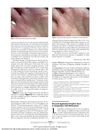
May 2013 in “JAMA Dermatology” This report documents two cases of eruptive nevi occurring in the skin folds of children with Langerhans cell histiocytosis.

This study assessed the phytochemical properties and antifungal activity of Lawsonia inermis extracts, finding diverse compounds like flavonoids and alkaloids, and reporting that ethanol extracts exhibited the highest antifungal activity against Aspergillus flavus and Candida albicans at 200 mg/mL.
January 2013 in “University Libraries (University of Maryland)” This study suggests that selenium deficiency contributes to aging signs and health deterioration in a mouse model, supporting selenium's role in genome maintenance and protection against oxidative stress.
 2 citations
,
January 2014 in “Elsevier eBooks”
2 citations
,
January 2014 in “Elsevier eBooks” This review discusses drug-induced hypersensitivity syndrome and drug reaction with eosinophilia and systemic symptoms, highlighting clinical features, potential viral reactivations, and treatment, but reports no new clinical findings.
29 citations
,
August 1999 in “Journal of Investigative Dermatology” New mutations in hair keratin genes cause the rare hair disorder monilethrix.
September 1997 in “Clinical and Experimental Dermatology” 2 citations
,
May 2024 in “Nanomaterials” This study reports the synthesis of a hectorite/phenanthroline nanomaterial which acts as a potential fluorescent sensor for detecting Zn ions in water, offering a solution to the low solubility issue of traditional metal ion-detecting molecules.
This study found that soups with 5% and 10% hibiscus flower were more desirable in sensory attributes and had higher β-carotene content compared to the control soup.

This article explores whether Melampus, a mythological healer, may have intentionally caused the madness of Proetus' daughters through the use of herbs, despite being credited with their cure.
This book chapter discusses the mechanisms and prevention of selenium toxicity in livestock and reports no new experimental results; it emphasizes reducing selenium in the human food chain through animal products.
175 citations
,
August 1997 in “Nature Genetics”