 13 citations
,
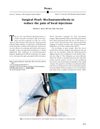
April 2001 in “Journal of The American Academy of Dermatology”
13 citations
,
April 2001 in “Journal of The American Academy of Dermatology” Using a vibrating device during injections can help reduce pain.
4 citations
,
August 2023 in “Biomedicine & Pharmacotherapy” This study found that in noise-exposed FVB/NJ mice and cell models, ivacaftor reduced oxidative stress and hearing damage by maintaining CFTR function and increasing Nrf2 expression, suggesting its potential for treating noise-induced hearing loss.
 January 2024 in “Wiadomości Lekarskie”
 This study found that administering steroids alongside cochlear implantation using Skarżyński's six-step method helped preserve residual hearing in patients, with a higher hearing preservation rate observed in those receiving steroids compared to those without.
13 citations
,
August 2021 in “Frontiers in Aging Neuroscience” This study found that in SAMP8 mice, phenotypic changes in outer hair cells or the stria vascularis, possibly due to oxidative deficiencies, may predict variability in age-related hearing loss before outer hair cell loss occurs.
 January 2024 in “Biochemical and Biophysical Research Communications”
 Lack of zinc can cause hearing loss by damaging important parts of inner ear cells in mice.
16 citations
,
December 2006 in “Chinese Medical Journal” This case report describes a 12-year-old boy with congenital insensitivity to pain with anhidrosis and progressing acro-osteolysis, highlighting the severe complications and the necessity for early intervention.
 2 citations
,
April 2022 in “PLoS ONE”
2 citations
,
April 2022 in “PLoS ONE” This study reports that short exposure to vibration causes epithelial cells to retract filopodia, concentrate actin at their edges, and increase expression of the protease calpain, suggesting a mechanism for vibration-induced pain relief.
 October 2025 in “bioRxiv (Cold Spring Harbor Laboratory)”
 In this study, researchers found that cochlear hair cell function declined with age in CBA/CaJ mice starting at 10 months, before detectable hearing loss, and was marked by a decrease in cell size and BK channel currents, without effect on MET currents.
December 2021 in “OPAL (Open@LaTrobe) (La Trobe University)” This study found that knocking out the Hars2 gene in mouse cochlear hair cells led to mitochondrial dysfunction and ROS stress, resulting in progressive hearing loss and differential effects on inner and outer hair cells.
 66 citations
,
February 2015 in “Cell & tissue research/Cell and tissue research”
66 citations
,
February 2015 in “Cell & tissue research/Cell and tissue research” This review explores the mechanisms of hair cell death due to factors like noise, ototoxic drugs, and aging and reports no conclusive clinical results; ongoing research may eventually enable preventive treatments for hearing loss.
In this study, researchers developed a mathematical model of outer hair cell hair bundles that replicates experimental responses to mechanical stimuli, providing insights into the stimulus-dependent adaptation mechanisms and the functional significance of their three-row stereocilia configuration in mammalian hearing.

CaBP1 and CaBP2 are necessary for proper hearing and neurotransmission in the ear's inner hair cells.
 1 citations
,
January 2024
1 citations
,
January 2024 CaBP1 and CaBP2 are necessary for proper hearing and neurotransmission in the ear's inner hair cells.
 5 citations
,
December 2011 in “Journal of Cosmetic Dermatology”
5 citations
,
December 2011 in “Journal of Cosmetic Dermatology” In this study, researchers found that patients who previously had hair restoration surgery by a different surgeon were more likely to experience postoperative hyperesthesia.
 8 citations
,
December 2020 in “The FASEB Journal”
8 citations
,
December 2020 in “The FASEB Journal” Blocking adenosine A2B receptor may prevent or treat hearing loss.

CaBP1 and 2 are important for maintaining the activity of calcium channels necessary for hearing in inner ear cells.
January 2026 in “Advanced Science” This study found that gastrodin promotes the XIAP-DDRGK1 pathway in noise-exposed mice, reducing hearing loss by enhancing ER-phagy and cochlear cell survival.
13 citations
,
November 1995 in “European Archives of Oto-Rhino-Laryngology”  62 citations
,
April 2008 in “Neurobiology of aging”
62 citations
,
April 2008 in “Neurobiology of aging” This study identified a new genetic locus, ahl4, on distal Chromosome 10 that contributes to the early-onset, severe hearing loss in A/J mice compared to B6 mice.
July 2025 in “Journal of Investigative Dermatology” Reduced AhR signaling in HS tunnels leads to persistent inflammation and microbial imbalance.
41 citations
,
November 2019 in “Journal of Ultrasound in Medicine” This study found that 70-MHz ultrasound can detect early signs of hidradenitis suppurativa linked to severity, including hair follicle abnormalities and keratin fragmentation, aiding in diagnosis and management.
November 2025 in “Biomedicine & Pharmacotherapy” This study found that administering calcium blockers verapamil or nimodipine significantly preserved auditory function and hair cell survival in Cx26-cKO mice, suggesting potential protective effects for other inner ear disorders.
18 citations
,
January 2021 in “Skin Research and Technology” This study found that high-frequency ultrasound was effective in localizing deep tumor margins in basal cell carcinoma, suggesting its utility in selecting therapeutic approaches.
 September 2025 in “PubMed”
 In this study, auricular electrostimulation effectively relieved dextran-induced pruritus in mice, comparable to loratadine treatment, and is attributed to down-regulating the H1R/TRPV1 signaling pathway and reducing inflammatory cells in the skin.
January 2020 in “Integrative Medicine Research”  April 2023 in “Research Square (Research Square)”
 Exosomes protect ear hair cells from damage by controlling cell waste removal, potentially helping treat hearing loss.
63 citations
,
February 2010 in “Journal of Neurophysiology” This study observed that electrical stimulation of specific mechanoreceptive afferents in the orofacial region can evoke sensations consistent with their response properties, while others may require multiple afferents to access perceptual levels.
 16 citations
,
December 2012 in “The Clinical Journal of Pain”
16 citations
,
December 2012 in “The Clinical Journal of Pain” This study found that trichodynia is associated with both peripheral and central sensitization, potentially linked to hair cycle abnormalities and chronic pain through proinflammatory agents.
November 2025 in “British Journal of Pharmacology” This study found that inositol hexaphosphate significantly reduced hearing threshold shifts and outer hair cell loss in various sensorineural hearing loss mouse models, suggesting potential for otoprotective use.
1 citations
,
December 2025 in “Stem Cell Research & Therapy” This study found that hucMSC-EXOs delivered via intratympanic injection effectively target vestibular sensory tissues, significantly reducing gentamicin-induced balance issues and high-frequency hearing loss, with some measured outcomes surpassing those achieved with dexamethasone.