58 citations
,
July 2005 in “Molecular and Cellular Biology” This study showed that a 2-kilobase upstream region of the mouse keratin 17 gene enables targeted GFP expression in major epithelial appendages of transgenic mice, indicating sonic hedgehog's involvement in its regulation.
11 citations
,
June 2010 in “Medical Molecular Morphology” 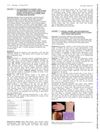
This case report details a child with a specific TNFAIP3 mutation manifesting as a severe SLE/SS phenotype, expanding the known phenotype for this genetic variant.
 April 2016 in “Journal of Investigative Dermatology”
 This study reported that the absence of Lsh in skin led to significant epidermal hyperplasia and altered gene expression, suggesting its crucial role in regulating epidermal proliferation, differentiation, and wound healing.
 January 2025 in “Open Life Sciences”
 This study observed that transgenic mice with overexpression of HE4 developed keratitis and severe corneal opacity, suggesting that HE4 may significantly influence keratopathy and inflammatory responses in the eye.
3 citations
,
July 2022 in “Brain and Behavior” This study observed that a CARASIL mouse model demonstrated abnormal behavior, vascular and cellular changes, and upregulation of the TGF-β/Smad signaling pathway, indicating its potential involvement in CARASIL pathogenesis.
 August 2022 in “Frontiers in genetics”
 This study identified a novel bi-allelic missense variant in the DSC3 gene linked to severe Hypotrichosis with Recurrent Skin Vesicles in a Saudi child, supporting its role in the condition.
 August 2016 in “The journal of investigative dermatology/Journal of investigative dermatology”
 This article discusses how activating the hexosamine pathway may enhance skin homeostasis by increasing hyaluronic acid secretion and supporting hair follicle stem cell self-renewal, but reports no new results.
 April 2026 in “Human Genome Variation”
 In this study, researchers identified a recurrent MBTPS2 splice-site variant as a mutational hotspot in IFAP syndrome across diverse families, with phenotype severity suggesting the influence of additional modifiers.
This article reviews the role of the hairless protein in hair cycling and gene regulation, noting the need for further understanding of its JmjC domain and subcellular localization roles.
5 citations
,
September 2021 in “Journal of Molecular Histology” In this study, the researchers identified LHX2 as a specific marker for hair follicle placodes, differentiating them from eccrine sweat gland placodes through double immunofluorescence staining.
11 citations
,
January 2005 in “Brazilian Journal of Medical and Biological Research” This study found no qualitative skin differences during development between mutant hairless USP mice and BALB/c mice, except for enlarged cysts in the hairless strain.
1 citations
,
July 2024 in “Journal of Investigative Dermatology” Immune cells boost stem cell activity in hairy moles, causing more hair growth.
17 citations
,
July 2019 in “Lupus Science & Medicine” In this study, gene expression analysis of plucked hair follicles from scalp lesions was sufficient to differentiate chronic discoid lupus erythematosus from psoriasis and healthy controls, suggesting a non-invasive diagnostic potential.
7 citations
,
August 2008 in “Immunogenetics” A gene mutation in mice causes increased mast cells and disorganized hair follicles in their skin.
 20 citations
,
June 2007 in “Recent Patents on Endocrine, Metabolic & Immune Drug Discovery”
20 citations
,
June 2007 in “Recent Patents on Endocrine, Metabolic & Immune Drug Discovery” This review summarizes recent research and patents on 17β-HSD3, 17β-HSD5, and 3α-HSD3 inhibitors, suggesting their potential in treating androgen-dependent diseases, but reports no new clinical results.
August 2009 in “Mechanisms of Development” 6 citations
,
August 2024 in “BMC Ophthalmology” This study identified multiple genetic variants in Pakistani families with oculocutaneous albinism, including two novel variants, enhancing understanding of its genetic basis and aiding better management and counseling.
18 citations
,
November 2005 in “Archives of Dermatological Research” 15 citations
,
January 1991 in “Mammalian Genome”  32 citations
,
February 1998 in “The journal of investigative dermatology/Journal of investigative dermatology”
32 citations
,
February 1998 in “The journal of investigative dermatology/Journal of investigative dermatology” This study reports the cloning and sequencing of two type II hair-specific keratin genes, ghHb1 and ghHb6, located on chromosome 12q13, which are expressed during hair growth.
18 citations
,
September 2003 in “International Journal of Cancer” This study found that Epstein-Barr virus infection upregulated a truncated variant of human basic hair keratin 1 (hHb1-ΔN) in gastric carcinoma cell lines, suggesting a possible link to carcinoma differentiation.
April 2018 in “The journal of investigative dermatology/Journal of investigative dermatology” This commentary discusses the crucial role of the alternative splicing factor Esrp1 in maintaining skin barrier function and its association with skin diseases like atopic dermatitis and psoriasis, but reports no new clinical results.
 36 citations
,
October 2000 in “British Journal of Dermatology”
36 citations
,
October 2000 in “British Journal of Dermatology” This study identified a distinct gene near the hairless locus on chromosome 8p that is responsible for hereditary Marie Unna type hypotrichosis in a German family.
1 citations
,
March 2007 in “Journal of Chinese Integrative Medicine” In this study, Huoxue Bushen Mixture was associated with increased blood vessel formation and VEGF expression in mice hair follicles, suggesting it may enhance hair growth.
 78 citations
,
October 2020 in “Experimental Dermatology”
78 citations
,
October 2020 in “Experimental Dermatology” This review summarizes 15 years of clinical and experimental research advancements in hidradenitis suppurativa, highlighting its recognition as a uniquely healable inflammatory skin disease but reports no new clinical results.
 24 citations
,
January 2019 in “Theranostics”
24 citations
,
January 2019 in “Theranostics” This study found that loss of the Pten gene in Lgr5+ hair follicle stem cells promoted squamous cell carcinoma formation through the Akt/β-catenin signaling pathway.
 10 citations
,
January 2010 in “Veterinary pathology”
10 citations
,
January 2010 in “Veterinary pathology” This study found that a newly identified mutation in the hairless gene in mice led to decreased Hr mRNA levels and changes in gene expression related to hair follicle development.
 25 citations
,
May 1994 in “Journal of Investigative Dermatology”
25 citations
,
May 1994 in “Journal of Investigative Dermatology” This study identified a novel gene, hacl-1, that is specifically expressed in the hair follicles of ICR mouse skin and is associated with their active state.
 August 2016 in “Journal of Investigative Dermatology”
 This case report identifies a novel LIPH gene mutation linked to autosomal recessive woolly hair/hypotrichosis in a Japanese boy, expanding the spectrum of known mutations associated with this condition.