 89 citations
,
October 1996 in “Dermatologic Clinics”
89 citations
,
October 1996 in “Dermatologic Clinics” This review discusses androgenetic alopecia and alopecia areata through a systems biology lens, emphasizing the role of multi-omics data integration to explore molecular mechanisms and potential therapeutic strategies, but offers no new clinical results.
 88 citations
,
February 2010 in “JEADV. Journal of the European Academy of Dermatology and Venereology/Journal of the European Academy of Dermatology and Venereology”
88 citations
,
February 2010 in “JEADV. Journal of the European Academy of Dermatology and Venereology/Journal of the European Academy of Dermatology and Venereology” This study reported that vitiligo patients in Turkey had a high prevalence of associated autoimmune diseases and auditory problems, suggesting vitiligo may be part of a systemic autoimmune process.
 88 citations
,
August 2019 in “Nature communications”
88 citations
,
August 2019 in “Nature communications” In this study, researchers identified a specific T cell receptor associated with carbamazepine-induced severe cutaneous adverse reactions, demonstrating its potential for therapeutic development in patients with the HLA-B*15:02 genotype.
68 citations
,
December 1983 in “British Journal of Dermatology” This study found HLA and beta 2-microglobulin antigens in various skin structures, with specific localization patterns in keratinocytes and hair follicle components, but not in eccrine or apocrine glands.
 58 citations
,
December 2020 in “Mayo Clinic Proceedings”
58 citations
,
December 2020 in “Mayo Clinic Proceedings” This paper discusses the variability in COVID-19 susceptibility and severity, emphasizing factors like biological differences and suggesting potential precision medicine approaches, but it reports no new clinical results.
 50 citations
,
March 2000 in “American Journal of Clinical Dermatology”
50 citations
,
March 2000 in “American Journal of Clinical Dermatology” This article discusses the etiology, clinical features, and treatment of alopecia areata but presents no new clinical findings, underlining the palliative nature of current therapies.
 49 citations
,
April 2000 in “Journal of The American Academy of Dermatology”
49 citations
,
April 2000 in “Journal of The American Academy of Dermatology” This article discusses the etiology, clinical features, diagnosis, histopathology, and treatment of alopecia areata but reports no new clinical findings; it emphasizes the palliative nature of current treatments.
44 citations
,
December 2005 in “Journal of Investigative Dermatology” This study found significant associations between certain MICA variants and haplotypes with alopecia areata, suggesting MICA as a potential candidate gene linked to the disease's susceptibility and severity.
40 citations
,
October 2012 in “Dermatologic clinics” This review highlights the need for a deeper understanding of the genetic mechanisms in alopecia areata to develop evidence-based treatments, but it provides no new experimental results.
 39 citations
,
October 2010 in “Journal of The American Academy of Dermatology”
39 citations
,
October 2010 in “Journal of The American Academy of Dermatology” This study reported that alopecia occurred in 2.5% of patients with mycosis fungoides or Sézary syndrome, with some cases resembling alopecia areata and others associated with specific skin lesions.
36 citations
,
July 2007 in “Journal of Investigative Dermatology” This study observed a strong negative association between the HLA-DQB1*0201 allele and the alopecia totalis/alopecia universalis phenotype in Caucasian individuals, indicating a potential protective role.
35 citations
,
June 2011 in “British Journal of Dermatology” This study found that in an Italian population, the HLA-DQB1*03 allele was associated with increased susceptibility to alopecia areata, particularly in cases with more than 50% hair loss.
 32 citations
,
January 2017 in “Orphanet journal of rare diseases”
32 citations
,
January 2017 in “Orphanet journal of rare diseases” This article reviews the genetic basis, diagnostic approaches, and treatment options for nude severe combined immunodeficiency, but does not present any new research findings.
 32 citations
,
March 2015 in “The Journal of Clinical Endocrinology & Metabolism”
32 citations
,
March 2015 in “The Journal of Clinical Endocrinology & Metabolism” In this study, alopecia areata was associated with thyroid autoimmunity but not islet autoimmunity, correlating with specific class II HLA haplotypes linked to various autoimmune diseases.
 32 citations
,
May 2012 in “PloS one”
32 citations
,
May 2012 in “PloS one” This study found that despite the persistence of aberrant double-negative T-cells, functional immune-competence was maintained after thymic transplantation in a patient with a rare FOXN1 mutation.
 30 citations
,
July 2019 in “PloS one”
30 citations
,
July 2019 in “PloS one” This study found that T-regulatory cells, specifically the FOXP3 CD39 subset, were significantly reduced in both circulation and hair follicles of alopecia areata patients compared to healthy subjects, suggesting potential therapeutic targets.
 24 citations
,
January 2008 in “KARGER eBooks”
24 citations
,
January 2008 in “KARGER eBooks” This review discusses recent advances in understanding the pathogenesis of autoimmune alopecia areata and reports no new clinical results; it highlights potential for developing more effective treatments.
 20 citations
,
March 1985 in “Journal of The American Academy of Dermatology”
20 citations
,
March 1985 in “Journal of The American Academy of Dermatology” Genetic factors alone might not cause pemphigus vulgaris; other factors like birth complications and puberty may trigger it.
18 citations
,
January 2013 in “PLoS ONE” This study identified several significant genetic variants associated with alopecia universalis, including a novel association with HLA-DRB5, which may play a hidden role in the disease.
18 citations
,
July 2012 in “Cell Biology International Reports” This study suggests that human mesenchymal stem cells have the potential to differentiate into dermal papilla cells both in vitro and in vivo.
 17 citations
,
July 1994 in “Journal of Dermatological Science”
17 citations
,
July 1994 in “Journal of Dermatological Science” This article reviews the genetic and potential environmental factors in alopecia areata's pathogenesis and suggests a polygenic model but reports no new clinical findings.
 16 citations
,
March 2018 in “Seminars in Oncology”
16 citations
,
March 2018 in “Seminars in Oncology” This article compares the immunology of cancer and the placenta and suggests that immunotherapy for pregnant cancer patients could be feasible with careful exploration, though no new clinical results are reported.
 16 citations
,
December 2001 in “Dermatologic Therapy”
16 citations
,
December 2001 in “Dermatologic Therapy” This review summarizes current genetic knowledge of alopecia areata and provides a theoretical framework for future genetic mapping studies, but reports no new results.
14 citations
,
January 2024 in “Skin Research and Technology” The study suggested certain immune cells might cause alopecia areata, but it was retracted.
12 citations
,
January 1998 in “Clinical Infectious Diseases” This case report describes a instance of lepromatous leprosy in a renal transplant recipient, highlighting the potential for leprosy in immunocompromised patients and emphasizing the importance of including it in differential diagnoses for unusual skin lesions.
11 citations
,
May 2011 in “The Journal of Dermatology” This case report describes a possible association between Vogt-Koyanagi-Harada disease and linear IgA/IgG bullous dermatosis in a 35-year-old Japanese male, though coincidence cannot be ruled out.
11 citations
,
February 1990 in “PubMed” This study found that zinc treatment in alopecia areata patients may increase CD8+ cells, suggesting its effectiveness could be due to immunomodulation.
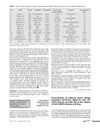 10 citations
,
September 2014 in “European Journal of Dermatology”
10 citations
,
September 2014 in “European Journal of Dermatology” This case report describes a 29-year-old woman with longstanding alopecia areata who experienced improvement in her scalp hair loss after 7 years of topical treatment with squaric acid dibutylester.
 9 citations
,
April 2024 in “Cureus”
9 citations
,
April 2024 in “Cureus” This study outlines the features and diagnosis of Vogt-Koyanagi-Harada disease, highlighting its association with specific genes, its prevalence among pigmented races, and treatment with systemic steroids and immunosuppressants.
 8 citations
,
January 2022 in “Infectious diseases News Opinions Training”
8 citations
,
January 2022 in “Infectious diseases News Opinions Training” This review discusses gene polymorphisms in COVID-19 patients but reports no new clinical findings.