4 citations
,
July 2025 in “Annals of the New York Academy of Sciences” This review emphasizes that collaboration between forensic anthropology and molecular anthropology could significantly improve the identification of unknown human remains by creating more comprehensive biological profiles.
27 citations
,
November 2015 in “American Journal of Primatology” This review discusses the use of stable isotope analysis in primate hair to study feeding behavior and reports no new results; the authors call for methodological refinement in field and lab procedures.
10 citations
,
January 2011 in “Journal of biomedical optics” This study found that optical coherence tomography provides highly reproducible and less variable measurements of hair shaft thickness compared to standard light microscopy, offering a promising noninvasive tool for clinical practice.
 May 2026 in “International Journal of Versatile Research and Analysis”
 This study used air wedge interferometry to measure the thickness of human scalp hair from three individuals, finding average thicknesses of 66.482 µm, 59.355 µm, and 59.927 µm respectively, within the typical range for adults.
February 2012 in “Proceedings of SPIE, the International Society for Optical Engineering/Proceedings of SPIE” This study observed nestin-GFP expressing stem cells in the hair follicle bulge of living mice using high-resolution in-vivo multiphoton tomography, allowing migration tracking within their natural skin environment.
 10 citations
,
May 2018 in “Forensic Science International”
10 citations
,
May 2018 in “Forensic Science International” This study concluded that the process of mummification disfigures facial features, making identification challenging, but commercial shrunken heads retain more defining features compared to ceremonial ones.
5 citations
,
March 2011 in “Proceedings : 格差センシティブな人間発達科学の創成=Science of human development for restructuring the "gap widening society"” This study introduces a non-invasive photoacoustic imaging technique that accurately measures hair follicle density and subdermal angles, showing strong correlation with the gold-standard photographic method.
27 citations
,
September 1988 in “PubMed” In this study, researchers used three-dimensional reconstruction to show that the shape of the hair follicle determines the hair's form, with variations observed among different racial groups.
12 citations
,
May 2012 in “Journal of Biomedical Optics” In this study, Trichoscan®, reflectance confocal microscopy, and optical coherence tomography were found to be reliable noninvasive tools for measuring hair growth and follicle analysis after hair removal.
 November 2025 in “Clinical Cosmetic and Investigational Dermatology”
 In this study, researchers suggest that digital microscopy using visible light could offer a more objective approach to diagnosing hirsutism by quantifying terminal hair, with future research needed to assess its usefulness in women with the condition.
 March 2026 in “The Open Dentistry Journal”
 This study found significant gender-based differences in forehead dimensions among 297 participants, with males showing larger vertical measurements, which could inform applications in forensic identification, cosmetic surgery, and anthropological research.
 28 citations
,
November 2018 in “Journal of structural biology”
28 citations
,
November 2018 in “Journal of structural biology” This study found statistically significant patterns in hair morphology and ultrastructure linked to biogeographic ancestry among European, African, and East Asian populations.
 40 citations
,
April 2006 in “Journal of the European Academy of Dermatology and Venereology”
40 citations
,
April 2006 in “Journal of the European Academy of Dermatology and Venereology” This study reported that Trichoscan, a computer-assisted hair measurement system, was not supported as accurate for clinical trials due to errors in signal detection, despite its analysis speed.
January 2007 in “한국미용학회지” This study found that a lack of fat tissues in the hair root during the telogen phase might indicate hair loss, potentially providing a standard for identifying hair conditions and the impact of cytotoxic drugs.
 December 2022 in “Kristu Jayanti Journal of Core and Applied Biology (KJCAB)”
 This study examined the morphometric features of hair from different regions of India to identify potential regional characteristics.
 2 citations
,
May 2022 in “Clinical, Cosmetic and Investigational Dermatology”
2 citations
,
May 2022 in “Clinical, Cosmetic and Investigational Dermatology” This study reports that quantitative trichoscopy, while noninvasive and convenient, provides less accurate hair density data compared to invasive histopathologic examination, which was demonstrated in a sample of adult Chinese individuals without alopecia.
 9 citations
,
February 2018 in “Journal of The American Academy of Dermatology”
9 citations
,
February 2018 in “Journal of The American Academy of Dermatology” This study found that methylene blue staining helped identify late catagen and telogen hair follicles more accurately than unstained follicles, which suggests that established telogen percentage standards may be overestimated.
10 citations
,
December 2017 in “Physiological Reports” In this study, hair follicle transcriptomic responses to a 10-day HIIT program revealed both existing and new biomarkers, such as certain miRNAs, offering a potentially effective way to monitor cellular and molecular HIIT adaptations.
5 citations
,
March 2022 in “STAR Protocols” This article presents a protocol for using mouse tail skin to study hair follicle stem cells, enabling visualization of calcium signaling and other cellular features in various conditions but reports no new research data.
 1 citations
,
March 2009 in “Hair transplant forum international”
1 citations
,
March 2009 in “Hair transplant forum international” This article reviews optimal patient selection and donor site quality for successful hair transplant procedures, but reports no new clinical findings.
 2 citations
,
July 2008 in “Dermatologic Surgery”
2 citations
,
July 2008 in “Dermatologic Surgery” This study suggests that a prototype device may accurately measure hair quantity, diameter, and density in balding patients, potentially aiding in diagnostic assessments, though formal clinical studies are needed to confirm its effectiveness.
 1 citations
,
May 2016 in “Dermatologic Surgery”
1 citations
,
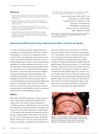
May 2016 in “Dermatologic Surgery” The document concludes that using a phototrichogram with a protractor and tapeline is a reliable and noninvasive way to measure hair loss.
 5 citations
,
April 2024 in “bioRxiv (Cold Spring Harbor Laboratory)”
5 citations
,
April 2024 in “bioRxiv (Cold Spring Harbor Laboratory)” This study found that by using an automated system to analyze skin histology, 108 structural features were significantly affected by age, and it identified four new aging biomarkers and notable sex-based differences in skin aging.
 13 citations
,
December 2018 in “Development, Growth & Differentiation”
13 citations
,
December 2018 in “Development, Growth & Differentiation” This study found that male and female chicken feather morphology and color patterns can be extrinsically modified through molting and resetting the stem cell niche during regeneration.
 3 citations
,
April 2021 in “Journal of Cosmetic Dermatology”
3 citations
,
April 2021 in “Journal of Cosmetic Dermatology” In this study, the researchers found that a manual micrometer caliper is a reliable tool for planning hair transplant surgery and accurately measures the short axis of the hair shaft.
 26 citations
,
March 1986 in “Clinical and Experimental Dermatology”
26 citations
,
March 1986 in “Clinical and Experimental Dermatology” Scalp hair grows at 0.37 mm/day, forearm hair at 0.18 mm/day, and thigh hair at 0.30 mm/day, with no significant differences found in people with certain hair conditions.
 November 2023 in “Journal of Dermatological Science”
 A new computer tool quickly measures hair thickness differences in people with common types of hair loss.
7 citations
,
January 2013 in “Supportive care in cancer” In this study, cross-section trichometry was found to be a precise method for measuring hair loss in chemotherapy patients, but marking the measurement site on the scalp is not always necessary.
This study provides genomic and epigenomic insights into the white wax scale insect, highlighting high methylation levels and differential hormone profiles linked to its sexual dimorphism and developmental differences.
This study shows that multiphoton microscopy can non-invasively distinguish scarring from non-scarring alopecia by identifying specific morphological features in hair follicle structures.