74 citations
,
July 2008 in “Dermatologic therapy” This review discusses histopathologic findings in diagnosing primary cicatricial alopecias and emphasizes the importance of correlating histology with clinical presentation for accurate diagnosis; it reports no new results.
 3 citations
,
October 2019 in “JAAD Case Reports”
3 citations
,
October 2019 in “JAAD Case Reports” This review discusses different forms and patterns of alopecia associated with lupus erythematosus and reports no new clinical results; the authors highlight distinct features of these conditions.
 April 2026 in “Scientific Reports”
 In this study, the proposed MSF-VMDNet, combining dual encoder networks with a multi-frequency domain mechanism, significantly outperformed existing methods in segmenting skin cancer tissues from histological slide images, achieving high accuracy with an MIoU of 95.37% and a Dice coefficient of 95.11%.
 16 citations
,
February 2018 in “Journal of The American Academy of Dermatology”
16 citations
,
February 2018 in “Journal of The American Academy of Dermatology” This study found that scalp involvement in dermatomyositis consistently shows a nonscarring pattern with chronic telogen effluvium, featuring telangiectasia and mucin deposition as universal histologic markers.
 5 citations
,
April 2016 in “The American Journal of Dermatopathology”
5 citations
,
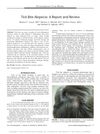
April 2016 in “The American Journal of Dermatopathology” This report describes a rare case of nonscarring alopecia linked to a tick bite on a 21-year-old male's scalp, with specific histological findings and proposed mechanisms.
 January 2025 in “Pakistan Veterinary Journal”
 This report describes a pancreatic mixed acinar-neuroendocrine carcinoma in a cat, underscoring its diagnostic complexity and the need to consider it in diagnoses of pancreatic masses with mixed features.
 July 2023 in “Veterinary pathology”
 In this report, the researchers described a follicular dysplastic syndrome in two adult white-tailed deer, where gross alopecia and histologic signs suggestive of alopecia areata were observed, potentially predisposing affected deer to environmental exposure.
December 2022 in “Laboratory Animal Research” This study described two cases of trichoblastomas in the tactile hair skin of aged house musk shrews, highlighting that their histological structure differs from that in humans and other animals.
 36 citations
,
June 2018 in “Journal of The American Academy of Dermatology”
36 citations
,
June 2018 in “Journal of The American Academy of Dermatology” This review examines the increasing clinical applications of dermoscopy in diagnosing various skin conditions and highlights its potential to improve diagnostic accuracy and reduce unnecessary histologic confirmation.
 January 2026 in “International Research Journal of Modernization in Engineering Technology and Science”
 This review outlines the existing understanding of alopecia areata, detailing its autoimmune nature, clinical presentation, histology, and management strategies, with corticosteroids highlighted as the most popular treatment option.
 June 2024 in “British Journal of Dermatology”
 In this case study, a 46-year-old post-transplant woman with poorly controlled diabetes exhibited a rare acquired form of epidermodysplasia verruciformis associated with HPV-49, marked by unique histological findings that distinguishing it from trichodysplasia spinulosa.
 May 2024 in “Indian Journal of Dermatology”
 In this case report, a 22-year-old female was diagnosed with follicular Dowling-Degos disease based on clinical and histological findings, with symptoms including skin lesions confined to hair follicles. The report emphasizes the importance of differentiating this rare variant from similar conditions for proper management.
21 citations
,
April 2000 in “Journal of Cutaneous Pathology” This case report describes a 22-year-old woman with a nevoid plaque termed localized follicular hamartoma, characterized by skin-colored papules and specific cellular and structural features.
2 citations
,
January 2014 in “Case Reports in Clinical Medicine” This case study presents an 81-year-old woman diagnosed with Cronkhite-Canada syndrome and discusses the importance of recognizing its clinical and histopathological features for timely and accurate diagnosis.
1 citations
,
August 2019 In this study, researchers developed a pemphigus mouse model expressing anti-Desmocollin 3 antibodies and found it mimicked atypical pemphigus with distinct pathological features compared to the standard Desmoglein 3 model.
July 2025 in “Indian Dermatology Online Journal” This study reports a unique case of trichotillomania incognita in an adult female that mimicked female pattern hair loss, highlighting the importance of trichoscopy and histology for accurate diagnosis.
 April 2021 in “Rheumatology”
 This study reports a case of constrictive pericarditis associated with COVID-19, highlighting the need for imaging, biomarkers, and histology for effective evaluation and treatment decisions.
January 2006 in “International water power & dam construction” This report details a rare case of late-onset, bilateral nevus comedonicus on the eyelids in a 79-year-old man, discussing its clinical presentation and histopathologic features without presenting new research findings.
12 citations
,
April 2004 in “PubMed” This study reports the first known case of multiple type nevus lipomatosus cutaneous superficialis in a 10-month-old girl, with the unique feature of perifollicular fibrosis.
 5 citations
,
March 2004 in “Journal of The American Academy of Dermatology”
5 citations
,
March 2004 in “Journal of The American Academy of Dermatology” This presentation reviews common myths and practical treatment guidance for dandruff and scalp seborrheic dermatitis but does not provide new research findings.
 March 2004 in “Journal of The American Academy of Dermatology”
 This study found that patients with systemic lupus erythematosus and diffuse hair loss showed non-scarring alopecia without inflammation and a decrease in total hair follicles.
 March 2004 in “Journal of The American Academy of Dermatology”
 This study found that the vehicle of hydrocortisone impacts its absorption and therapeutic effectiveness, as demonstrated by efficacy tests using UV-erythema and vasoconstriction models.
 March 2004 in “Journal of The American Academy of Dermatology”
 This report describes a unique case of dyschromatosis universalis in a 10-year-old Haitian male, notable for the presence of a silvery sheen to his scalp hairs and eyelashes, which may represent a variation of the condition.
 3 citations
,
July 2012 in “Sokoto Journal of Veterinary Sciences”
3 citations
,
July 2012 in “Sokoto Journal of Veterinary Sciences” This study found that Bakhtiari sheep hair fibers and follicles became larger and more organized with age across all skin regions, with no significant differences by sex.
3 citations
,
August 2000 in “Anatomia Histologia Embryologia” In this study, prenatal exposure to a non-teratogenic dose of all-trans-retinoic acid showed no adverse effects on vibrissal follicle development in NMRI mice.
6 citations
,
January 1967 in “Journal of Small Animal Practice” This study observed that aged dogs exhibit atrophy of the epidermis, appendages, and dermis, along with variable skin changes and increased dermal pigmentation, but lack senile elastosis seen in humans.
61 citations
,
March 1966 in “Archives of Dermatology” This study found that nevoid basal cell carcinomas originate in the epidermis and upper hair follicles, resembling early nonnevoid basal cell carcinoma proliferations.
 329 citations
,
January 1997 in “Journal of the American Academy of Dermatology”
329 citations
,
January 1997 in “Journal of the American Academy of Dermatology” This study reports that progressive frontal fibrosing alopecia, a distinct and gradually stabilizing form of lichen planopilaris affecting elderly women and often involving eyebrow hair loss, lacks effective treatments.
 9 citations
,
August 2017 in “Journal of comparative pathology”
9 citations
,
August 2017 in “Journal of comparative pathology” This study suggests that uncontrolled embryonic trichogenesis may play a role in the development of trichoblastoma in rabbits.
110 citations
,
September 1999 in “British Journal of Dermatology” This case report describes a young woman with hypopituitarism who experienced hair loss typical of female androgenetic alopecia without detectable androgens, suggesting this hair loss pattern may not always be androgen dependent.