21 citations
,
April 2004 in “Australasian Journal of Dermatology” This report describes a rare case of hair and nail ectodermal dysplasia in a 3-year-old girl, where treatment with topical minoxidil resulted in minimal improvement after 12 months.
9 citations
,
October 1995 in “Clinical Dysmorphology” This study described a Scottish family with hidrotic ectodermal dysplasia featuring variable symptoms such as hypo/oligodontia, thin hair, and heat tolerance, and concluded they exhibited overlapping traits with Clouston syndrome.
 July 2024 in “Journal of Dermatological Treatment”
 In this case report, a 6-year-old boy with hidrotic ectodermal dysplasia 2 caused by GJB6 mutations showed no significant hair improvement with age, despite treatment with botanical extracts and Minoxidil.
 20 citations
,
January 2009 in “International Journal of Dermatology”
20 citations
,
January 2009 in “International Journal of Dermatology” This case report describes a patient with Clouston's syndrome and alopecia who responded positively to topical treatment with minoxidil and tretinoin.
39 citations
,
July 1997 in “American Journal of Medical Genetics” This study confirmed linkage of Clouston syndrome in a large Indian family to the 13q11-12.1 region, suggesting it shares a genetic basis with French Canadian cases.
 November 2003 in “Journal of Investigative Dermatology”
 This article includes summaries of multiple studies on dermatological topics like Imiquimod's effects on tumors, vitamin C absorption enhancement, and ferritin levels in hair loss, but reports no new results itself.
This article describes the "naked" mouse mutation, which results in hair loss and is linked to chromosome 15, noting similarities and differences with human ectodermal dysplasia, but provides no new experimental findings.
 12 citations
,
March 2013
12 citations
,
March 2013 This report describes a case where a 4-year-old boy with congenital alopecia due to hypohidrotic ectodermal dysplasia experienced significant hair growth after using topical minoxidil.
 1 citations
,
November 2017 in “Expert opinion on orphan drugs”
1 citations
,
November 2017 in “Expert opinion on orphan drugs” This review discusses the genetic basis of ectodermal dysplasia, highlighting that identification of gene pathologies enhances diagnosis and supports prenatal DNA testing, but it reports no new clinical results.
 4 citations
,
August 2016 in “JEADV. Journal of the European Academy of Dermatology and Venereology/Journal of the European Academy of Dermatology and Venereology”
4 citations
,
August 2016 in “JEADV. Journal of the European Academy of Dermatology and Venereology/Journal of the European Academy of Dermatology and Venereology” This case report observed that after 6 months of treatment with topical cetirizine and oral vitamin D, hair density and quality improved in three girls with congenital hypotrichosis due to ectodermal dysplasia.
 197 citations
,
June 2009 in “American journal of human genetics”
197 citations
,
June 2009 in “American journal of human genetics” This study found that previously undescribed WNT10A mutations are a prominent cause of various forms of ectodermal dysplasia, including OODD and Schöpf-Schulz-Passarge syndrome, with gender-specific phenotypic effects noted.
 37 citations
,
June 2002 in “The Laryngoscope”
37 citations
,
June 2002 in “The Laryngoscope” This study describes the otolaryngologic manifestations and multidisciplinary management strategies for 12 patients with ectodermal dysplasia, emphasizing the importance of early recognition for effective treatment.
 42 citations
,
October 2009 in “The journal of investigative dermatology/Journal of investigative dermatology”
42 citations
,
October 2009 in “The journal of investigative dermatology/Journal of investigative dermatology” In this study, researchers identified two distinct homozygous mutations in the KRT85 gene among consanguineous Pakistani families with pure hair and nail ectodermal dysplasia, highlighting variations in severity and potential impacts on the K85 protein function.
 January 2026 in “Journal of Clinical and Investigative Dermatology”
 This case report describes a father with HOXC13-associated pure hair-nail ectodermal dysplasia, presenting with severe nail dystrophy affecting all digits and notable hypotrichosis or complete alopecia.
 21 citations
,
April 2014 in “PLoS ONE”
21 citations
,
April 2014 in “PLoS ONE” In this study, researchers identified a novel KRT74 gene mutation associated with autosomal recessive pure hair and nail ectodermal dysplasia in a Pakistani family, expanding the known genetic causes of the disorder.
 August 2025 in “BMC Pregnancy and Childbirth”
 In this study, prenatal ultrasonography was found to be a valuable tool for screening ectodermal dysplasia during pregnancy, and a new EDA gene variant associated with X-linked hypohidrotic ectodermal dysplasia was identified, aiding in more accurate diagnoses and reproductive decision-making.
4 citations
,
November 2020 in “Acta Dermato Venereologica” In this study, patients with specific skin and scalp conditions, including eczematous lesions, showed significant improvement after two weeks of oral tofacitinib treatment, as evidenced by changes in the trunk lesions.
November 2025 in “Indian Journal of Dermatology” This study reports a rare cluster of four patients with ectodermal dysplasia, highlighting its typical dental and dermatological manifestations and the necessity of multidisciplinary management.
April 2016 in “Journal of Investigative Dermatology” Mutations in the TSPEAR gene cause a new form of ectodermal dysplasia affecting hair and tooth development.
74 citations
,
October 2012 in “The American Journal of Human Genetics” This study found that loss-of-function mutations in the HOXC13 gene cause autosomal-recessive pure hair and nail ectodermal dysplasia, emphasizing its role in hair and nail development.
 30 citations
,
June 2014 in “Seminars in Immunology”
30 citations
,
June 2014 in “Seminars in Immunology” This review discusses recent advances in understanding the Eda pathway's role in developmental biology, and highlights ongoing trials and areas for further research, including Eda's potential involvement in cell processes and disease.
 2 citations
,
January 2013 in “Elsevier eBooks”
2 citations
,
January 2013 in “Elsevier eBooks” The document explains the genetic causes and characteristics of inherited hair disorders.
 1 citations
,
February 2013 in “InTech eBooks”
1 citations
,
February 2013 in “InTech eBooks” Genetic mutations cause various hair diseases, and whole genome sequencing may reveal more about these conditions.
 23 citations
,
November 2001 in “Archives of Dermatology”
23 citations
,
November 2001 in “Archives of Dermatology” This review discusses recent advances in the genetic understanding of inherited hair and nail disorders and reports no new clinical results.
 October 2023 in “Case reports in dermatological medicine”
 In this case report, a 45-year-old Jordanian woman was diagnosed with Clouston syndrome, an autosomal-dominant disorder characterized by alopecia and nail dystrophy due to a mutation in the GJB6 gene, though she lacked the typical palmoplantar keratoderma.
 12 citations
,
January 2016 in “Journal of Orofacial Orthopedics / Fortschritte der Kieferorthopädie”
12 citations
,
January 2016 in “Journal of Orofacial Orthopedics / Fortschritte der Kieferorthopädie” This study identified a novel mutation in the EDA gene, which may impair protein stabilization and be involved in the development of oligodontia and mild ectodermal dysplasia phenotypes.
 21 citations
,
January 2005 in “Skinmed”
21 citations
,
January 2005 in “Skinmed” This article reviews the structural similarities and common disorders of hair and nails, highlighting their joint involvement in congenital and acquired conditions, but it reports no new clinical results.
 18 citations
,
August 2015 in “Biochemical and Biophysical Research Communications”
18 citations
,
August 2015 in “Biochemical and Biophysical Research Communications” This study found that the XEDAR receptor can activate the non-canonical NF-kB pathway involving p100 processing, which is regulated by interactions with TRAF proteins and specific kinases.
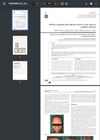
In this study, the authors emphasize the importance of accurately diagnosing congenital atrichia with papules—a condition marked by hair loss and papular skin lesions—differentiating it from other similar disorders to prevent unnecessary treatments and inform families about its benign but irreversible nature.
 September 2023 in “International journal of science and healthcare research”
 In this report, a preterm neonate was found to have total irreversible hair loss due to congenital atrichia, confirmed by a mutation in the human hairless gene on chromosome 8p22, illustrating this rare autosomal recessive disorder.