 April 2026 in “International Journal for Research in Applied Science and Engineering Technology”
 In this study, the developed polyherbal shampoo with Hibiscus rosa-sinensis exhibited good stability and cleansing properties, suggesting it may be an effective natural alternative to synthetic anti-hair fall products.
 May 2026 in “Zenodo (CERN European Organization for Nuclear Research)”
 This study found that the polyherbal anti-dandruff shampoo formulated from medicinal plants like Azadirachta indica and Hibiscus rosa-sinensis demonstrated significant antioxidant and antimicrobial activities, including effects against dandruff-causing microorganisms, suggesting it could be a natural alternative to synthetic shampoos.
This review highlights the therapeutic potential of Hibiscus rosa-sinensis, detailing its significant medicinal value for treating various conditions such as wounds, infections, and diabetes, attributed primarily to its bioactive compounds like flavonoids and tannins.
 May 2026 in “Zenodo (CERN European Organization for Nuclear Research)”
 In this study, researchers developed a polyherbal antidandruff shampoo using medicinal plant extracts and found it exhibited significant antioxidant and antimicrobial properties, including activity against bacteria and fungi linked to scalp infections, suggesting it as a natural alternative to synthetic shampoos.
 April 2026 in “Zenodo (CERN European Organization for Nuclear Research)”
 This review outlines the medicinal uses, phytochemistry, and pharmacology of Hibiscus rosa sinensis, noting its wide-ranging effects like anti-inflammatory and antioxidant properties, but also calls for more research on its safety and precise mechanisms given some extracts affect hematological and biochemical markers.
 March 2026 in “Zenodo (CERN European Organization for Nuclear Research)”
 This review article outlines the various pharmacological and therapeutic benefits of Hibiscus rosa sinensis, noting its use in treating a multitude of ailments such as inflammation, diabetes, and infections, with bioactive substances like flavonoids and alkaloids being key to its efficacy.
11 citations
,
April 2017 in “Scholar Science Journals - International Journal of Biomedical Research” The researchers reported that a hydroalcoholic extract of Hibiscus Rosa Sinensis flowers was more effective than glibenclamide in reducing blood sugar levels in alloxan-induced diabetic rabbits, and demonstrated superior antioxidative and lipid-lowering effects, suggesting potential as an alternative antidiabetic treatment.
 July 2026 in “Journal of Medicinal Plants Studies”
 In this study, methanolic extracts of Hibiscus rosa-sinensis showed higher phenolic and flavonoid content, as well as greater concentrations of gallic acid and quercetin, than aqueous extracts, despite the latter yielding more extract, highlighting the effectiveness of methanol for extracting bioactive phytochemicals.
 25 citations
,
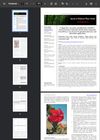
July 2017 in “Archives of Dermatological Research”
25 citations
,
July 2017 in “Archives of Dermatological Research” This review summarizes preclinical and clinical information on herbal products for hair loss treatment, highlighting their mechanisms, follicular penetration, and potential side effects, suggesting they may offer alternatives to synthetic drugs with fewer side effects.
June 2026 in “International Journal of Innovative Science and Research Technology (IJISRT)” This review explores both traditional Ayurvedic uses and modern scientific findings on Japa Pushpa (Hibiscus rosa-sinensis), suggesting it may benefit cardiovascular health and metabolic balance as a herbal tea, but emphasizes the need for further clinical validation.
 June 2025 in “Research Journal of Pharmacy and Technology”
 In this study, researchers developed a herbal hair oil formulation using various herbs and oils designed to counteract greying, promote hair growth, and reduce dandruff, finding that the formulation met standard values for organoleptic characteristics, grittiness, sensitivity, pH, and viscosity.
 October 2022 in “International Journal For Multidisciplinary Research”
 This review summarizes Hibiscus rosa Sinensis's phytochemistry, pharmacology, and medicinal uses, noting various beneficial effects and the need for further research on its phytochemicals and clinical applications.
 July 2023 in “Journal of the Mexican chemical society”
 This study found that Hibiscus rosa-sinensis dried leaves extract displayed the strongest pancreatic lipase inhibitory activity among 37 tested plant extracts, showing potential as an anti-obesity agent with effects comparable to the pharmaceutical drug orlistat in reducing plasma triacylglycerol levels in rats.
10 citations
,
January 2013 in “International Journal of Research in Pharmaceutical Sciences” This study found that a microemulsion containing extracts of Hibiscus rosa sinensis and Murraya koenigii was non-irritating and more effective at controlling hair loss than a standard marketed formulation.
December 2022 in “Zenodo (CERN European Organization for Nuclear Research)” In this study, herbal hair oil formulated from Murraya koenigii, Hibiscus rosasinensis, and Lawsonia inermis showed promising properties such as good pH, acceptable viscosity, and stability at room temperature, suggesting potential for hair growth promotion in future formulations.
19 citations
,
February 2021 in “International Journal of Pharmacognosy and Chemistry” This review discusses the pharmacological and pharmaceutical applications of Hibiscus rosa sinensis but does not report new findings, emphasizing its use as an excipient due to its medicinal properties.
 December 2025 in “Zenodo (CERN European Organization for Nuclear Research)”
 This review outlines the therapeutic uses and phytochemical composition of Hibiscus rosa sinensis, highlighting its potential anti-inflammatory, anti-cancer, and other benefits, but it also calls for more research due to observed changes in hematological and biochemical markers in toxicity tests.
 June 2021 in “Journal of Emerging Technologies and Innovative Research”
 This article discusses the hair nutrition and growth effects of rice water and hibiscus, but reports no clinical results; it aims to understand their role in hair care.
 April 2026 in “Zenodo (CERN European Organization for Nuclear Research)”
 This review discusses the diverse therapeutic properties of Hibiscus rosa sinensis, including anti-inflammatory and anti-cancer effects, and notes that while most extracts showed no toxicity, some altered biological markers, necessitating further research to explore its medicinal potential through clinical trials.
 March 2026 in “Zenodo (CERN European Organization for Nuclear Research)”
 This review summarizes the medicinal properties and bioactive compounds of Hibiscus rosa sinensis, highlighting its various pharmacological uses such as analgesic, anti-inflammatory, and anti-depressant effects based on previous studies conducted on this plant.
4 citations
,
May 2021 in “Research Journal of Science and Technology” This review discusses the therapeutic applications of Hibiscus rosa sinensis and reports no new clinical results; the authors highlight its potential in herbal medicine.
 March 2021 in “Egyptian Journal of Chemistry”
 In this study, researchers analyzed a herbal shampoo containing Momordica charantia extract and Hibiscus Rosa-Sinensis, noting it could support collagen development and hair growth. The shampoo, tailored to various hair and scalp conditions, was confirmed free of certain harmful heavy metals.
1 citations
,
September 2025 in “Plant Science Today” This study reported that an herbal formulation containing aqueous extracts of Hibiscus rosa sinensis and Vitex negundo demonstrated promising antimicrobial, antioxidant, anti-inflammatory, and cytotoxic activities, indicating potential health benefits and applications in managing autoimmune diseases.
This study found that soups with 5% and 10% hibiscus flower were more desirable in sensory attributes and had higher β-carotene content compared to the control soup.
 4 citations
,
January 2016 in “Journal of analytical & bioanalytical techniques”
4 citations
,
January 2016 in “Journal of analytical & bioanalytical techniques” This study evaluated a hair growth gel with Hibiscus rosa sinensis, Eclipta alba, and Solanum nigrum extracts, demonstrating consistent homogeneity, 5 α-reductase inhibitory activity, and no skin irritation.
 1 citations
,
December 2021 in “The Open Dermatology Journal”
1 citations
,
December 2021 in “The Open Dermatology Journal” This study found that a herbal hair oil formulation from various plants showed good hair growth and weight without irritation, suggesting potential for improving hair growth.
 July 2023 in “International journal of life science and pharma research”
 In this study, a herbal hair cream containing extracts from Hibiscus rosa sinensis, Eclipta alba, and Solanum nigrum was developed, showing promising in-vitro inhibition of the 5α-reductase enzyme and potential benefits for alopecia treatment.
 May 2023 in “Advancements in Homeopathic Research”
 This study investigated the effectiveness of a botanical formulation, Zauberӧl®, on testosterone-induced alopecia in Wistar rats, focusing on ingredients such as Arnica montana and Hibiscus Rosa sinensis. Results are not reported in the abstract.
June 2021 in “Zenodo (CERN European Organization for Nuclear Research)” This study evaluated the stability and capillary growth-stimulating activity of emulsions made with natural plant extracts and oils in vivo on guinea pigs, finding that specific hydrophilic/lipophilic balance and globule size contribute to a stable and effective formulation.
 June 2021 in “World Journal Of Advanced Research and Reviews”
 In this study, researchers evaluated emulsions made with natural plant extracts and oils on guinea pigs, finding that a specific hydrophilic/lipophilic balance and globule size led to a stable emulsion and stimulated hair growth.