 September 2019 in “Journal of Investigative Dermatology”
 This study found that the clinical severity of hidradenitis suppurativa, evaluated through Hurley staging, VAS, PGA, and SAHS, significantly affects patients' work absenteeism and presenteeism, with presenteeism being more prevalent.
 July 2024 in “JAAD Case Reports”
 This source reports that while effective treatments for hereditary hypotrichosis simplex have been limited, recent studies show promising results using interventions such as minoxidil, topical gentamicin, and platelet-rich plasma injections.
 October 2024 in “Cermin Dunia Kedokteran”
 This article discusses the surveillance and spread of hand, foot, and mouth disease in China, Singapore, and Indonesia, and reports no new results, emphasizing the need for improved prevention and management strategies.
 November 2022 in “The journal of investigative dermatology/Journal of investigative dermatology”
 This study found that skin organoids derived from iPSCs with an HS-associated NCSTN mutation showed defects in hair follicle stem cell differentiation and increased expression of inflammatory proteins related to hidradenitis suppurativa.
 151 citations
,
December 2004 in “Annals of the New York Academy of Sciences”
151 citations
,
December 2004 in “Annals of the New York Academy of Sciences” This review discusses nonclassical 21-hydroxylase deficiency as the most common autosomal recessive disorder in humans and highlights the effectiveness of glucocorticoid treatment in reversing related symptoms.
4 citations
,
July 2017 in “Journal of Medical Case Reports” This case report highlights a rare presentation of acute lupus hemophagocytic syndrome with initially negative antinuclear antibodies, underscoring the higher sensitivity of the 2012 Systemic Lupus International Collaborating Clinics criteria for diagnosis.
October 2018 in “The American journal of gastroenterology” This case study highlights the importance of early detection and management of pembrolizumab-induced hepatitis, suggesting that early steroid treatment could potentially prevent severe complications.
8 citations
,
June 2001 in “Journal of Biological Chemistry” This study found that the truncated hHb1-DeltaN transcript in breast cancer cells is produced by a cryptic intron promoter and responds to DNA demethylation, potentially altering cancer cell adhesion.
7 citations
,
February 2011 in “Journal of dermatology” This study identified a specific LIPH gene mutation (736T>A) as common in Japanese patients with autosomal recessive woolly hair/hypotrichosis, potentially indicating its role in the condition's manifestation within this population.
11 citations
,
February 2011 in “The Journal of Dermatology” This study observed four consanguineous families with congenital atrichia with papular lesions and identified three novel mutations in the hairless gene, which may contribute to the disorder.
 74 citations
,
September 2006 in “Cell Cycle”
74 citations
,
September 2006 in “Cell Cycle” This review examines the role of Hairless, a nuclear receptor corepressor, in regulating Wnt signaling during hair cycling and reports no new clinical results.
18 citations
,
February 2006 in “Genomics” A new genetic mutation in mice causes permanent hair loss and skin wrinkling.
 32 citations
,
February 1998 in “The journal of investigative dermatology/Journal of investigative dermatology”
32 citations
,
February 1998 in “The journal of investigative dermatology/Journal of investigative dermatology” This study reports the cloning and sequencing of two type II hair-specific keratin genes, ghHb1 and ghHb6, located on chromosome 12q13, which are expressed during hair growth.
 109 citations
,
October 2007 in “American Journal of Human Genetics”
109 citations
,
October 2007 in “American Journal of Human Genetics” This study found that postnatal treatment with recombinant EDA normalized adult teeth, improved sweating, and restored normal lacrimation in dogs with XLHED, suggesting its potential as a treatment for the condition.
8 citations
,
July 2015 in “International Journal of Dermatology” This study reports that a homozygous A1103G mutation in DSG 4 is responsible for localized autosomal recessive hypotrichosis in a 2-year-old Chinese girl, resulting in reduced DSG 4 expression and hair defects.
 January 2024 in “JCEM case reports”
 In this clinical case report, a man with Birt Hogg Dube syndrome presented with parathyroid cancer, the first such case according to the authors, highlighting a potential link between Folliculin gene mutations and parathyroid cancer development.
 3 citations
,
March 2010 in “Dermatologica Sinica”
3 citations
,
March 2010 in “Dermatologica Sinica” This study reports the first case of atrichia with papular lesions in a Taiwanese family without a detectable mutation in the HR gene.
 February 2026 in “Orphanet Journal of Rare Diseases”
 This study identified pathogenic or likely pathogenic gene variants in 70.1% of Russian families affected by hypohidrotic ectodermal dysplasia, expanding knowledge of causative mutations.
September 2026 in “British Journal of Dermatology” This study identified 11 genes associated with non-syndromic hereditary hypotrichosis in a Chinese cohort and proposed a preliminary framework for phenotype-driven candidate-gene prioritization to aid clinical evaluation.
 1 citations
,
August 2011 in “Dermatology Reports”
1 citations
,
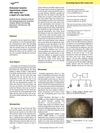
August 2011 in “Dermatology Reports” This case report describes a new family with autosomal recessive hypotrichosis simplex with woolly hair, suggesting the disorder may be underreported due to misdiagnosis.
47 citations
,
February 1998 in “Journal of bone and mineral research” In this study, researchers identified a unique Arg30stop mutation in the vitamin D receptor gene that causes hereditary vitamin D-resistant rickets in a young French-Canadian boy by truncating the receptor and causing hormone resistance.
 April 2019 in “The journal of investigative dermatology/Journal of investigative dermatology”
 This study suggests that HDAC inhibitors, such as Vorinostat and Entinostat, could be effective in promoting hair regrowth in a mouse model of alopecia areata.

This study explores the expression and function of 11β-HSD1 in human hair follicles and its potential regulation of glucocorticoid effects on dermal papilla cells, but reports no definitive findings on 11β-HSD1's role.
 April 2023 in “Journal of Investigative Dermatology”
 This study found that in biopsied skin samples of alopecia areata, a lower anagen/telogen ratio was associated with increased T cell infiltration, and enhancing the PD-1/PD-L1 axis may inhibit CD8+T cell infiltration and improve the condition.
 11 citations
,
September 2010 in “American Journal of Medical Genetics - Part A”
11 citations
,
September 2010 in “American Journal of Medical Genetics - Part A” This study reports a mutation in the U2HR gene causing Marie Unna hereditary hypotrichosis in a Turkish family and notes eyebrow loss as a diagnostic clue.
 January 2026 in “Zenodo (CERN European Organization for Nuclear Research)”
 This paper outlines the chronic inflammatory skin disorder hidradenitis suppurativa, emphasizing its symptomatology, associated systemic diseases, known risk factors, and treatment strategies, including medical and surgical interventions depending on disease severity, while highlighting its significant impact on patients' quality of life.
 April 2024 in “Communications biology”
 The researchers reported that disrupting ATRA signaling by deleting RDHE genes in the hair follicle led to altered hair follicle cycles, composition, and gene expression, indicating RDHEs' role in hair follicle signaling coordination.
33 citations
,
December 1999 in “Journal of Investigative Dermatology Symposium Proceedings”  78 citations
,
October 2020 in “Experimental Dermatology”
78 citations
,
October 2020 in “Experimental Dermatology” This review summarizes 15 years of clinical and experimental research advancements in hidradenitis suppurativa, highlighting its recognition as a uniquely healable inflammatory skin disease but reports no new clinical results.
1 citations
,
May 2007 in “PubMed” This case study of a subfertile couple highlighted the importance of considering haemochromatosis, particularly involving the C282Y mutation of the HFE gene, in patients with endocrine disorders linked to hypogonadism.