7 citations
,
April 2021 in “Journal of Bodywork and Movement Therapies” This editorial reviews the concept of central sensitization and central sensitivity syndromes, discussing their potential role linking various chronic conditions, but it reports no new clinical findings.
 September 1997 in “Journal of The European Academy of Dermatology and Venereology”
 Alopecia linked to higher anxiety and personality disorders.
1 citations
,
March 2019 in “American journal of geriatric psychiatry/The American journal of geriatric psychiatry” This case study highlights the challenges inpatient psychiatric teams face in managing end-of-life care for patients with advanced Alzheimer's, particularly in honoring DNR/DNI orders and coordinating hospice transfers.
 1 citations
,
May 2010 in “Nursing Standard”
1 citations
,
May 2010 in “Nursing Standard” Treatments for autoimmune hair loss have limited success and patients need emotional support and self-acceptance.
47 citations
,
September 1995 in “British Journal of Dermatology” This review discusses the complication of vitiligo in patients undergoing diphencyprone sensitization therapy for alopecia universalis and reports no new clinical findings.
 June 2021 in “Reactions Weekly”
 Finasteride caused serious side effects and led to six suicides.
This study explored how men's perceived height and androgenetic alopecia affect social and personality impressions, reporting a potential "attractiveness malus" but noting limitations due to an older dataset, selective sample, and cultural homogeneity among raters.
2 citations
,
October 2015 in “The Journal of Dermatology” This article is a letter to the editor discussing a case of extensive cicatricial alopecia in a patient with long-term trichotillomania and reports no new research findings.
 3 citations
,
March 2014 in “Annals of Hepatology”
3 citations
,
March 2014 in “Annals of Hepatology” This case report describes irreversible alopecia universalis following discontinuation of Peg-IFN/RBV treatment for chronic hepatitis C, highlighting potential autoimmune side effects of interferon-based therapies.
 October 2025 in “Zenodo (CERN European Organization for Nuclear Research)”
 This study found that both alopecia areata and androgenetic alopecia moderately impacted patients' quality of life, affecting not only physiological but also emotional and social aspects.
 May 1991 in “Current problems in dermatology”
 This article reviews the relationship between the skin and the immune system and discusses how skin manifestations can indicate immunodeficiencies but reports no new research findings.
1 citations
,
January 2019 in “Indian Journal of Public Health Research and Development” This study found that androgenic alopecia significantly impairs quality of life among adults, with higher impairment observed in males and those who are employed.
July 2025 in “Malaysian Journal of Medicine and Health Sciences” This study found that individuals with alopecia areata in Malaysian tertiary hospitals who are unmarried and have diabetes are more likely to experience a poorer quality of life, based on their Dermatology Life Quality Index scores.
January 2013 in “대한피부과학회지” This article presents a rare case of cicatricial alopecia in a 59-year-old woman after using the epidermal growth factor receptor inhibitor gefitinib.
January 2016 in “Journal of Dr Behcet Uz Children s Hospital” This study examined family functioning, psychopathology, and quality of life in children and adolescents with alopecia areata, analyzing their relationships with sociodemographic and disease-related variables.
In this study, researchers found that acne, melasma, vitiligo, and atopic dermatitis significantly impact anxiety, depression, loneliness, and quality of life, while alopecia does not have a significant effect.
 6 citations
,
June 2021 in “Journal of health psychology”
6 citations
,
June 2021 in “Journal of health psychology” This review found that commercial influences may affect how male baldness is represented as a disease and how treatment options are presented, often omitting limitations.
46 citations
,
April 1971 in “American Journal of Clinical Nutrition” Lack of protein causes hair root damage, but it can be reversed by eating protein again.
 March 2026 in “Frontiers in Medicine”
 This study provides a framework for understanding different types of alopecias based on immune privilege collapse at specific follicular sites, revealing distinct patterns in immune effector programs and stromal influences depending on the alopecia type.
7 citations
,
May 2007 in “Nutrition Journal” This study found that due to variability in measurements, hair pluckability is not a reliable indicator of adult nutritional status, although it may hold potential in certain emergency situations if improved for consistency.
 15 citations
,
January 2010 in “Experimental Dermatology”
15 citations
,
January 2010 in “Experimental Dermatology” This study found that maternal iron-restricted diets increased alopecia incidence in IL-10-deficient mouse pups with mast cells, implicating mast cells as potential effectors in this process.
May 2022 in “Counseling And Psychological Services Dissertations (Georgia State University)” This study explored how chronic hair pulling behavior serves as a coping mechanism among African American women, particularly through the lens of eroticism, but reports on narratives rather than clinical results.
May 2024 in “International journal of medicine and psychology.” In this study, researchers examined the relationship between stress resistance and coping strategies in 87 operational law enforcement officers, finding a positive correlation with "Active coping" and negative correlations with strategies like "Mental withdrawal" and "Denial," which may inform programs to enhance stress resistance.
June 2014 in “Reactions Weekly” Finasteride can cause muscle weakness and eye movement issues, even at low doses.
 5 citations
,
December 2012 in “Journal of Dermatology”
5 citations
,
December 2012 in “Journal of Dermatology” This letter reports on the impact wigs may have on the perceived quality of life in patients with androgenetic alopecia.
 September 2018 in “International Journal of Dermatology”
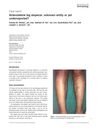
 This case report about anterolateral leg alopecia discusses a potentially underreported condition with no new clinical results available.
July 2018 in “IP Indian Journal of Clinical and Experimental Dermatology” In this study, hair changes like diffuse alopecia and anagen effluvium were common among cancer patients undergoing chemotherapy, highlighting the need for prior counselling to reduce patient anxiety.
 58 citations
,
September 1991 in “British Journal of Dermatology”
58 citations
,
September 1991 in “British Journal of Dermatology” This study found that women with androgenetic alopecia reported more psychosocial problems and lower self-esteem than women with non-visible skin conditions and men with androgenetic alopecia, which they attributed to their hair loss.
January 2012 in “Human health handbooks” This article reviews hair loss in elderly women, discussing common forms, diagnostic challenges, and the limited effectiveness of current treatments, but presents no new clinical findings.
 4 citations
,
May 2006 in “médecine/sciences”
4 citations
,
May 2006 in “médecine/sciences” This study suggests that the hairless gene encodes a nuclear factor important for hair follicle integrity, and its absence leads to hair follicle loss and defects in tissue development.