 July 2024 in “Dermatology Practical & Conceptual”
 This article discusses the diagnostic challenges between certain neonatal scalp conditions and highlights the potential of line-field confocal optical coherence tomography to provide detailed, non-invasive skin examination, without presenting new clinical findings.
 July 2024 in “International Journal of Dermatology Venereology and Leprosy Sciences”
 This review highlights the increasing use of trichoscopy, a noninvasive and well-tolerated diagnostic tool, to aid in the accurate diagnosis and management of various pediatric hair and scalp conditions, such as alopecia and other abnormalities.
 March 2024 in “IP Indian journal of clinical and experimental dermatology”
 This case report highlighted the rarity and diagnostic challenges of a giant solitary trichoepithelioma occurring on the neck, noting that while typically benign, these tumors can rarely transform malignantly into basal cell carcinoma.
 January 2023 in “Pediatric Endocrinology Diabetes and Metabolism”
 This review discusses current knowledge of isolated premature pubarche in infants and reports no new findings, highlighting it as a mild, self-limiting condition that necessitates exclusion of serious causes.
 September 2022 in “TURKDERM”
 This article reports an unprecedented case of trichofolliculoma in the gluteal area, previously unreported in English literature.
 August 2020 in “Nigerian journal of paediatrics”
 This case report describes a 24-month-old girl from Nigeria with idiopathic precocious puberty, emphasizing the financial barriers to necessary treatment in developing countries.
 May 2020 in “Research Square (Research Square)”
 This study found that trichilemmal carcinoma shares genetic changes with other skin cancers, suggesting a similar pathogenesis, particularly in those with aggressive clinical courses linked to TP53 mutations.
 April 2020 in “Research Square (Research Square)”
 This study reported genetic mutations in trichilemmal carcinoma similar to those found in other skin cancers, including TP53 mutations associated with aggressive disease.
 December 2018 in “Neuroradiology”
 MRI helps distinguish between pituitary adenomas and craniopharyngiomas, guides treatment for pediatric CNS tumors, and assesses rhinocerebral mucormycosis with a high mortality rate in transplanted patients.
 April 2018 in “The journal of investigative dermatology/Journal of investigative dermatology”
 This study found that electrical epilation in organ-cultured human scalp skin perturbs hair follicles by causing inflammation, impairing melanin production, and possibly inhibiting post-epilation hair re-growth.
 April 2018 in “Journal of Investigative Dermatology”
 This study identified the osteopontin-derived peptide, FOL-005, as a potential inhibitor of unwanted human hair growth by promoting catagen development without reducing stem cell numbers or showing toxicity.
 April 2018 in “The journal of investigative dermatology/Journal of investigative dermatology”
 This study observed that in an ex vivo setting, 17β-estradiol increased CB1 expression in human hair follicles, suggesting possible sensitivity to endocannabinoids and a potential mechanism for hair therapy.
 April 2018 in “The journal of investigative dermatology/Journal of investigative dermatology”
 The authors concluded that Lrig1-positive stem cells are essential for sebaceous gland formation in mice, as their ablation led to temporary sebaceous gland disappearance without affecting hair growth.

In this study, botulinum toxin type A injections reduced the severity of treatment-resistant scalp psoriasis in more patients compared to placebo over a 12-week period.
 November 2017 in “International journal of research in dermatology”
 This case report describes a rare instance of nevus comedonicus with a multi-dermatomal unilateral pattern along the lines of Blaschko, treated unsuccessfully with topical tretinoin and oral retinoids.
 September 2017 in “Pediatric Dermatology”
 The document concludes that an experimental drug may help wound healing in Epidermolysis Bullosa, links Hydroa vacciniforme to EBV, discusses diagnosing hair loss disorders, finds many children with eczema have allergies, reviews the safety of a skin medication in children, notes side effects of a Duchenne's treatment, and identifies a marker for pediatric mastocytosis.
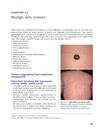
This chapter classifies various benign skin tumors and discusses their characteristics, treatment indications, and potential for recurrence, but reports no new clinical findings.
 December 2016 in “British Journal of Dermatology”
 The meeting highlighted the importance of genetic testing and multidisciplinary approaches in pediatric dermatology.
 July 2016 in “American Journal of Dermatopathology”
 The meeting showcased rare skin disease cases, highlighting the need for accurate diagnosis and treatment.
 February 2015 in “Dermatologic Surgery”
 This article discusses various affiliations of the authors with no reference to new research findings.
 January 2015 in “Dermatology”
 The document covers various dermatological treatments and conditions.
 January 2014 in “Pathology”
 The document concludes that understanding nail anatomy is key for diagnosing nail diseases, early signs of nail melanoma may allow for less aggressive treatment, and specific genetic mutations are important in thyroid cancer prognosis and treatment.
 January 2014 in “Pathology”
 Non-scarring hair loss can be diagnosed with two 4mm punch biopsies, one cut vertically and the other transversely.
 January 2014 in “Pathology”
 RET mutation is important in familial medullary thyroid carcinoma, and BRAF mutation in papillary thyroid carcinoma is linked to more aggressive cancer and higher death rates.
 January 2014 in “Pathology”
 Early subungual melanoma might be treated with less aggressive surgery because it invades the skin under the nail more slowly.

This study evaluated the accuracy of the HairCheck device, a cross-section trichometer, and concluded that it effectively measures changes in hair diameter and density for assessing alopecia progression and treatment response.
 February 2013 in “Journal of the American Academy of Dermatology”
 This study found that certain polymorphisms in EGF and EGFR genes may increase susceptibility to alopecia areata in the Korean population, and these genetic variations could be associated with specific symptoms such as nail involvement and body hair loss.
 February 2013 in “Journal of the American Academy of Dermatology”
 In this study, the HairCheck device was reported to accurately assess changes in hair density and diameter, suggesting its usefulness in monitoring alopecia progression and treatment response.
 September 2009 in “Pediatric Dermatology”
 This meeting abstract volume for the Society for Pediatric Dermatology reports no new clinical results.
 January 1998 in “Lasers in Surgery and Medicine”
 This study found that both 5-ALA and Photofrin can effectively destroy human microvascular endothelial cells in vitro and cause tissue necrosis in vivo, with Photofrin showing greater efficacy at lower concentrations or power densities.