 45 citations
,
February 2001 in “Joint bone spine”
45 citations
,
February 2001 in “Joint bone spine” This study found that Turner’s syndrome is associated with significant bone mass decrease due to estrogen deficiency, which can be improved with estrogen therapy, while bone issues in Klinefelter’s syndrome may benefit from early androgen therapy and possibly bisphosphonates.
 9 citations
,
January 1997 in “Endocrine Journal”
9 citations
,
January 1997 in “Endocrine Journal” This study found a significant association between patients' sex of rearing and external genitalia in those with gonadal dysgenesis, while noting lower testosterone levels compared to controls.
26 citations
,
March 1981 in “Clinical Endocrinology” In this study, researchers found that oestrogen did not increase adrenal androgen secretion in children with premature adrenarche or in adolescents with gonadal dysgenesis undergoing oestrogen replacement therapy.
9 citations
,
November 2014 in “Indian Journal of Endocrinology and Metabolism” This case report describes a young female with a rare combination of 46,XX gonadal dysgenesis and MRKH syndrome, highlighting associated infertility challenges.
1 citations
,
September 2023 in “International Journal of Women’s Dermatology” This article discusses the teratogenic risks of skin condition treatments for individuals with DSD and notes that testosterone replacement, often used in this population, may cause acne.
 48 citations
,
February 2013 in “Molecular and Cellular Endocrinology”
48 citations
,
February 2013 in “Molecular and Cellular Endocrinology” This review discusses the presence of the StAR protein in 17 non-classical steroidogenic tissues, suggesting that advanced detection methods are needed for a complete understanding of its functions in these tissues.
13 citations
,
June 2024 in “Frontiers in Genetics” This review examined genetic factors in 46, XY differences/disorders of sex development and found that whole-exome sequencing is more effective than panel sequencing for molecular diagnosis. It identified regional genetic variation and emphasized next-generation sequencing's role in detecting variants related to gonadal and androgen-related genes.
 9 citations
,
October 2017 in “Translational pediatrics”
9 citations
,
October 2017 in “Translational pediatrics” This review examines the skin manifestations of various endocrine disorders, highlighting their underlying pathophysiology and impact on an individual's health and quality of life, without reporting new research findings.
 September 2021 in “Physiology News”
 This abstract provides template specifications for design materials but reports no new research findings.
4 citations
,
January 2023 in “Andrology” This review discusses the structure and function of the testes in male reproduction and development, noting the complex hormonal regulation within the hypothalamic-pituitary-gonadal axis but reports no new clinical results.
 November 2013 in “John Wiley & Sons, Ltd eBooks”
 The document concludes that accurate diagnosis of male and female gonadal disorders is crucial for effective treatment and better patient outcomes.
 July 2021 in “Advances in laboratory medicine”
 This article reviews differential diagnosis approaches for 46,XY DSD, proposing a diagnostic algorithm focused on biochemical and genetic data, without presenting new clinical results.
13 citations
,
July 2012 in “International Journal of Trichology” In this study, the varied phenotype of trichothiodystrophy was highlighted, with findings of distinctive hair shaft abnormalities and a wide range of multisystem issues, including neurologic and urologic disorders.
 2 citations
,
August 2020 in “JCRPE”
2 citations
,
August 2020 in “JCRPE” This case report describes a girl with Denys-Drash syndrome misdiagnosed with hyperandrogenism due to biotin interference in immunoassays, highlighting the need for awareness of laboratory result discrepancies.
 November 2022 in “Journal of the Endocrine Society”
 This case report highlights a novel NR5A1 gene variant associated with a severe 46,XY disorder of sex development, stressing the importance of genetic screening in similar cases.

This book reviews evidence-based medicine practices in obstetrics and gynecology but reports no new clinical findings.
 2 citations
,
July 2016 in “Pharmacopsychiatry”
2 citations
,
July 2016 in “Pharmacopsychiatry” This case report describes a non-mosaic Turner-Syndrome individual with global cerebral atrophy, significant cognitive impairment, and severe treatment-resistant schizophrenia.
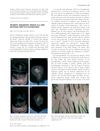 July 2011 in “British Journal of Dermatology”
 Hormone treatment caused hair loss, finasteride helped regrowth.
 78 citations
,
November 2008 in “Fertility and Sterility”
78 citations
,
November 2008 in “Fertility and Sterility” Amenorrhea is relatively rare and initial testing should check FSH, TSH, and prolactin levels.
 38 citations
,
October 2006 in “Fertility and Sterility”
38 citations
,
October 2006 in “Fertility and Sterility” The document concludes that identifying the cause of amenorrhea is crucial for proper treatment.
 35 citations
,
May 2022 in “Baillière's best practice and research in clinical endocrinology and metabolism/Baillière's best practice & research. Clinical endocrinology & metabolism”
35 citations
,
May 2022 in “Baillière's best practice and research in clinical endocrinology and metabolism/Baillière's best practice & research. Clinical endocrinology & metabolism” This review discusses the current understanding of androgen biosynthesis, mechanisms of action, and their roles in human biology, as well as related congenital and acquired disorders, but it reports no new research findings.
 30 citations
,
July 2004 in “Fertility and Sterility”
30 citations
,
July 2004 in “Fertility and Sterility” Amenorrhea is when a woman doesn't have periods, with primary amenorrhea starting by age 15 or within five years of breast development, and secondary amenorrhea when periods stop for three months. It affects 3-4% of women not pregnant, breastfeeding, or in menopause, mainly due to polycystic ovary syndrome, hypothalamic amenorrhea, hyperprolactinemia, and ovarian failure.
 21 citations
,
September 2004 in “Fertility and Sterility”
21 citations
,
September 2004 in “Fertility and Sterility” Amenorrhea, or the absence of periods, should be evaluated by age 15 or within five years of early breast development, and is most commonly caused by conditions like polycystic ovary syndrome and hypothalamic amenorrhea.
 2 citations
,
January 2015 in “Springer eBooks”
2 citations
,
January 2015 in “Springer eBooks” Environmental factors and exposure to toxins may contribute to male infertility by affecting sperm and hormone function.
 1 citations
,
February 2022 in “Online journal of biological sciences”
1 citations
,
February 2022 in “Online journal of biological sciences” This article reviews the congenital disorder aphallia, describing its rarity, clinical characteristics, and the normal hormonal and chromosomal profiles of affected individuals, but does not report new research findings.
 April 2020 in “Journal of the Endocrine Society”
 This case report emphasizes the importance of early diagnosis of Swyer Syndrome in adolescents with slow pubertal progression and primary amenorrhea due to the high risk of germ cell cancers.
 November 2016 in “Elsevier eBooks”
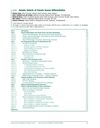
 This chapter reviews genetic defects in female sexual differentiation, focusing on 46,XX disorders of sex development and the impact of genetic factors and sex steroids on development, but reports no new clinical findings.
 February 2010 in “ePrints Soton (University of Southampton)”
 This research found that androgen bioactivity plays a role in normal female sexual differentiation, suggesting females develop within a significant androgenic environment, with implications for understanding conditions like congenital adrenal hyperplasia.
 45 citations
,
April 2018 in “Nature Reviews Urology”
45 citations
,
April 2018 in “Nature Reviews Urology” This review discusses the molecular mechanisms of masculinization involving androgen signaling and their roles in male embryonic development and conditions like hypospadias and prostate cancer, and reports no clinical results.
 378 citations
,
November 2011 in “Human reproduction update”
378 citations
,
November 2011 in “Human reproduction update” This review discusses the epidemiology, causes, diagnosis, and management of hirsutism in women, noting that effective treatment requires addressing the root cause as well as the hair growth.