 January 2023 in “National journal of physiology, pharmacy and pharmacology”
 This study of South Indian patients with autoimmune rheumatic diseases using low-dose methotrexate reported that while mild adverse effects such as hair loss and nausea were common, serious events like cytopenia were less frequent, and folic acid supplementation significantly reduced their prevalence.

This study concludes that one year after COVID-19 infection, patients in Northeast Brazil showed improvements in quality of life, although some symptoms such as anxiety and memory loss persisted.
 October 2022 in “International Journal For Multidisciplinary Research”
 This review summarizes Hibiscus rosa Sinensis's phytochemistry, pharmacology, and medicinal uses, noting various beneficial effects and the need for further research on its phytochemicals and clinical applications.
 October 2022 in “International journal of pharmaceutical sciences review and research”
 This study compared the antioxidant and antidiabetic activities of Hibiscus rosa-sinensis leaf extract and Eclipta alba bark extract, finding that Hibiscus rosa-sinensis exhibited greater antidiabetic activity, whereas Eclipta alba demonstrated stronger antioxidant activity.

This article discusses the role of dermatologists in providing inclusive and affirming care to LGBT patients, highlighting the importance of familiarizing with their specific health needs and fostering a supportive practice environment; it reports no new clinical results.
 January 2022 in “Journal of Skin and Stem Cell”
 This review discusses trichodynia, its potential causes, and treatment options, but reports no new clinical findings.

This study demonstrated that cryogelation of human hair keratin allows the development of 3D scaffolds with tunable properties, supporting cell adhesion and proliferation for potential biomedical applications.
 December 2021 in “Turkderm”
 This research aims to evaluate the impact of the COVID-19 post-crisis period and normalization process on dermatology practice, suggesting implications for future healthcare challenges; no new results are reported.
This genetic study identified a potential interval for the Marie Unna hypotrichosis gene but found no mutations in the nearby hr gene, suggesting its involvement remains unconfirmed.
 June 2021 in “Asian Journal of Medical Sciences”
 This case study highlights that vitamin B12 deficiency can cause reversible hyperpigmentation, illustrated by a vegetarian female patient whose skin lesions improved after treatment.
 January 2021 in “Erciyes medical journal”
 This study found an increase in certain dermatological conditions like dermatitis and scabies, and a decrease in others such as psoriasis vulgaris and atopic dermatitis during the COVID-19 pandemic compared to the previous year.

This study found that low-intensity light therapy improved quality of life related to emotional, psychosocial, and symptom domains in individuals with androgenic alopecia, with a greater impact observed in women.
 June 2020 in “bioRxiv (Cold Spring Harbor Laboratory)”
 This study found that the HoxC gene cluster is crucial for the development of hair and nails in mice, with key regulation by two mammalian-specific enhancers.
 November 2019 in “Harper's Textbook of Pediatric Dermatology”
 This review discusses potential causes of alopecia and hair overgrowth in pediatric patients, detailing diagnostic techniques and treatments, but presents no new research findings.
 November 2019 in “Harper's Textbook of Pediatric Dermatology”
 This index of Harper's Textbook of Pediatric Dermatology, Fourth Edition, provides no clinical results or new findings.
 January 2019 in “LASER THERAPY”
 Laser technologies improve medical treatments and outcomes.
 November 2018 in “Springer eBooks”
 Children need early diagnosis and treatment for iron-deficiency anemia to prevent learning problems and promote health.
 September 2018 in “Cosmetics”
 This study found that anisotropic osmolyte solutions may improve hair follicle turnover and condition in both in vitro and in silico models, as well as in human volunteers with hair disorders.
 January 2018 in “Stem cells in clinical applications”
 This review discusses the potential of exosomes and the secretome in stem cell-based regenerative therapies but reports no new experimental findings.
 October 2017 in “Springer eBooks”
 A thorough initial check-up is essential before sperm banking to ensure the best chance of preserving good quality sperm.
 April 2017 in “InTech eBooks”
 This review discusses potential mechanisms and treatments for trichodynia, noting a lack of strong literature support and reporting no new clinical results; the authors highlight several hypotheses and available treatment options.
 April 2017 in “Our Dermatology Online”
 This study explored how septuagenarians and octogenarians responded hedonically to natural cosmetics that were marketed as making them feel younger and more attractive, using a simple satisfaction questionnaire.
 January 2017 in “Springer eBooks”
 The document explains various skin conditions and their treatments.
 January 2017 in “Acta dermato-venereologica”
 The congress showed that psychological therapy can help skin condition patients, social media affects acne stigma, education improves atopic dermatitis, and patient satisfaction in dermatology is high, especially with good doctor engagement.
 December 2016 in “Journal of Evolution of Medical and Dental Sciences”
 This case report highlights that inherited zinc deficiency can persist into adulthood and emphasizes the importance of selecting optimal chelating agents to improve oral zinc bioavailability.
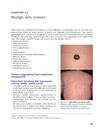
This chapter classifies various benign skin tumors and discusses their characteristics, treatment indications, and potential for recurrence, but reports no new clinical findings.
 January 2016 in “Dermatology Review”
 This review details various skin manifestations linked to different endocrine disorders but does not report any new clinical results.

This study found a direct correlation between IL6 and insulin, glucose, and cholesterol serum levels in patients with oral lichen planus, suggesting a potential increased cardiovascular risk.
 October 2015 in “Elsevier eBooks”
 Aldesleukin can treat certain cancers and increase HIV patient CD4+ counts but often causes severe side effects.
 May 2014 in “Annals of Plastic Surgery”
 The book is highly praised as an essential resource for plastic surgeons, despite minor gaps.