1 citations
,
August 2025 in “JDDG Journal der Deutschen Dermatologischen Gesellschaft” This population-based study found a significant association between alopecia areata and autoimmune thyroid diseases, including Hashimoto's and Graves' disease, confirming a higher prevalence of these conditions in individuals with alopecia areata.
 April 2023 in “Elsevier eBooks”
 This review discusses the potential male equivalent of polycystic ovary syndrome, examining early-onset androgenic alopecia as a marker and current research on risks and diagnostic recommendations, but it reports no new results.
January 2016 in “Hair transplant forum international” This abstract provides a brief introduction to Propecia® (finasteride 1mg) but reports no new research findings.
 16 citations
,
September 2018 in “Clinical Biochemistry”
16 citations
,
September 2018 in “Clinical Biochemistry” This paper discusses the link between polycystic ovarian syndrome (PCOS) and health issues like infertility and cardiovascular diseases, caused by both genetic and environmental factors, but reports no new clinical findings.
 7 citations
,
January 2012 in “International Journal of Trichology”
7 citations
,
January 2012 in “International Journal of Trichology” This article highlights differences in childhood alopecia areata compared to adult cases but reports no new clinical findings.
March 2024 in “International journal of molecular sciences” In this study, researchers identified three pathogenic de novo genetic variants contributing to epidermolysis bullosa simplex in young children, highlighting the complexity of genetic influences and underscoring the need for early genetic screening for accurate diagnosis and effective management.
April 2018 in “Journal of Investigative Dermatology” In this study, researchers found that the NUDT15 R139C gene variant is a significant genetic risk factor for azathioprine-induced severe myelotoxicity in Japanese patients with dermatological conditions, suggesting that screening for this variant may help prevent adverse reactions in East-Asian populations.
6 citations
,
April 2018 in “Transplantation proceedings” This case report describes severe agranulocytosis and alopecia in a Japanese woman after starting azathioprine, highlighting the potential role of NUDT15 genetic screening in preventing adverse reactions to the drug.
 3 citations
,
April 2015 in “AFRICAN JOURNAL OF BIOTECHNOLOGY”
3 citations
,
April 2015 in “AFRICAN JOURNAL OF BIOTECHNOLOGY” This study found that certain Y-chromosome alleles may influence susceptibility to prostate cancer among Iraqi males, suggesting potential genetic screening markers for the disease.
 November 2022 in “Journal of the Endocrine Society”
 This case report highlights a novel NR5A1 gene variant associated with a severe 46,XY disorder of sex development, stressing the importance of genetic screening in similar cases.
 January 2025 in “Case Reports in Medicine”
 In this case study, a diagnosis of HAIR-AN syndrome, a rare form of polycystic ovarian syndrome, was made in a 17-year-old female with hyperandrogenism, insulin resistance, and acanthosis nigricans, but genetic screening revealed no significant mutations linked to her symptoms.
8 citations
,
December 2019 in “Molecular genetics and metabolism reports” This study found that early biochemical screening and molecular confirmation are crucial for distinguishing profound from partial biotinidase deficiency, which supports timely treatment and management in symptomatic children.
6 citations
,
August 2024 in “BMC Ophthalmology” This study identified multiple genetic variants in Pakistani families with oculocutaneous albinism, including two novel variants, enhancing understanding of its genetic basis and aiding better management and counseling.
 October 2025 in “Frontiers in Molecular Biosciences”
 This source critically examines Bruce Ames's influential contributions to biochemistry, particularly his theories on oxidative stress and mitochondrial DNA damage in aging, while acknowledging current challenges to his work and highlighting his lasting impact on the fields of mutagen screening and public health.
153 citations
,
June 2015 in “GenomeBiology.com” This study found that both genome-wide screening methods identified the VTRNA2-1 epiallele as highly responsive to environmental influences, suggesting a link between early embryonic environment, epigenetic changes, and human disease.
 12 citations
,
February 2023 in “Journal of Personalized Medicine”
12 citations
,
February 2023 in “Journal of Personalized Medicine” This review discusses the complex interplay of genetic and environmental factors in Type 1 Diabetes Mellitus and its frequent association with other autoimmune conditions, focusing on personalized medicine to potentially improve patient care.
 10 citations
,
April 2020 in “Clinics in Dermatology”
10 citations
,
April 2020 in “Clinics in Dermatology” This case report describes a girl in China with biotinidase deficiency confirmed by genetic mutations, whose skin and hair symptoms improved with biotin therapy.
 May 2025 in “Journal of the ASEAN Federation of Endocrine Societies”
 This case report discusses a patient with VHL-associated paraganglioma, highlighting the importance of genetic testing and monitoring in those with VHL disease, due to high mutation penetrance and associated risks.
January 2021 in “Digital Commons - PCOM (Philadelphia College of Osteopathic Medicine)” This review discusses recent findings related to sebaceous gland conditions, including updated recommendations for screening in sebaceous neoplasms and potential treatments for acne vulgaris, though no new definitive clinical results are reported.
 117 citations
,
May 2017 in “Human Reproduction Update”
117 citations
,
May 2017 in “Human Reproduction Update” This review examines the epidemiology, pathophysiology, diagnosis, and management strategies for non-classic congenital hyperplasia due to 21-hydroxylase deficiency, and provides evidence-based recommendations for its treatment and genetic counseling.
5 citations
,
December 2014 in “Molecular cytogenetics” This study identified a 290 Kb microduplication in chromosome 1q22 in a family with members exhibiting neurodevelopmental disorders, suggesting a link between this genetic alteration and the observed neurological symptoms.
 2 citations
,
April 2013 in “Expert Review of Endocrinology & Metabolism”
2 citations
,
April 2013 in “Expert Review of Endocrinology & Metabolism” This review discusses the challenges in diagnosing different causes of adult androgen excess and outlines current screening and management strategies but reports no new findings.
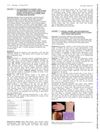
This case report details a child with a specific TNFAIP3 mutation manifesting as a severe SLE/SS phenotype, expanding the known phenotype for this genetic variant.
4 citations
,
February 2025 in “Journal of Autoimmunity” This systematic review and meta-analysis reports a significant familial risk of autoimmune and related conditions among relatives of individuals with Alopecia Areata, highlighting the importance of comprehensive family monitoring and genetic counseling.
 124 citations
,
August 1990 in “British Journal of Dermatology”
124 citations
,
August 1990 in “British Journal of Dermatology” Diffuse alopecia in women may be related to androgens and iron deficiency, and basic hormone and nutrient screening is useful.
 28 citations
,
November 2014 in “Current Diabetes Reports”
28 citations
,
November 2014 in “Current Diabetes Reports” This review discusses the complex links between polycystic ovary syndrome, insulin resistance, and potential metabolic risks starting in adolescence, noting the need for early screening and treatment but reports no new clinical results.
7 citations
,
September 2013 in “Familial cancer” This review discusses recent insights into Birt–Hogg–Dube syndrome, including the functions of the FLCN gene and clinical recommendations for screening and treatment, but it reports no new experimental results.
1 citations
,
May 2025 in “Journal of Cosmetic Dermatology” This study established a causal link between plasma metabolism and alopecia areata, providing insights into the disorder's mechanisms and suggesting directions for future screening and prevention strategies.
 December 2025 in “Çukurova medical journal (Online)/Çukurova medical journal”
 In this retrospective review, increased frequencies of certain HLA-DRB1 alleles and low vitamin D3 levels were observed in men with androgenetic alopecia, suggesting an association with immunogenetic factors and potential relevance for screening and treatment decisions.
March 2026 in “PubMed Central” This study reports that the prevalence of female pattern hair loss increases with age, affecting 12% of women by age 29, 25% by age 50, and 41% to 50% by age 70 and older, with risk factors including genetics and certain endocrinological conditions.