37 citations
,
December 2020 in “PLANT PHYSIOLOGY” In this study, the researchers identified a temperature-sensitive mutant in Arabidopsis thaliana, showing disrupted root hair formation and altered responses to plant hormone treatments at elevated temperatures.
52 citations
,
April 2000 in “International Journal of Dermatology” In this study of tinea capitis in Benghazi, Libya, the most common form identified was the gray patch type, with Trichophyton violaceum being the predominant causative agent.
January 2016 in “Dermatology online journal” This case report describes an adolescent female with a linear array of trichoepitheliomas on her left neck, highlighting the clinical presentation of this benign tumor.
 1 citations
,
July 2021 in “Aesthetic Plastic Surgery”
1 citations
,
July 2021 in “Aesthetic Plastic Surgery” This study concluded that a triangular flag-shaped incision design in hair transplantation achieved better hair alignment compared to the common elliptical incision, particularly in patients with specific hair directions.
352 citations
,
August 2003 in “Proceedings of the National Academy of Sciences” In this study, nestin-expressing cells in the hair follicle bulge, marked by GFP in transgenic mice, were identified as progenitors of the hair follicle outer-root sheath.
 September 2020 in “Revista da Sociedade Portuguesa de Dermatologia e Venereologia”
 This review discusses fibrosing alopecia in a pattern distribution, noting its trichoscopic and histopathological features, and emphasizes the importance for dermatologists to recognize and treat it early to prevent irreversible follicular damage.
 March 2025 in “American Journal of Medical Genetics Part A”
 In this study, researchers found that mosaic PLCD1 hotspot variants, even without the recognized germline "risk allele," may be a rare but significant genetic cause of nevus trichilemmocysticus, warranting DNA testing and sensitive sequencing technologies for accurate diagnosis.
419 citations
,
March 2005 in “Proceedings of the National Academy of Sciences” This study demonstrated that ND-GFP stem cells from the hair-follicle bulge area can differentiate into various cell types, including neurons, suggesting their potential as a source for therapeutic applications.
 April 2017 in “Journal of Investigative Dermatology”
 In this study, the authors concluded that the TS-associated polyomavirus may disrupt Wnt/β-catenin signaling, likely contributing to abnormal hair follicle formation in trichodysplasia spinulosa.
 July 1999 in “Hair transplant forum international”
 This article discusses the ongoing debate between exclusive follicular unit grafting and combination mini-/micrografts in hair restoration, but reports no new findings and suggests the controversy will persist.
This study suggests that the growth arrest of nevus melanocytes is not due to oncogene-induced senescence but rather to collective cell interactions, similar to those in normal tissue size regulation.
 January 2016 in “Hair transplant forum international”
 This case report details a post-surgical complication of Trigeminal Neuralgia in a patient following hair restoration surgery, which the author has not seen previously documented.
1 citations
,
December 2022 in “Skin Appendage Disorders” This review highlights that trichofolliculomas can resemble certain skin cancers, emphasizing the importance of recognizing their clinical features to avoid unnecessary surgery; it reports no new clinical results.
April 2023 in “Journal of The American Academy of Dermatology” This letter discusses findings from an article by Sun et al. showing that neodymium doped yttrium aluminum garnet laser effectively treats prominent facial vasculature in patients with frontal fibrosing alopecia, but highlights concerns about the risk of iatrogenic scarring and suggests caution with treatment frequency.
 May 2022 in “Journal of Cosmetic Dermatology”
 This review discusses the characteristics and diagnostic challenges of fibrosing alopecia pattern distribution, proposing an algorithm for hair transplantation, but reports no new clinical results.
 12 citations
,
June 2006 in “Anais Brasileiros de Dermatologia”
12 citations
,
June 2006 in “Anais Brasileiros de Dermatologia” This study reports that scalp biopsies in white adults usually have 16.5 hair follicles, primarily in the anagen phase, with male samples showing fewer follicular units but more fibrous tracts in certain areas.
 39 citations
,
July 2015 in “British Journal of Dermatology”
39 citations
,
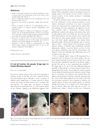
July 2015 in “British Journal of Dermatology” This article discusses the pseudo 'fringe sign' in frontal fibrosing alopecia, highlighting that it is not solely related to traction, and it reports no new clinical results.
5 citations
,
June 2024 in “Pharmacological Research” This study identified neuropilin-1 as the receptor for FOL-026 and showed that it stimulates angiogenesis and cell growth, suggesting potential for vascular repair and enhanced angiogenesis therapies.
 1 citations
,
January 2014 in “Archives of Aesthetic Plastic Surgery”
1 citations
,
January 2014 in “Archives of Aesthetic Plastic Surgery” This study found that follicular unit extraction for Asian female hairline surgery produced satisfactory aesthetic results without leaving a linear scar, contrary to some surgeons' beliefs about its limitations.
12 citations
,
August 1988 in “Histopathology” This case report describes a giant pigmented tumor of the scalp in a 47-year-old woman and suggests a possible dual origin involving neural crest differentiation.
1 citations
,
December 2012 in “Journal of dermatological science” This study introduces ficlatuzumab, an anti-HGF monoclonal antibody, in combination with gefitinib in a phase 2 trial to address EGFR TKI resistance in Asian NSCLC patients.
This study found that WISP-1 plays a key role in ligamentum flavum fibrosis through the Hedgehog-Gli1 pathway, with cyclopamine showing potential to reduce fibrosis effects in a rabbit model.
 January 2021 in “Hair transplant forum international”
 This article describes a new T-Fast multi-implanter that potentially reduces operating costs and surgical time by implanting two follicular unit excision grafts simultaneously, which may encourage clinics to adopt this technique.
 1 citations
,
January 2021 in “Journal of biological chemistry/The Journal of biological chemistry”
1 citations
,
January 2021 in “Journal of biological chemistry/The Journal of biological chemistry” This study found that loss of the folliculin protein delays transferrin receptor recycling, leading to iron deficiency and suggesting a role in the mechanisms of Birt-Hogg-Dubé syndrome.
May 2018 in “The journal of immunology/The Journal of immunology” This study identified that patients with compound heterozygous mutations in FOXN1 exhibited severe T-cell lymphopenia but retained normal hair and nail development, indicating a distinct clinical phenotype from classic FOXN1 cases.
 32 citations
,
May 2012 in “PloS one”
32 citations
,
May 2012 in “PloS one” This study found that despite the persistence of aberrant double-negative T-cells, functional immune-competence was maintained after thymic transplantation in a patient with a rare FOXN1 mutation.
1 citations
,
August 2024 in “Pediatric Dermatology” In this report, researchers describe an unusual case of congenital pili multigemini, a hair follicle disorder, presenting on the eyebrow of a female infant, highlighting its rarity and atypical location.
10 citations
,
October 2009 in “Photomedicine and laser surgery” This study found that intense pulsed light treatment achieved a mean of 85% hair reduction in two patients with faun tail, although local anesthesia may be needed due to severe pain associated with neurological abnormalities.
May 2019 in “CINECA IRIS Institutial Research Information System (University of Genoa)” This study found that patients with the MITF p.E318K variant are more likely to develop multiple primary melanomas and dysplastic nevi with uncommon dermoscopic patterns compared to non-carriers.