25 citations
,
April 2017 in “PloS one” In this study, specific SNPs in the FST gene were significantly associated with various wool quality traits in Chinese Merino sheep, suggesting potential markers for breeding programs.
 February 2025 in “Ciencia Latina Revista Científica Multidisciplinar”
 This in-silico study found that Finasteride interferes with neurotransmitters and may increase psychopathology when it decomposes into a carboxylic acid similar to Cortisol.
 9 citations
,
May 2021 in “International Journal of Dermatology”
9 citations
,
May 2021 in “International Journal of Dermatology” In this study, sublingual tofacitinib achieved a longer estimated half-life than oral administration in treatment-resistant alopecia areata patients, potentially supporting daily dosing; overall treatment response was modest.
 53 citations
,
May 2010 in “Dermatologic Surgery”
53 citations
,
May 2010 in “Dermatologic Surgery” This article appears to be a table of contents or navigation page for a journal, not presenting any new findings or research results.
 November 2024 in “International Society of Hair Restoration Surgery”
 This treatise provides guidelines and suggestions for the safe practice of follicular unit transplantation but reports no new clinical results.
January 2013 in “CINECA IRIS Institutial research information system (University of Pisa)” 1 citations
,
November 2022 in “International journal of trichology” This case report describes a 6-year-old girl with IFAP syndrome who showed good improvement in cutaneous symptoms after one month of acitretin treatment.
3 citations
,
July 2022 in “BMC chemistry” This study introduced and validated new spectrophotometric methods to simultaneously determine finasteride and tadalafil in Entadfi™ capsules with high sensitivity and without interference from excipients.
 9 citations
,
October 2019 in “Dermatologic Therapy”
9 citations
,
October 2019 in “Dermatologic Therapy” This study observed that oral tofacitinib was reasonably well-tolerated but had limited efficacy in treating alopecia areata, with a clinical response seen in 41.4% of patients over six months.
6 citations
,
January 2014 in “Genetics and Molecular Research” This study constructed a hair follicle-specific expression vector for IGFBP-5 in Inner Mongolia Cashmere goat cells, allowing for future functional genetic analyses and potential use in nuclear transfer.
2 citations
,
June 2024 in “Skin Appendage Disorders” This study identifies specific trichoscopic features such as empty follicles and perifollicular erythema in Caucasians with frontal fibrosing alopecia, which may assist in diagnosis and monitoring, but stresses the need for further research due to limited demographic data.
 June 2026 in “Indian Dermatology Online Journal”
 In this pilot study, both tofacitinib and methotrexate improved alopecia areata outcomes, but tofacitinib showed greater efficacy in achieving significant SALT score improvement after 6 months, although the difference was not statistically significant.
 September 2022 in “The American journal of dermatopathology/American journal of dermatopathology”
 In this pilot study, researchers found no sunscreen particles in the hair follicle units of patients with frontal fibrosing alopecia, suggesting no direct link between sunscreen use and the condition.
2 citations
,
July 2025 in “Journal of the European Academy of Dermatology and Venereology” This study involved 69 hair experts using a Delphi process to achieve consensus on treating frontal fibrosing alopecia, finding strong agreement on disease monitoring but less on physical and systemic therapies, indicating the need for more research.
 March 2024 in “Journal of cosmetic dermatology”
 This study found that oral isotretinoin significantly reduced symptoms in nearly 90% of patients with frontal fibrosing alopecia, affecting both facial papules and hair loss.
January 2016 in “Indian dermatology online journal” This case report describes a 50-year-old woman with frontal fibrosing alopecia who showed no improvement despite multiple treatments, including intralesional triamcinolone and topical glucocorticoids.
6 citations
,
November 2020 in “JAAD Case Reports” This study identified overlapping genetic susceptibility loci in both alopecia areata and inflammatory bowel disease, specifically with Crohn's disease and ulcerative colitis.
 130 citations
,
February 2018 in “Journal of Investigative Dermatology”
130 citations
,
February 2018 in “Journal of Investigative Dermatology” This study found that tofacitinib led to ≥50% hair regrowth in eight out of twelve patients with moderate to severe alopecia areata, suggesting a potential benefit for using JAK inhibitors in treating this condition.
 2 citations
,
September 2022 in “Dermatologic Therapy”
2 citations
,
September 2022 in “Dermatologic Therapy” In this study, tofacitinib showed a mixed response in treating refractory alopecia areata, with some patients experiencing complete or partial hair regrowth and others showing no response, particularly those with alopecia universalis.
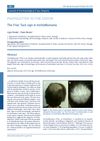 13 citations
,
June 2012 in “Journal of Dermatological Case Reports”
13 citations
,
June 2012 in “Journal of Dermatological Case Reports” This report describes an 8-year-old male with trichotillomania, confirmed by trichoscopy showing characteristic hair damage and patterns.
 10 citations
,
January 2011 in “Case reports in dermatological medicine”
10 citations
,
January 2011 in “Case reports in dermatological medicine” This report documented a successful and sustained hair restoration surgery using follicular unit transplantation for temporal triangular alopecia, lasting over six years.
1 citations
,
June 2025 in “Journal of Clinical Medicine” This study reported that frontal fibrosing alopecia predominantly affects postmenopausal women and identified potential risk factors like frequent β-blocker use and sunscreen application, indicating the need for further research.
June 2025 in “British Journal of Dermatology” This study found that both tofacitinib and methotrexate effectively reduced hair loss and psychological distress in patients with moderate-to-severe alopecia areata, but tofacitinib showed much greater efficacy. Both treatments had similar safety profiles, with no serious adverse effects reported.
 16 citations
,
April 2017 in “Journal of Cosmetic Dermatology”
16 citations
,
April 2017 in “Journal of Cosmetic Dermatology” This study found that fig leaf extract significantly downregulated inflammatory and androgenic gene expression in vitro, suggesting potential topical benefits for certain skin disorders.
 28 citations
,
November 2008 in “Facial Plastic Surgery”
28 citations
,
November 2008 in “Facial Plastic Surgery” This article reviews the development of follicular unit transplantation for hair replacement, highlighting its ability to provide natural-looking results with minimal recovery time, but results depend heavily on the skill and planning of the practitioner.
October 2020 in “Der Hautarzt” This case study demonstrated that off-label tofacitinib treatment led to full regrowth of scalp hair after 18 months in a patient with alopecia areata universalis, following unsuccessful therapies.
20 citations
,
March 1975 in “Journal of steroid biochemistry/Journal of Steroid Biochemistry” This study found a direct correlation between the testicular feminization gene and decreased androgen receptor activity, potentially explaining the androgen insensitivity in affected individuals.
37 citations
,
December 2020 in “PLANT PHYSIOLOGY” In this study, the researchers identified a temperature-sensitive mutant in Arabidopsis thaliana, showing disrupted root hair formation and altered responses to plant hormone treatments at elevated temperatures.
1 citations
,
January 2024 in “Arab Board Medical Journal” This study found that tofacitinib was an effective and well-tolerated treatment for alopecia areata, with significant to moderate hair regrowth in 78% of patients observed.
2 citations
,
June 2020 in “Clinical Journal of Gastroenterology” This case report describes two patients with ulcerative colitis and alopecia areata who did not respond to various treatments but achieved remission and improved hair growth after starting tofacitinib.