April 2021 in “The journal of investigative dermatology/Journal of investigative dermatology” This study examined clinical characteristics of lichen planopilaris and frontal fibrosing alopecia in 24 men, revealing common scalp symptoms, frequent beard involvement, and limited association with thyroid disease.
 1 citations
,
December 2012 in “I P Pavlov Russian Medical Biological Herald”
1 citations
,
December 2012 in “I P Pavlov Russian Medical Biological Herald” In this study, finasteride was found to induce tissue-specific P-glycoprotein activity in the liver and kidney of rabbits after a 14-day treatment period.
 January 2021 in “Türkiye klinikleri dermatoloji dergisi”
 This study found that eyebrow involvement in frontal fibrosing alopecia was more common among postmenopausal females with comorbidities, without a significant link to age or disease duration.
 26 citations
,
June 2018 in “Australasian Journal of Dermatology”
26 citations
,
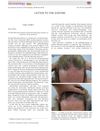
June 2018 in “Australasian Journal of Dermatology” Stopping sunscreen use on the forehead led to hair regrowth in a woman with frontal fibrosing alopecia.
 March 2026 in “Collagen and Leather”
 This study found that a newly developed supramolecular FPC hydrogel effectively promotes wound healing through its anti-inflammatory and angiogenic properties, making it a promising material for wilderness first aid due to its storage convenience, sprayability, and ability to speed up wound recovery.
 March 2025 in “Forum Dermatologicum”
 This case report highlights the importance of trichoscopy in diagnosing fibrosing alopecia in pattern distribution, distinguishing it from female pattern hair loss, and guiding effective treatment.
 March 2016 in “Reactions Weekly”
 Post-finasteride syndrome causes various symptoms in men using finasteride, with no known cure.
 17 citations
,
January 2015 in “International Journal of Trichology”
17 citations
,
January 2015 in “International Journal of Trichology” This case report suggests that frontal fibrosing alopecia with nail involvement may be associated with lichen planus and improved with oral dutasteride due to an inflammatory reaction related to androgenetic alopecia.
 86 citations
,
July 2012 in “British journal of dermatology/British journal of dermatology, Supplement”
86 citations
,
July 2012 in “British journal of dermatology/British journal of dermatology, Supplement” This report suggests a causal connection between hyaluronic acid filler injections and the development of xanthelasma, possibly through an inflammatory reaction that increases vascular permeability and LDL leakage.
 234 citations
,
February 2001 in “British Journal of Dermatology”
234 citations
,
February 2001 in “British Journal of Dermatology” FPHL affects hair density and diameter, causing visible hair loss in older women.
 January 2020 in “Revista da Sociedade Portuguesa de Dermatologia e Venereologia”
 This study reports that frontal fibrosing alopecia in Brazilian patients is common in postmenopausal women and often associated with hypothyroidism and facial irritation from cosmetic products.
 December 2015 in “Actas Dermo-Sifiliográficas”
 This review addresses the challenges in treating frontal fibrosing alopecia, highlighting the limited effectiveness of medical treatments and the demand for hair transplantation despite its risks, but it reports no new clinical results.
6 citations
,
July 2017 in “Clinical and Experimental Dermatology” This report presents four new cases of follicular porokeratosis, which exhibit distinct histological features where the cornoid lamella are confined to the follicular ostia.
5 citations
,
April 2019 in “DOAJ (DOAJ: Directory of Open Access Journals)” This article discusses the characteristics and pathogenesis of pseudofolliculitis barbae, particularly its prevalence in men of African and Asian descent, but presents no new research findings.
June 2026 in “British Journal of Dermatology” This study presents cases suggesting that hair transplantation may trigger de novo frontal fibrosing alopecia in some patients, highlighting a potential association worth considering as cosmetic hair procedures become more common.
July 2024 in “Clinical Case Reports” This study suggests that young females may experience a rare coexistence of Frontal Fibrosing Alopecia and ophiasis pattern Alopecia Areata, possibly sharing a common underlying pathophysiology.

In this narrative review, researchers evaluated existing literature on the treatment of frontal fibrosing alopecia, finding that while no curative treatment exists, clinical improvements can be achieved through personalized and combined therapy approaches.
 April 2023 in “JAAD international”
 This study observed that among a Moroccan population with frontal fibrosing alopecia, common comorbidities included lichen planus pigmentosus (36.8%), rosacea (28.9%), thyroid disorders (23.7%), and dyslipidemia (21.1%), highlighting potential relationships mediated by shared inflammatory or metabolic pathways.
29 citations
,
January 2020 in “Frontiers in endocrinology” This paper considers fibrodysplasia ossificans progressiva as a segmental progeroid syndrome, which may help uncover mechanisms of normal aging and suggest targets for new treatments.
151 citations
,
August 2011 in “The EMBO Journal” The enzyme PA-PLA1α is important for proper hair follicle development.
January 2022 in “Archivos españoles de urología” This review examines global literature on post-finasteride syndrome, finding few studies link finasteride to rare sexual and systemic adverse effects; it is the first such review conducted in Spain.
 May 2022 in “Journal of Cosmetic Dermatology”
 This review discusses the characteristics and diagnostic challenges of fibrosing alopecia pattern distribution, proposing an algorithm for hair transplantation, but reports no new clinical results.
 March 2023 in “Journal of Cosmetic Dermatology”
 This case report illustrates that fibrosing alopecia in a pattern distribution may be misdiagnosed as androgenetic alopecia due to similar hair loss patterns, but distinctive trichoscopic and histopathologic features help differentiate it.
39 citations
,
January 2006 in “Journal of Cosmetic and Laser Therapy” This study found that pneumatic skin flattening (PSF) significantly reduces pain and post-treatment erythema during high-energy IPL and laser hair removal while enhancing treatment efficacy.
 3 citations
,
September 2021 in “Experimental and Therapeutic Medicine”
3 citations
,
September 2021 in “Experimental and Therapeutic Medicine” This study described the clinical characteristics of keratosis pilaris atrophicans faciei in 14 patients, noting that earlier diagnosis may enable more targeted treatment options.
 March 2026 in “Clinical Cosmetic and Investigational Dermatology”
 This review discusses current hair removal strategies in paramedian forehead flap reconstruction and reports no new clinical results; it offers recommendations to improve aesthetic outcomes by guiding timing and technique selection.
 3 citations
,
January 2022 in “Journal of The American Academy of Dermatology”
3 citations
,
January 2022 in “Journal of The American Academy of Dermatology” This study found that sunscreen and moisturizer use was associated with a higher likelihood of developing frontal fibrosing alopecia in the reviewed studies.
2 citations
,
November 2018 in “Seminars in Cutaneous Medicine and Surgery” This source reviews treatments for female pattern hair loss and discusses the challenges in achieving effective regrowth, highlighting the need for combinations of topical, systemic, and interventional therapies.

This case study documented a 36-year-old woman with postpartum-onset frontal fibrosing alopecia who showed significant improvement in hair regrowth after early combination therapy with dutasteride, tofacitinib, and intralesional triamcinolone acetonide, suggesting potential benefits of multimodal treatment in this typically irreversible condition.
January 2015 in “프로그램북(구 초록집)” In this study, researchers found that nearly half of Korean women with female pattern hair loss showed temporal scalp involvement, with a decrease in temporal hair density compared to occipital areas.