 1 citations
,
June 2012 in “Revista Brasileira de Cirurgia Plástica”
1 citations
,
June 2012 in “Revista Brasileira de Cirurgia Plástica” In this study, the authors reported that frontal rhytidectomy with a pre-hairline incision effectively reduces a long forehead in select patients, with patients feeling the benefits outweighed the visibility of the scar.
 1 citations
,
January 2009 in “Elsevier eBooks”
1 citations
,
January 2009 in “Elsevier eBooks” This chapter reviews techniques for treating pseudofolliculitis barbae and suggests that combining daily shaving with topical treatments like glycolic acid may effectively manage this condition without new clinical results reported.
 1 citations
,
February 2004 in “Dermatologic Surgery”
1 citations
,
February 2004 in “Dermatologic Surgery” This study found that using deep plane fixation during scalp surgeries significantly reduced closure tension and allowed for increased tissue excision compared to standard techniques without fixation.
 1 citations
,
January 1989 in “Journal of dermatological treatment”
1 citations
,
January 1989 in “Journal of dermatological treatment” Azelaic acid may help treat acne by killing bacteria, reducing inflammation, and preventing clogged pores.

This study found that Plakophilin 1 regulates innate immune responses in keratinocytes by controlling RNA helicase activity, balancing inflammation during epidermal immune challenges.
 March 2026 in “Journal of Skin and Sexually Transmitted Diseases”
 This study reports ten cases of non-marginal traction alopecia in women with very long hair, which was improved with shorter hair cuts and topical minoxidil application.
 March 2026 in “Dermatology Reports”
 This study found that frontal fibrosing alopecia had higher long-term remission rates compared to lichen planopilaris, highlighting differences in their clinical presentations and outcomes.
 February 2026 in “International Journal of Homoeopathic Sciences”
 This paper reviews plica polonica, a rare hair disorder linked historically to poor hygiene and now to severe self-neglect or medical conditions, and outlines various treatment and preventive strategies but reports no new findings.
 January 2026 in “Military Medicine”
 This article discusses how lipopolysaccharide (LPS) from gram-negative bacteria activates platelets and affects vascular responses, emphasizing the role of reactive oxygen species (ROS) in these processes, without reporting new experimental findings.
 January 2026 in “Military Medicine”
 This study reported that male military personnel with pneumonia experienced accelerated hair transition to the telogen phase, particularly among smokers and those with androgenic alopecia, indicating potential areas for targeted interventions.
 November 2025 in “Journal of Pioneering Medical Science”
 This systematic review reported that probiotics, prebiotics, synbiotics, postbiotics, and dietary supplements may improve hair density and reduce dandruff severity in individuals with scalp disorders, potentially by modifying inflammation, oxidative stress, and microbiota composition; however, variability across studies limits the strength of these conclusions.
 October 2025 in “bioRxiv (Cold Spring Harbor Laboratory)”
 This study experimentally validated Lockhart's viscoplastic framework for tip growth in Arabidopsis root hairs by demonstrating alignment with observed growth rates and estimating yield turgor pressure and cell wall viscosity, offering a methodology adaptable to other species and conditions.
 September 2025 in “Cureus”
 This systematic review found conflicting evidence on hair loss related to GLP-1 receptor agonists in adults with type 2 diabetes or obesity, with some studies noting hair regrowth and others reporting hair loss as a side effect. Further research is needed to understand this relationship.
 June 2025 in “Mağallaẗ ʻulūm al-rāfidayn”
 This study found that certain pyrazole derivatives may serve as effective 5α-reductase inhibitors with potential use in the treatment of androgenetic alopecia, based on molecular docking analyses.
 May 2025 in “Galen Medical Journal”
 This research highlights advancements in understanding and treating psoriasis, finding that targeted therapies like IL-17 and IL-23 inhibitors show promise, but challenges such as adverse events, treatment resistance, and the need for personalized approaches remain.
 February 2025 in “Journal of Nutrients”
 This research reviews the scientific literature on bone broth extract, exploring its nutritional composition, potential health benefits, food industry applications, and risks such as heavy metal and antibiotic contamination. Results are not reported in this summary.

In this study, researchers developed a method using stencils to create controlled stiffness gradients in alginate hydrogels, revealing that stiffer regions within the gels promote deeper invasion by breast cancer cells, facilitating the study of mechanosensitive cellular behaviors.
 April 2024 in “Research Square (Research Square)”
 This study found that extracts of mesenchymal stem cells (MSC-extract) and their protein components (MSC-protein) enhanced the proliferation and migration of periodontal ligament cells and induced significant periodontal tissue regeneration, showing potential as a new cell-free treatment for periodontal disease.
 March 2024 in “World Journal Of Advanced Research and Reviews”
 This study highlights the potential benefits of herbal hair oil in improving hair health, controlling frizz, and preventing hair loss, with common ingredients like coconut, sesame, and mustard oils being frequently used.
 February 2024 in “Frontiers in physiology”
 This study examines the role of hair follicle stem cells in epidermal regeneration during skin soft tissue expansion, proposing a potential method for their cellular and molecular regulation.
 November 2023 in “Anticancer Research”
 The researchers reported that pulsed FUS can enhance the tumor-killing effects of cisplatin by unbinding it from albumin in cervical cancer, but further study is needed to measure its selective delivery to tumors.
This report details a case of severe alopecia areata developing one month after COVID-19 infection in a 20-year-old woman, suggesting a possible connection between COVID-19 and the condition's onset.
 August 2022 in “Frontiers in genetics”
 This study identified a novel bi-allelic missense variant in the DSC3 gene linked to severe Hypotrichosis with Recurrent Skin Vesicles in a Saudi child, supporting its role in the condition.
 November 2021 in “Journal of pharmaceutical research international”
 This review examines the benefits and preparation methods of herbal versus chemical depilatories, highlighting the potential safety and efficacy advantages of herbal ingredients but provides no new experimental findings.
 June 2021 in “bioRxiv (Cold Spring Harbor Laboratory)”
 This research found that the microtubule catastrophe factor KIF18B plays a crucial role in promoting spindle orientation in keratinocytes, linking this process to cell fate decisions during hair follicle morphogenesis.
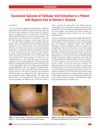 January 2021 in “Journal of Cutaneous and Aesthetic Surgery”
 Follicular unit extraction successfully restored hair growth in a leprosy patient without disease relapse.
 August 2019 in “Journal of The American Academy of Dermatology”
 This article discusses the premade slit method in hair restoration surgery, emphasizing the importance of a tailored depth control instrument for optimal follicle implantation, but provides no new clinical results.
 April 2018 in “The journal of investigative dermatology/Journal of investigative dermatology”
 This study demonstrated that prevascularized human skin constructs containing engineered hair follicles can successfully induce human hair growth when grafted onto mice by promoting blood supply to the grafted skin.
 April 2018 in “Journal of Investigative Dermatology”
 This study found that combining CelluTome system and RCM is a safe and effective protocol for evaluating wound healing responses in patients with epidermolysis bullosa.
 April 2018 in “Journal of Investigative Dermatology”
 This study found that the loss of transcription factor Ovol2 in epidermal and hair follicle stem cells leads to migration defects, which are partially improved by deleting the EMT-inducing Zeb1.