 100 citations
,
June 2006 in “British Journal of Dermatology”
100 citations
,
June 2006 in “British Journal of Dermatology” This study found that as hair loss severity increased in women with female pattern hair loss, the number of vellus follicles also rose, indicating miniaturization of terminal hair follicles.
 8 citations
,
January 2014 in “Annals of Dermatology”
8 citations
,
January 2014 in “Annals of Dermatology” This study found that TGF-β1 expression in follicular tumors correlates with differentiation degree and suggests its potential role alongside p63 in differentiating between sebaceous and follicular tumors.
 47 citations
,
September 2008 in “British Journal of Dermatology”
47 citations
,
September 2008 in “British Journal of Dermatology” This study found that women with androgenetic alopecia experience diffuse hair loss due to a decrease in terminal hairs and an increase in vellus hairs per follicular unit.
 15 citations
,
June 2006 in “Journal of Plastic Reconstructive and Aesthetic Surgery”
15 citations
,
June 2006 in “Journal of Plastic Reconstructive and Aesthetic Surgery” This study found that follicular unit transplantation using specific techniques may improve the natural appearance of transplanted hair in patients with male-pattern hair loss.
 3 citations
,
June 2005 in “Ophthalmology Clinics of North America”
3 citations
,
June 2005 in “Ophthalmology Clinics of North America” Follicular unit transplantation treats hair loss and restores eyebrows with short recovery and natural results.
2 citations
,
March 2021 in “Plastic and Reconstructive Surgery” This retrospective study reviewed 31 years of follicular unit transplantation data for female pattern hair loss, finding that the surgery is effective with low complication rates and avoids the need to shave recipient sites.
 January 2009 in “The Year book of dermatology”
 Ludwig pattern hair loss results from varying androgen sensitivity, causing fewer thick hairs and more thin hairs.
December 2023 in “Journal of Asia Pacific Aesthetic Sciences” This study found that a novel method of isolating human follicle stem cells from hair follicles via mechanical centrifugation, without culture conditions, promises to improve hair density in patients with Androgenetic Alopecia and some cases of Alopecia Areata.
 35 citations
,
November 2010 in “Journal of Cutaneous Pathology”
35 citations
,
November 2010 in “Journal of Cutaneous Pathology” This study reported that dilated follicular infundibula are a highly useful histopathologic criterion for diagnosing alopecia areata, particularly during its recovery stage.
 January 2012 in “Yearbook of Dermatology and Dermatologic Surgery”
 The study concluded that a 'Swiss cheese' pattern in hair follicles is a useful sign for diagnosing alopecia areata.
January 2020 in “Journal of Genetics and Gene Therapy” This article discusses the potential use of human hair follicular stem cells combined with platelet-rich plasma for androgenetic alopecia, focusing on the regenerative processes involved, but reports no new clinical results.
 8 citations
,
October 2018 in “Dermatologic Therapy”
8 citations
,
October 2018 in “Dermatologic Therapy” In this study of Indian patients with pattern hair loss, 40.8% showed low sulfotransferase enzyme activity in hair follicles, with a higher prevalence of low activity in men compared to women.
 8 citations
,
August 2007 in “Histopathology”
8 citations
,
August 2007 in “Histopathology” This article discusses the kinetic and topographical heterogeneity in follicular thyroid neoplasms and reports no new research findings; the authors emphasize understanding diverse growth patterns.
22 citations
,
February 2008 in “Biochemical and Biophysical Research Communications” Androgen effects on hair follicles vary by skin area.
 June 2025 in “Microorganisms”
 In this study, researchers observed significant differences in hair follicle microbiome diversity and microbial composition between hair loss and healthy groups, uncovering specific patterns and functional changes associated with female pattern hair loss, which may aid future targeted approaches for androgenetic alopecia.
 158 citations
,
February 2000 in “Archives of dermatology”
158 citations
,
February 2000 in “Archives of dermatology” This study reports that some patients with androgenetic alopecia may also exhibit clinical and histological features of inflammation and fibrosis, similar to those found in lichen planopilaris.
 309 citations
,
May 1993 in “Journal of The American Academy of Dermatology”
309 citations
,
May 1993 in “Journal of The American Academy of Dermatology” This study concluded that horizontal sections of scalp biopsy specimens provide more diagnostic information for male pattern androgenetic alopecia than vertical sections and can predict hair regrowth potential following topical minoxidil therapy.
251 citations
,
October 2006 in “Plastic and reconstructive surgery/PSEF CD journals” In this study, platelet plasma growth factors from patients' autologous plasma improved follicular unit yield in baldness surgery by 15.1% compared to control areas.
87 citations
,
February 2000 in “Journal of Investigative Dermatology” Stem cells in developing hair follicles move to specific areas as they mature.
 72 citations
,
September 1997 in “Dermatologic Surgery”
72 citations
,
September 1997 in “Dermatologic Surgery” This review discusses follicular transplantation for hair restoration, highlighting the importance of evaluating patient suitability and careful planning to achieve excellent cosmetic outcomes, but reports no new research findings.
 58 citations
,
September 2012 in “Dermatologic Clinics”
58 citations
,
September 2012 in “Dermatologic Clinics” This article reviews current knowledge on the causes, diagnosis, and medical treatments for androgenetic alopecia, particularly in men, and reports no new findings.
 43 citations
,
October 2003 in “Journal of The American Academy of Dermatology”
43 citations
,
October 2003 in “Journal of The American Academy of Dermatology” This article explains why modern hair transplant techniques can be effective for women with pattern hair loss, despite this being underrecognized.
 43 citations
,
February 2008 in “Journal of cutaneous pathology”
43 citations
,
February 2008 in “Journal of cutaneous pathology” This study revealed that during fetal development, MITF and Mart-1 expressing melanocytes progress from the dermis to the epidermis and hair follicles, with MITF possibly marking follicular stem cells.
21 citations
,
January 2010 in “International journal of trichology” This report on two Indian male siblings with monilethrix highlights trichoscopy's role in diagnosing this condition, which can be complicated by early-onset androgenetic alopecia.
 20 citations
,
April 2011 in “British Journal of Dermatology”
20 citations
,
April 2011 in “British Journal of Dermatology” Reflectance confocal microscopy can tell apart white dots on the scalp as either sweat gland ducts or hair follicle openings.
 18 citations
,
June 2017 in “Journal of The American Academy of Dermatology”
18 citations
,
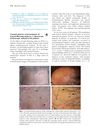
June 2017 in “Journal of The American Academy of Dermatology” In this study, trichoscopy consistently identified typical findings of frontal fibrosing alopecia, revealing three unusual clinical patterns in 18.4% of patients, which may aid in the differential diagnosis when clinical presentations are atypical.
 16 citations
,
July 2016 in “Veterinary Dermatology”
16 citations
,
July 2016 in “Veterinary Dermatology” This study found that dermoscopy can identify distinctive features in canine pattern alopecia, such as hair shaft thinning and pigmentation patterns, which may aid in diagnosing this and potentially other skin disorders.
 16 citations
,
February 2010 in “Journal of the European Academy of Dermatology and Venereology”
16 citations
,
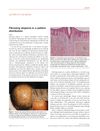
February 2010 in “Journal of the European Academy of Dermatology and Venereology” This article is a letter to the editor about fibrosing alopecia in a pattern distribution and reports no new research findings.
 14 citations
,
July 2015 in “Journal of Cosmetic Dermatology”
14 citations
,
July 2015 in “Journal of Cosmetic Dermatology” This study found that, in Japanese patients with androgenic alopecia, sebaceous glands exhibit increased multilobulation which may be significant in the condition's pathology.
 14 citations
,
June 2013 in “Anais Brasileiros de Dermatologia”
14 citations
,
June 2013 in “Anais Brasileiros de Dermatologia” This report found follicular red dots in patients with scalp pigmentary disorders, suggesting they might be linked to the scalp's vascular structure and may have implications for conditions like discoid lupus erythematosus.