 38 citations
,
January 2019 in “International Journal of Women's Dermatology”
38 citations
,
January 2019 in “International Journal of Women's Dermatology” This review discusses potential therapeutic options for frontal fibrosing alopecia by exploring distinct signaling pathways and cellular players, but reports no new clinical findings and emphasizes the need for further trials.
 August 2026 in “ACTA MEDICA IRANICA”
 This study found that women with female pattern hair loss exhibited hormonal imbalances, with the Free Androgen Index being a particularly effective diagnostic marker.
January 2016 in “Indian dermatology online journal” This case study diagnosed a 60-year-old woman with frontal fibrosing alopecia after histopathological analysis showed characteristic scarring patterns in the hairline area.
74 citations
,
April 2017 in “JEADV. Journal of the European Academy of Dermatology and Venereology/Journal of the European Academy of Dermatology and Venereology” This study classified frontal fibrosing alopecia patients into three clinical patterns, finding that pattern III had the best prognosis and pattern II the worst after treatment with dutasteride and corticosteroids.
 July 2023 in “Clinical, cosmetic and investigational dermatology”
 In this study, reflectance confocal microscopy was used to diagnose periorificial dermatitis, revealing specific skin changes such as hair follicle dilatation, increased vascular density, and inflammation, which help distinguish it from similar conditions.
 3 citations
,
August 2022 in “JAAD case reports”
3 citations
,
August 2022 in “JAAD case reports” This review discusses the emerging evidence for low-dose oral minoxidil in treating various types of alopecia, without providing new clinical results.
 17 citations
,
October 2017 in “Journal of Cutaneous Medicine and Surgery”
17 citations
,
October 2017 in “Journal of Cutaneous Medicine and Surgery” This review discusses the various treatment options for frontal fibrosing alopecia but reports no definitive results, as no treatment has proven effective in halting hairline recession or promoting hair growth.
 2 citations
,
January 2019 in “Annals of Dermatology”
2 citations
,
January 2019 in “Annals of Dermatology” This preliminary study found that Melandrium firmum extract may promote hair growth and inhibit 5α-reductase, suggesting potential as a candidate for treating androgenetic alopecia.
 24 citations
,
March 2017 in “Journal of The European Academy of Dermatology and Venereology”
24 citations
,
March 2017 in “Journal of The European Academy of Dermatology and Venereology” This study reported a significant increase in the reporting of sexual dysfunction associated with finasteride use, especially in individuals aged 31-45.
5 citations
,
December 2023 in “Clinical Case Reports” This article suggests considering biologics to stabilize inflammation in moderate to severe folliculitis decalvans, although it reports no new clinical results.
 12 citations
,
July 2017 in “Journal of cosmetic dermatology”
12 citations
,
July 2017 in “Journal of cosmetic dermatology” This study suggests that infrared thermography may be a useful noninvasive tool for diagnosing active phases of frontal fibrosing alopecia when combined with dermoscopy.
 30 citations
,
December 2017 in “Journal of The American Academy of Dermatology”
30 citations
,
December 2017 in “Journal of The American Academy of Dermatology” This correspondence discusses proposed updates to the diagnostic criteria for frontal fibrosing alopecia, emphasizing the importance of differentiating it from other types of alopecia.
July 2026 in “Journal of Ethnopharmacology” This study found that fermented Morinda citrifolia extract enhances the viability and cycle progression of human dermal papilla cells and promotes hair growth through Wnt/β-catenin signaling activation, suggesting its potential as a therapeutic candidate for alopecia.

This case study documented a 36-year-old woman with postpartum-onset frontal fibrosing alopecia who showed significant improvement in hair regrowth after early combination therapy with dutasteride, tofacitinib, and intralesional triamcinolone acetonide, suggesting potential benefits of multimodal treatment in this typically irreversible condition.
 23 citations
,
October 2018 in “Australasian Journal of Dermatology”
23 citations
,
October 2018 in “Australasian Journal of Dermatology” This review highlights that frontal fibrosing alopecia’s increasing incidence may involve immune, genetic, hormonal, and environmental factors, yet its pathogenesis remains complex and not fully understood.
January 2025 in “Indian Dermatology Online Journal” This case report highlights an unusual presentation of mycosis fungoides with photo-exacerbated lesions and a rare CD4+/CD8+ immunohistochemical phenotype, complicating diagnosis and treatment.
 119 citations
,
November 2014 in “Trends in Cell Biology”
119 citations
,
November 2014 in “Trends in Cell Biology” This review discusses the mechanisms and pathways of FGFR signalling and its roles in development, disorders, and therapeutic targeting, but reports no new clinical results.
January 2012 in “Chinese Clinical Oncology” This study found that for metastatic colorectal cancer patients, substituting calcium folinate with disodium folinate in combination with fluorouracil and oxaliplatin showed similar effectiveness and safety as the mFOLFOX6 regimen.
June 2025 in “Basrah Journal of veterinary Research” This article reviews the genetic diversity, clinical symptoms, diagnosis, and prevention strategies of feline calicivirus in domestic cats, but reports no new clinical results; it emphasizes the importance of vaccination and proper hygiene.
 7 citations
,
October 2015 in “Actas Dermo-Sifiliográficas”
7 citations
,
October 2015 in “Actas Dermo-Sifiliográficas” This article reviews the increasing incidence of frontal fibrosing alopecia since its first description in 1994 and reports no new results.
November 2024 in “International Journal of Women’s Dermatology” In this study of a Colombian sample, the researchers found that while sex, alopecia location, and symptoms aligned with global reports, age at presentation, tobacco use, and use of wigs and dyes were different from those noted in other countries.
 4 citations
,
January 2019 in “Skin appendage disorders”
4 citations
,
January 2019 in “Skin appendage disorders” This study found that Follicular Maps, derived from trichoscopic images, remained consistent over time and unaffected by hair cycling or noncicatricial alopecia, offering a precise tool for diagnosing and monitoring hair and scalp conditions.
 September 2021 in “Clinical research in dermatology”
 This review discusses frontal fibrosing alopecia and reports no new clinical results; the authors highlight the need for randomized controlled trials on 5AR inhibitors to assess their efficacy and safety.
 18 citations
,
November 2012 in “Australasian Journal of Dermatology”
18 citations
,
November 2012 in “Australasian Journal of Dermatology” This case report describes a 66-year-old man with frontal fibrosing alopecia, a rare lichen planopilaris variant, presenting with scarring alopecia at the hairline and extensive body hair loss.
This study reports that patients with specific MFN2 mutations, including p.Arg707Trp, exhibit significant upper body fat overgrowth with suppressed leptin production, suggesting tissue-selective mitochondrial dysfunction and potential therapeutic targets.
 November 2023 in “Brain Sciences”
 This study investigated medications potentially linked to male-factor infertility using the FDA Adverse Event Reporting System and found that finasteride, testosterone, valproate, and other drugs showed significant disproportionate reporting of infertility cases, highlighting a potential under-reporting issue to regulatory bodies.

This study developed a personalized microneedle that delivers finasteride directly to the skin, facilitating a sustained release and potentially reducing side effects associated with oral administration.
 2 citations
,
October 2002 in “American Journal of Nursing”
2 citations
,
October 2002 in “American Journal of Nursing” This article provides contact details and affiliations for Amy M. Karch and Fred E. Karch; it presents no new research findings.
 1 citations
,
January 2019 in “Acta dermato-venereologica”
1 citations
,
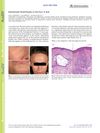
January 2019 in “Acta dermato-venereologica” The woman's skin and hair symptoms were confirmed as frontal fibrosing alopecia, and while facial papules are common in such cases, there's no effective local treatment, but systemic treatments can help.
 8 citations
,
December 2009 in “Journal of The European Academy of Dermatology and Venereology”
8 citations
,
December 2009 in “Journal of The European Academy of Dermatology and Venereology” This article discusses a novel mutation in the FERMT1 gene identified in a Spanish family with Kindler’s syndrome but reports no new clinical results.