 103 citations
,
January 2009 in “Carbon”
103 citations
,
January 2009 in “Carbon” This study found that carbon nanotube impurities induced immunological toxicity in mice, whereas purified nanotubes showed good biocompatibility, suggesting high-temperature thermal treatment may improve nanotube biocompatibility.
 72 citations
,
June 2013 in “Journal of feline medicine and surgery”
72 citations
,
June 2013 in “Journal of feline medicine and surgery” This review discusses the infection dermatophytosis in cats and reports no new results; it emphasizes the difficulty of eradicating the disease in shelters and catteries.
 59 citations
,
February 2003 in “Veterinary Dermatology”
59 citations
,
February 2003 in “Veterinary Dermatology” This narrative review discusses the use of cyclosporin for various skin diseases in small animals and notes minimal side effects at therapeutic doses, but reports no original clinical findings.
 53 citations
,
September 2007 in “Veterinary dermatology”
53 citations
,
September 2007 in “Veterinary dermatology” This study suggests that Malassezia spp. overgrowth may contribute to pruritus and skin lesions in allergic cats, with antifungal treatments alone providing substantial improvements.
 25 citations
,
July 2013 in “Environmental Toxicology and Chemistry”
25 citations
,
July 2013 in “Environmental Toxicology and Chemistry” This study found that spironolactone reduced fish fecundity and caused masculinization of females at certain concentrations, while having no effect on Daphnia magna reproduction, underscoring concerns for environmental exposure to vertebrates.
 24 citations
,
April 2007 in “European Journal of Pharmaceutics and Biopharmaceutics”
24 citations
,
April 2007 in “European Journal of Pharmaceutics and Biopharmaceutics” This study found that artocarpin delivered via alginate/chitosan microparticles effectively suppressed the growth of hamster flank organs compared to artocarpin in solution form, without significant systemic effects.
 18 citations
,
July 2001 in “Australian veterinary journal”
18 citations
,
July 2001 in “Australian veterinary journal” This case study describes a cat with concurrent cutaneous xanthomas, demodicosis, and dermatophytosis, which suggests potential primary hyperlipidaemia as the underlying cause for its symptoms.
 9 citations
,
November 2014 in “Journal of feline medicine and surgery”
9 citations
,
November 2014 in “Journal of feline medicine and surgery” This case study suggests lymphocytic mural folliculitis in a cat might be an early sign of pancreatic carcinoma.
 7 citations
,
July 2015 in “Parasitology Research”
7 citations
,
July 2015 in “Parasitology Research” This study found that the imidacloprid/flumethrin collar (Seresto®) is chemically compatible with major spot-on formulations and dermally and systemically safe for adult dogs and cats when used together.
 5 citations
,
January 2021 in “Veterinary dermatology”
5 citations
,
January 2021 in “Veterinary dermatology” This study found that adding low-level laser therapy to conventional treatment for canine acral lick dermatitis significantly increased hair growth compared to conventional therapy alone, but did not significantly reduce licking behavior.
 4 citations
,
May 2014 in “Javma-journal of The American Veterinary Medical Association”
4 citations
,
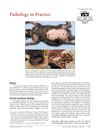
May 2014 in “Javma-journal of The American Veterinary Medical Association” The cat had liver cancer and a related hair loss condition, with a likely cause being bile duct cancer.
 4 citations
,
July 2005 in “International Journal of Dermatology”
4 citations
,
July 2005 in “International Journal of Dermatology” This article does not contain an abstract and presents no new clinical findings, instead discussing prior cases and literature on infant alopecia universalis and the potential role of topical PUVA therapy.
 3 citations
,
May 2018 in “The Journal of the American Animal Hospital Association/Journal of the American Animal Hospital Association”
3 citations
,
May 2018 in “The Journal of the American Animal Hospital Association/Journal of the American Animal Hospital Association” In this study, a single deslorelin acetate implant led to substantial and sustained hair regrowth in two sexually intact male keeshonden with hair cycle arrest.
 2 citations
,
January 2005 in “The Japanese Journal of Veterinary Dermatology”
2 citations
,
January 2005 in “The Japanese Journal of Veterinary Dermatology” In this study, Pomeranians with non-illness, generalized alopecia did not exhibit adrenal or pituitary abnormalities, suggesting a breed-specific hormonal pattern as a potential cause rather than a functional adrenal anomaly.
 May 2026 in “International Journal of Advanced Biochemistry Research”
 In this case study, a three-year-old Labrador with canine atopic dermatitis showed significant improvement in pruritus and skin lesions after treatment with oclacitinib and supportive therapy over a one-month follow-up.
 March 2026 in “Buletin Veteriner Udayana”
 This case report described a Persian cat with psychogenic alopecia and secondary dermatitis linked to environmental stress, which improved with antihistamine therapy, diet changes, and owner interaction, but relapsed in a high cat population setting.
 March 2026 in “Buletin Veteriner Udayana”
 In this case report, a combination therapy including pyrantel pamoate, chlorpheniramine maleate, vitamin B-complex, and topical candlenut oil effectively treated dermatitis and Ancylostoma spp. infection in a dog, leading to improvement in skin condition and hair growth after 14 days.
 January 2025 in “International Journal of Biology Sciences”
 In this case study, a 10-month-old Doberman with generalized demodicosis recovered fully after treatment with a combination of systemic and topical therapies, including ivermectin, hydroxyzine, enrofloxacin, fluralaner, and specialized shampoos.
 January 2025 in “International Journal of Advanced Biochemistry Research”
 This study found that in dogs with dermatological disorders, fungal dermatitis was diagnosed in 20.77% of cases, with Microsporum spp. being the most common fungal pathogen, emphasizing the need for thorough diagnostic approaches including clinical, microscopic, and cultural assessments.
 January 2025 in “International Journal of Veterinary Sciences and Animal Husbandry”
 In this case study, researchers found that treatment with sarolaner led to complete recovery from generalized demodicosis in six dogs within four weeks, resolving clinical signs without adverse reactions.
 January 2025 in “International Journal of Advanced Biochemistry Research”
 This research proposes to investigate the incidence of skin diseases in dogs from North-eastern India linked to deficiencies in alpha-linolenic and linoleic acids, as these essential fatty acids have anti-inflammatory and immunomodulatory benefits potentially aiding inflammatory skin disease therapy.
 November 2024 in “Open Repository of the University of Porto (University of Porto)”
 Tailored medication preparation and ongoing education are crucial for effective treatments.
 September 2023 in “Small animal advances”
 This case report from Veterinary Clinical Complex, Kurumbapet, India, described a kitten with superficial dermatophytosis caused by Microsporum spp., which was successfully treated using itraconazole syrup, cetirizine, and a liver-supportive syrup, achieving complete recovery by the third week without adverse effects.
 December 2022 in “Indian Journal of Animal Research”
 This study found that both fluoxetine and clomipramine are effective in treating psychogenic triggers of acral lick dermatitis in dogs, with fluoxetine leading to quicker recovery and lower recurrence rates, while clomipramine showed better overall recovery rates but was associated with fewer side effects.
This study used molecular dynamics simulations to illustrate the complex molecular behavior of the hair surface F-layer, highlighting how fatty acids interact with 18-MEA under different conditions.
 January 2020 in “Frontiers in Medical Case Reports”
 This case study reported that reducing glucocorticoids resolved calcinosis cutis in a dog with hypoadrenocorticism, while demodicosis was treated with a fluralaner chewable tablet.
 December 2019 in “Mehmet Akif Ersoy Üniversitesi Sağlık Bilimleri Enstitüsü dergisi”
 In this case series, two cats with hypothyroidism and hyperthyroidism achieved clinical remission and normal thyroid function following timely diagnosis and targeted treatment with levothyroxine and methimazole, respectively.
 September 2016 in “Elsevier eBooks”
 Different types of hair loss in dogs and cats have various causes and treatments, with outcomes ranging from good to uncertain.
 March 2007 in “The FASEB Journal”
 This observational study reports a striking correlation between the use of henna hair dye and a specific pattern of hair loss, termed "hennapecia," but calls for experimental research to determine causality.
 August 2001 in “Veterinary Dermatology”
 This article reviews topics from the American Academy of Veterinary Dermatology and American College of Veterinary Dermatology Annual Meeting and contains no new clinical findings.