 January 2022 in “International Journal of Medical Research”
 This article discusses the negative impact of chemotherapy on healthy cells, noting side effects like decreased blood cell production and hair loss, but reports no new findings.
 December 2021 in “Journal of oncology research reviews & reports”
 This article discusses the treatment options for women with polycystic ovarian syndrome and notes the need for further research to improve patient management.
 November 2021 in “International journal of life science and pharma research”
 This study reported that a solid lipid nanoparticle-based gel formulation, specifically optimized for psoriasis, improved drug loading capacity and release properties using high-pressure homogenization, suggesting its potential efficacy as a topical treatment.
 June 2021 in “Journal of emerging technologies and innovative research”
 This article reviews the potential hair-protective effects of Onion and Aloe vera against damage from hair dyes but reports no new experimental results.
 July 2020 in “IP International Journal of Maxillofacial Imaging/International journal of maxillofacial imaging/IP International journal of maxillofacial imaging”
 The authors concluded that mesotherapy is a new, effective, and safer dermatologic treatment option for conditions like alopecia, skin rejuvenation, and hyperpigmentation due to its efficiency and reduced treatment time.
 July 2020 in “Scholarly Journal of Psychology and Behavioral Sciences”
 This article discusses psychological and clinical responses to the recent pandemic and emphasizes the potential for a virus-free future, but it reports no new research findings.
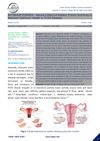 January 2020 in “Asian Journal of Basic Science & Research”
 This review discusses the role of Nutrease powder in managing hormonal disturbances in polycystic ovary syndrome and reports no new clinical results.
This study explored the structure and function of lipocalin prostaglandin D synthase, revealing its dual role in substrate catalysis and as a lipophilic ligand carrier, potentially informing future drug delivery design.
 May 2019 in “Asian Journal of Pharmaceutical and Clinical Research”
 This study found that the ethyl acetate and chloroform fractions of Eclipta prostrata Linn. exhibited significant anti-inflammatory activity in a carrageenan-induced paw edema model and showed notable anti-arthritic potential in a formaldehyde-induced arthritis model.

This study found that a high-fat diet in macaques led to severe gastrointestinal inflammation and chronic wasting, with more pronounced effects in females, highlighting the potential risks of certain dietary interventions in obesity models.
 November 2018 in “International Journal of Current Pharmaceutical Research”
 This review discusses the causes, underlying mechanisms, diagnosis, and treatment strategies for polycystic ovary syndrome but reports no new clinical findings.
 December 2017 in “Springer eBooks”
 Transplant patients often get skin problems, with treatments varying by condition.
 April 2017 in “Our Dermatology Online”
 This study explored how septuagenarians and octogenarians responded hedonically to natural cosmetics that were marketed as making them feel younger and more attractive, using a simple satisfaction questionnaire.
 January 2015 in “Springer eBooks”
 Hair health is influenced by genetics, aging, and environmental factors, with proper care needed to maintain it.
 November 2014 in “John Wiley & Sons, Ltd eBooks”
 This review discusses hormones that affect acne and highlights a statistically significant link between a low-glycemic-load diet and reduced acne activity, but reports no new experimental findings.
 June 2007 in “Journal of The Royal Society for The Promotion of Health”
 Smoking doubles the risk of blindness, and physical exercise helps dyslexic children read better.
 November 2004 in “Medical Journal of Indonesia”
 This review discusses the impact of hormonal changes on female skin and hair loss and suggests that antiandrogenic treatments may help mitigate these effects, but reports no new clinical results.

This text is a navigation menu and service announcement for the JAMA website and contains no research findings.
 March 2020 in “Journal of the turkish academy of dermatology”
 In this study, no significant difference was found in serum triglyceride and HDL cholesterol levels between male patients with androgenetic alopecia and those without.
 February 2024 in “Digital Library of Theses and Dissertations (Universidade de São Paulo)”
 This study demonstrated that using a mass spectrometry imaging technique, researchers were able to visualize the incorporation of argan, avocado, and coconut oils into hair fibers, suggesting their potential in cosmetic and alopecia treatments by confirming oil absorption and fiber modification.
January 2015 in “Seoul National University Open Repository (Seoul National University)” This study reports that polyunsaturated fatty acids, particularly arachidonic acid alone and combined with eicosapentaenoic acid, may stimulate hair growth and enhance hair growth factors in mice and human dermal cells.
8 citations
,
June 2023 in “Journal of clinical medicine” This study reviews the use of nanofat in facial rejuvenation and cosmetic surgery, highlighting its potential for improving skin appearance and treating conditions like wrinkles and acne scars, yet emphasizes the need for further research into its long-term efficacy and safety.
14 citations
,
July 1977 in “PubMed” This study reported that a 19-year-old man's essential fatty acid deficiency was reversed with daily topical application of linoleic acid, improving clinical symptoms and normalizing certain fatty acid levels.
July 2026 in “Pharmaciana” This study found that the optimal characteristics for ulin seed oil extraction are fresh, mature, and resinous seeds, and that FTIR spectrophotometry with PCA can effectively detect adulteration of the oil, particularly at certain wavenumbers like 1745 cm⁻¹.
73 citations
,
July 1977 in “Archives of Dermatology” In this case report, applying linoleic acid topically reversed essential fatty acid deficiency and related skin symptoms in a patient receiving long-term fat-free intravenous nutrition.
January 2026 in “Brazilian Journal of Pharmaceutical Sciences” This study assessed the effects of chemical treatments on hair fiber integrity and found that conditioners with vegetable oils like jojoba and coconut enhanced hydrophobicity and reduced combing friction except for jojoba, while participants preferred these oil-containing conditioners over the base formulation.
 90 citations
,
February 2013 in “The Journal of Clinical Endocrinology and Metabolism”
90 citations
,
February 2013 in “The Journal of Clinical Endocrinology and Metabolism” This study found that women with polycystic ovary syndrome have higher global adiposity and increased visceral fat, particularly in the ip and mesenteric depots, compared to women without androgen excess.
 93 citations
,
April 2003 in “Proceedings of the National Academy of Sciences of the United States of America”
93 citations
,
April 2003 in “Proceedings of the National Academy of Sciences of the United States of America” This study identified an unexpected critical role for the FATP4 protein in skin and hair development in mice, linking it to a potential candidate gene for restrictive dermopathy in humans.
 August 2018 in “Journal of Investigative Dermatology”
 This study found that the application of polyunsaturated fatty acids, particularly arachidonic acid, promoted hair growth and anagen induction in both human dermal papilla cells and mouse models.
20 citations
,
January 1946 in “Journal of Dairy Science” In this study, calves fed skim milk and soybean oil experienced hair loss over the perineal region, which regrew once they began consuming hay or grain, despite continuing the same diet.