August 2019 in “Journal of the American Academy of Dermatology” Frontal fibrosing alopecia may be caused by an autoimmune reaction and hormonal imbalance.
 166 citations
,
April 2012 in “Journal of The American Academy of Dermatology”
166 citations
,
April 2012 in “Journal of The American Academy of Dermatology” This study reviewed clinical data from 60 patients with frontal fibrosing alopecia and found increasing prevalence and generally poor response to treatment, with the cause remaining unclear.
November 2021 in “CRC Press eBooks” This article discusses female pattern androgenic alopecia, emphasizing its impact on women's lives and highlighting the need for further research into effective treatments, but reports no new clinical results.
 May 2019 in “Anais brasileiros de dermatologia/Anais Brasileiros de Dermatologia”
 This study reviewed 38 cases of frontal fibrosing alopecia, observing that diagnosis often occurs years after onset and is more prevalent in postmenopausal women.
 1 citations
,
July 2016 in “British Journal of Dermatology”
1 citations
,
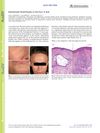
July 2016 in “British Journal of Dermatology” Men with a certain type of hair loss often use facial moisturizers, and a specific antibiotic treatment may help another hair condition.
 1 citations
,
January 2019 in “Acta dermato-venereologica”
1 citations
,
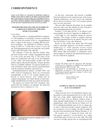
January 2019 in “Acta dermato-venereologica” The woman's skin and hair symptoms were confirmed as frontal fibrosing alopecia, and while facial papules are common in such cases, there's no effective local treatment, but systemic treatments can help.
 16 citations
,
January 2005 in “Pediatric Dermatology”
16 citations
,
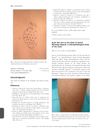
January 2005 in “Pediatric Dermatology” This brief report describes a case of Fox-Fordyce disease in a prepubertal girl but reports no new clinical findings.
 July 2022 in “Research Square (Research Square)”
 This study found that Egyptian women with frontal fibrosing alopecia had lower serum PPARγ levels and a higher occurrence of PPARG gene polymorphism compared to healthy controls, suggesting a potential role for PPARγ in the condition's development.
2 citations
,
August 2025 in “JAAD reviews.” This review discusses frontal fibrosing alopecia in males and reports no new clinical results, indicating a broader demographic affected by this inflammatory disorder beyond postmenopausal women.

This report presents a case of IFAP syndrome with the typical symptoms of alopecia universalis, severe photophobia, and follicular ichthyosis, but provides no additional clinical findings or conclusions.
14 citations
,
January 2014 in “Indian Journal of Dermatology Venereology and Leprology” Frontal fibrosing alopecia can affect men's beards and leads to permanent hair loss.
January 2016 in “Indian dermatology online journal” This case study diagnosed a 60-year-old woman with frontal fibrosing alopecia after histopathological analysis showed characteristic scarring patterns in the hairline area.
April 2025 in “International Journal of Dermatology” This article proposes renaming frontal fibrosing alopecia to frontal fibrosing alopecia syndrome to better reflect its varied presentations and enhance understanding and treatment approaches.
 64 citations
,
June 2009 in “Journal of The American Academy of Dermatology”
64 citations
,
June 2009 in “Journal of The American Academy of Dermatology” This article discusses frontal fibrosing alopecia, noting potential connections to lichen planopilaris, but reports no new clinical findings.
August 2024 in “Clinical & experimental pathology” This research highlights significant advancements in forensic DNA phenotyping, enabling predictions of physical traits, ancestry, and age from crime scene DNA, but notes that further research and validation are needed for greater accuracy and reliability.
 31 citations
,
April 2010 in “British journal of dermatology/British journal of dermatology, Supplement”
31 citations
,
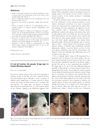
April 2010 in “British journal of dermatology/British journal of dermatology, Supplement” This report describes two patients with frontal fibrosing alopecia who developed acute hair loss on their limbs, revealing that the limb alopecia had similar histological features to scalp alopecia.
5 citations
,
January 2015 in “Case reports in medicine” In this case report, a novel missense mutation c.1360G>C (p.Ala454Pro) in the MBTPS2 gene was identified in a boy with typical IFAP syndrome and severe atopic features, although no phenotype/genotype correlation was established.
 39 citations
,
July 2015 in “British Journal of Dermatology”
39 citations
,
July 2015 in “British Journal of Dermatology” This article discusses the pseudo 'fringe sign' in frontal fibrosing alopecia, highlighting that it is not solely related to traction, and it reports no new clinical results.
This study found that a novel pet food formulation significantly improved the management of feline atopic skin syndrome by reducing symptom severity and medication dependence over six months in client-owned cats, compared to a control diet.
April 2019 in “Journal of Investigative Dermatology” This study found that frontal fibrosing alopecia involves distinct molecular changes, such as downregulation of steroid and cholesterol pathways and upregulation of fibrotic and immune response genes, which may help guide treatment strategies.
7 citations
,
July 2021 in “The Journal of Dermatology” This study in Asian females found that higher use of moisturizers and sunscreen among FFA patients may reflect appearance concerns rather than indicating a direct link to the disease mechanism.
June 2020 in “Journal of Drugs in Dermatology” This case report highlights that frontal fibrosing alopecia can occur in black patients and may resemble androgenetic alopecia, underscoring the importance of considering FFA when diagnosing frontotemporal alopecia in this population.
 1 citations
,
May 2015 in “Journal of The American Academy of Dermatology”
1 citations
,
May 2015 in “Journal of The American Academy of Dermatology” Finasteride for hair loss in young men may significantly increase the risk of sexual dysfunction.
 11 citations
,
May 2023 in “Journal of Cutaneous Medicine and Surgery”
11 citations
,
May 2023 in “Journal of Cutaneous Medicine and Surgery” This study found that combining plasma rich in growth factors with conventional treatment significantly improved hair regrowth and reduced symptoms in patients with frontal fibrosing alopecia compared to conventional treatment alone.
 30 citations
,
December 2017 in “Journal of The American Academy of Dermatology”
30 citations
,
December 2017 in “Journal of The American Academy of Dermatology” This correspondence discusses proposed updates to the diagnostic criteria for frontal fibrosing alopecia, emphasizing the importance of differentiating it from other types of alopecia.
 9 citations
,
January 2018 in “Journal of the European Academy of Dermatology and Venereology”
9 citations
,
January 2018 in “Journal of the European Academy of Dermatology and Venereology” A male patient developed frontal fibrosing alopecia after antiandrogen therapy for prostate cancer.
November 2024 in “Dermatology and Therapy” In this review, cosmetic practices such as non-ablative lasers, autologous fat injections, and oral isotretinoin may help alleviate certain symptoms of frontal fibrosing alopecia, while treatments like deep chemical peels and ablative laser therapies are contraindicated due to potential scarring risks.
 12 citations
,
January 2005 in “Pediatric Dermatology”
12 citations
,
January 2005 in “Pediatric Dermatology” Fox Fordyce disease might be more common in prepubertal girls than thought and can be managed with treatment.
 August 2021 in “Annals of Agricultural and Environmental Medicine”
 This review provides a detailed analysis of frontal fibrosing alopecia, focusing on its prevalence in postmenopausal Caucasian women, associated comorbidities, and potential autoimmune, genetic, hormonal, and environmental factors; it emphasizes the need for improved understanding to enhance diagnosis and treatment.
 January 2017 in “Open Journal of Endocrine and Metabolic Diseases”
 This case report identifies an adolescent with symptoms indicative of Dunnigan-type partial lipodystrophy, emphasizing the need for early diagnosis to manage associated metabolic complications and improve self-esteem.