6 citations
,
April 2015 in “Plastic surgical nursing” This study reports that applying bimatoprost ophthalmic solution 0.03% to the upper eyelid margin enhances eyelash growth by increasing length, thickness, and darkness, with a favorable safety profile.
1 citations
,
January 2000 in “Aesthetic Surgery Journal” This article presents a discussion amongst surgeons on treatment approaches for a male patient with severe pseudoptosis of the upper eyelid and brow ptosis, but reports no clinical outcomes.
11 citations
,
January 2012 in “PubMed” This case report suggests that topical bimatoprost may promote eyebrow hair growth, as observed in a patient with eyebrow hypotrichosis, but lacks broader published scientific evidence.
 17 citations
,
May 2012 in “Journal of dermatology”
17 citations
,
May 2012 in “Journal of dermatology” This letter to the editor compares the efficacy and safety of bimatoprost 0.03% with minoxidil 3% for eyebrow enhancement but does not report any study results.
This review discusses various brow lift techniques and considerations, highlighting that endoscopic brow lifts may raise the hairline and should be cautiously used with certain patients due to potential complications.
7 citations
,
November 2018 in “Plastic Surgery” In this retrospective study, researchers reported that using the Mitek Microfix QuickAnchor for endoscopic brow lifts provides durable fixation without implant palpability or alopecia, with a mean operative time of 100 minutes, showing feasibility even with resident surgeon involvement.
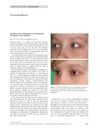 15 citations
,
November 2009 in “Clinical and Experimental Dermatology”
15 citations
,
November 2009 in “Clinical and Experimental Dermatology” This case study describes a 16-year-old girl with alopecia areata affecting her eyelashes and eyebrows, who showed very limited response to treatment with topical mometasone furoate and subsequent partial hair loss upon stopping the treatment.
 12 citations
,
September 2012 in “Plastic and Reconstructive Surgery”
12 citations
,
September 2012 in “Plastic and Reconstructive Surgery” This study found that combining follicular isolation with de-epithelialization in eyebrow and eyelash transplantation led to better outcomes and fewer complications than using follicular isolation alone.
February 2026 in “Journal of Cosmetic Dermatology” This study found that intradermal polynucleotide injections were linked to improvements in the appearance around the eyes and increased patient satisfaction, with minimal adverse effects, suggesting potential for further research to validate efficacy and optimize treatment protocols.
 7 citations
,
March 2019 in “Dermatologic surgery”
7 citations
,
March 2019 in “Dermatologic surgery” In this randomized trial, bimatoprost 0.01% significantly improved eyebrow hair density and diameter in patients with eyebrow hypotrichosis compared to a placebo, with minimal adverse effects, suggesting it is an effective and safe treatment option.
34 citations
,
October 2015 in “British journal of dermatology/British journal of dermatology, Supplement” This review synthesizes current knowledge on eyelash hair follicles, highlighting gaps in understanding their biology and proposing future research directions; it reports no new experimental findings.
 January 2010 in “Yearbook of Dermatology and Dermatologic Surgery”
 Topical latanoprost and bimatoprost ophthalmic solutions don't help eyelash growth in patients with alopecia areata.
 14 citations
,
March 2015 in “Facial plastic surgery clinics of North America”
14 citations
,
March 2015 in “Facial plastic surgery clinics of North America” This review discusses various surgical techniques for rejuvenating the aging upper face, focusing on the assessment of individual structures and their relationships, but it reports no new clinical results.
 13 citations
,
January 2016 in “Journal of Ophthalmology”
13 citations
,
January 2016 in “Journal of Ophthalmology” This study found that using the novel eyelid shampoo ESL improved eyelid hygiene, reduced dry eye symptoms in meibomian gland dysfunction patients, and increased eyelash length over 8 weeks.
 34 citations
,
February 2018 in “Drug Design Development and Therapy”
34 citations
,
February 2018 in “Drug Design Development and Therapy” This source reports that bimatoprost, a medication approved for eyelash growth, has shown efficacy in treating eyebrow hypotrichosis, suggesting it as a noninvasive, effective, and well-tolerated option for enhancing eyebrow hair.
 7 citations
,
July 2011 in “Survey of Ophthalmology”
7 citations
,
July 2011 in “Survey of Ophthalmology” This guide provides a comprehensive approach to diagnosing periocular hair disorders, which can range from benign conditions to those posing serious health risks.
 23 citations
,
April 2004 in “American Journal of Ophthalmology”
23 citations
,
April 2004 in “American Journal of Ophthalmology” This case report found that topical bimatoprost usage in a female Hispanic patient with open-angle glaucoma was associated with hypertrichosis and increased pigmentation of vellus hairs on the malar region.
 2 citations
,
February 2009 in “Journal of the American Academy of Dermatology”
2 citations
,
February 2009 in “Journal of the American Academy of Dermatology” Injecting triamcinolone into the eyebrow area may help eyelash regrowth in alopecia areata patients.
September 2025 in “International Society of Hair Restoration Surgery” This source highlights the challenges and importance of skilled surgical procedures in eyelash restoration, necessary due to its role in eye protection and aesthetics, while poor outcomes can impact self-esteem and cause ocular issues.
24 citations
,
January 2013 in “Lasers in medical science” This study found that fractional ultrapulse CO2 laser resurfacing effectively enhanced upper eyelid crease and brow position in patients with low and moderate dermatochalasis, with only mild side effects reported.
July 2021 in “British Journal of Dermatology” This article suggests that eyelash prostheses may exacerbate isotretinoin-induced blepharitis, highlighting the need for caution among young women using both products.
 1 citations
,
January 2019 in “Clinical, Cosmetic and Investigational Dermatology”
1 citations
,
January 2019 in “Clinical, Cosmetic and Investigational Dermatology” In this study, a gel containing extracts from Coffea arabica and Larrea divaricata was found to significantly thicken eyebrows and eyelashes in most premenopausal and postmenopausal women, without causing adverse effects, but showed no statistical difference from a placebo in overall hair growth.
 7 citations
,
May 2013 in “Optometry and vision science”
7 citations
,
May 2013 in “Optometry and vision science” This case report observed increased eyelash growth in a trichotillomania patient using bimatoprost 0.03% solution over four months.
1 citations
,
January 2026 in “Journal of the European Academy of Dermatology and Venereology” This critique suggests that the prior iconodiagnosis of Vermeer's "Girl with a Pearl Earring" suffers from confirmation bias, arguing that cultural trends, rather than medical conditions, explain the artwork's features.

This study reports that a novel eyelash transplantation method using chalazion forceps effectively thickens and enhances eyelashes by precisely placing transplanted hairs in a narrow recipient area, with approximately 85-92% of transplanted lashes expected to grow within 12 months.

EFBL offers hidden incisions, faster recovery, and fewer risks, but may raise hairline and cost more.
 9 citations
,
September 2021 in “Stem Cell Reviews and Reports”
9 citations
,
September 2021 in “Stem Cell Reviews and Reports” This study concluded that hair-derived stem cells from older donors may offer a promising alternative for autologous corneal endothelial replacement, potentially benefitting patients of various age groups.
4 citations
,
July 2019 in “Journal of cosmetic dermatology” This clinical study reported that while both 0.01% and 0.03% bimatoprost significantly improved eyebrow density and diameter in patients with eyebrow hypotrichosis, the 0.03% concentration was more clinically preferred by patients.
 20 citations
,
November 2009 in “European Journal of Dermatology”
20 citations
,
November 2009 in “European Journal of Dermatology” This study found that topical latanoprost was not effective in treating alopecia areata in eyebrows and eyelashes.