 110 citations
,
October 2019 in “Translational Andrology and Urology”
110 citations
,
October 2019 in “Translational Andrology and Urology” This review discusses current and emerging treatments for benign prostatic hyperplasia and emphasizes the need for further research to optimize treatment selection, but reports no new clinical results.
March 2023 in “Archives of Physical Medicine and Rehabilitation” This pilot study suggests that high-dose testosterone plus finasteride improved knee extensor strength and muscle size in men with impaired gait after chronic incomplete spinal cord injury.
 January 2022 in “International Microsurgery Journal”
 In this case report, the authors described how a 27-year-old male developed scarring and penile shortening after a previous lengthening procedure, which was successfully repaired using a pedicled superficial circumflex iliac artery perforator flap combined with a novel hybrid technique.
July 2026 in “Research Square”  28 citations
,
November 2003 in “The Journal of clinical endocrinology and metabolism/Journal of clinical endocrinology & metabolism”
28 citations
,
November 2003 in “The Journal of clinical endocrinology and metabolism/Journal of clinical endocrinology & metabolism” This study indicates that the normal human prostate is not a major contributor to circulating blood DHT concentrations in androgen-deficient patients receiving testosterone replacement therapy.
 June 2011 in “Oncology times”
 This article covers discussions from the Society of Urologic Oncology Annual Meeting outlining that new therapies, such as Provenge, Prostvac, and denosumab, are making the treatment of advanced prostate cancer more complex but may offer extended survival benefits.
 April 2017 in “The Journal of Urology”
 This study found that patients with BPH who received finasteride before TURP experienced reduced intraoperative blood loss and improved quality of life one month after surgery compared to those who did not.
January 2015 in “Faculty of 1000 Research Ltd” BPH treatment improved with personalized medicine, new drugs, and less invasive surgeries.
April 2018 in “The Journal of Urology” This study found that phosphodiesterase inhibitors may suppress the proliferation of benign prostatic hyperplasia epithelial cells by modulating CCL5 levels in low androgen conditions.
 September 2009 in “European Urology Supplements”
 Surgery for high-risk prostate cancer is challenging but doesn't lead to more complications, and additional treatment is often needed.
 5 citations
,
September 2011 in “Andrologia”
5 citations
,
September 2011 in “Andrologia” Finasteride use may be linked to rare testicular tumor, but more research needed.
 September 2005 in “Archives of Dermatological Research”
 Large prostate patients more likely to have hair loss.
 15 citations
,
September 2014 in “JAMA Dermatology”
15 citations
,
September 2014 in “JAMA Dermatology” This discussion highlights the use of minimal incision extraction for lipoma removal, noting that it is a favored technique among dermatologists due to its efficiency, despite some hesitance with larger lipomas.
 November 2012 in “The Journal of Urology”
 Certain gene variants may raise the risk of prostate enlargement, but taking NSAIDs could reduce this risk.
 72 citations
,
January 2003 in “American Journal of Pathology”
72 citations
,
January 2003 in “American Journal of Pathology” This study found that the co-activator CBP enhances the agonistic action of hydroxyflutamide on androgen receptors, suggesting a mechanism for therapy resistance in prostate cancer.
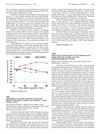 April 2010 in “The Journal of Urology”
 Human prostate cells produce more WISP1/CCN4 when there's not enough oxygen.
5 citations
,
December 2018 in “Frontiers in Endocrinology” This study found that nuclear androgen receptor expression was enhanced by dihydrotestosterone in rat gubernacular mesenchyme, but this did not affect muscle morphology or matrix composition during fetal development.
 1 citations
,
October 2017 in “The Journal of Urology”
1 citations
,
October 2017 in “The Journal of Urology” Long-term medication for enlarged prostate might not clearly affect the timing or outcomes of later surgery.
 3 citations
,
October 1995 in “Southern Medical Journal”
3 citations
,
October 1995 in “Southern Medical Journal” Finasteride may cause breast enlargement, low testosterone a risk factor.
 5 citations
,
July 2021 in “medRxiv (Cold Spring Harbor Laboratory)”
5 citations
,
July 2021 in “medRxiv (Cold Spring Harbor Laboratory)” This study found that proxalutamide improved immunologic, inflammatory, thrombotic, and oxygen markers in both female and male COVID-19 outpatients, which may support its association with lower hospitalization rates compared to standard care.
 57 citations
,
January 1986 in “The Prostate”
57 citations
,
January 1986 in “The Prostate” This article discusses the role of dihydrotestosterone in human prostatic adenocarcinoma growth and suggests that 6-methyleneprogesterone could be used to inhibit DHT for treating hormone-responsive prostate cancer, without new clinical findings.
1 citations
,
January 2002 in “Yaoxue jinzhan” This study found that Epristeride and Finasteride reduced prostate development and testis weight in male rats, but only Finasteride appeared to impact reproductive function.
This study discusses a hypothesis that combining intermittent androgen ablation therapy with finasteride may enhance prostate cancer treatment, though new results from this approach are not yet available.
 4 citations
,
September 2010 in “Medical Hypotheses”
4 citations
,
September 2010 in “Medical Hypotheses”  October 1999 in “The Journal of Urology”
 This article discusses developments in clinical urology featured in the Journal of Urology's October 1999 issue and presents no new clinical findings.
 3 citations
,
January 2018 in “Reproduction, Fertility and Development”
3 citations
,
January 2018 in “Reproduction, Fertility and Development” This study concluded that cyproterone acetate alone produced antiandrogenic effects on the female gerbil prostate, while ethinyloestradiol alone stimulated estrogenic activity, and their combination led to prostatic lesions.
31 citations
,
January 1989 in “The Prostate/The prostate” This study found that early treatment with estradiol or dihydrotestosterone significantly reduced prostate adenocarcinoma development in Lobund-Wistar rats, while later treatments were ineffective.
 March 2011 in “European Urology Supplements”
 CEC levels may be a useful marker for predicting prostate cancer progression.
February 2004 in “European Urology Supplements” 57 citations
,
April 2009 in “The Journal of Steroid Biochemistry and Molecular Biology” This study found that despite the presence of steroidogenesis inhibitors, CRPC tumor cells adapt to continue synthesizing androgens, suggesting a need for more effective androgen axis targeting.