3 citations
,
January 2025 in “International Journal of Molecular Sciences” In this study, researchers investigated EGCG's spectroscopic properties and its interaction with DPPG lipid, finding that both experimental and theoretical approaches agree on the electronic transitions and reveal an increased absorbance due to molecular interactions.
 50 citations
,
May 2004 in “Journal der Deutschen Dermatologischen Gesellschaft”
50 citations
,
May 2004 in “Journal der Deutschen Dermatologischen Gesellschaft” This review discusses the role of estrogens in hair follicle cycling and the skin, highlighting the need for more research on estrogen signaling pathways and their interactions with other factors in hair biology.
November 2001 in “Oncology Times” The committee unanimously voted against recommending approval of the injectable cisplatin/epinephrine gel IntraDose for certain head and neck cancer patients, citing insufficient clinical benefit and concerns about toxicity in this study.
4 citations
,
January 2019 in “Indian Dermatology Online Journal” This report discusses two cases of porokeratotic eccrine ostial and dermal duct nevus and porokeratotic eccrine and hair follicle nevus, suggesting they may represent a single clinical entity, but reports no therapeutic outcomes.
 68 citations
,
June 2005 in “Expert Opinion on Therapeutic Targets”
68 citations
,
June 2005 in “Expert Opinion on Therapeutic Targets” This review discusses the influence of oestrogens on various skin components and highlights their modulatory roles and receptor pathways, but it reports no new clinical results.
 6 citations
,
October 2017
6 citations
,
October 2017 This review summarizes the antioxidant and anticarcinogenic properties of Indian Gooseberry, its phytochemical composition, and its use in traditional Ayurvedic medicine, but reports no new clinical results.
12 citations
,
March 2000 in “Clinical Chemistry” This study found that a daily dose of 50 mg DHEA only slightly increased the urinary testosterone/epitestosterone ratio for a short period, without exceeding the IOC's acceptable limit.
February 2025 in “Universidade Nova de Lisboa's Repository (Universidade Nova de Lisboa)” This research discusses various collaborative and funding efforts across multiple institutions but does not present new experimental findings.
4 citations
,
November 2015 in “The journal of investigative dermatology. Symposium proceedings/The Journal of investigative dermatology symposium proceedings” This case study highlights a patient with alopecia areata who also has eosinophilic esophagitis, suggesting it may be considered an atopic disease and a potential trigger for alopecia areata in affected patients.
 18 citations
,
January 2020 in “Journal of the European Academy of Dermatology and Venereology”
18 citations
,
January 2020 in “Journal of the European Academy of Dermatology and Venereology” This study identified trichoscopy as a key diagnostic tool for erosive pustular dermatosis of the scalp and suggested high-potency steroids or tacrolimus as effective first-line treatments.
 May 2021 in “Journal of the Endocrine Society”
 This study found that estradiol transdermal patches helped many MTF patients achieve target estrogen levels, especially those who could not reach these levels with oral therapy and those at higher thrombotic risk.
 8 citations
,
January 2013 in “Medicinal chemistry”
8 citations
,
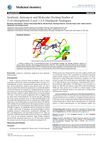
January 2013 in “Medicinal chemistry” This study reported that among 10 tested 2-(4-chlorophenyl)-5-aryl-1,3,4-oxadiazole compounds, compound 4c showed the highest activity against cancer cell lines, with a 95.37% average growth rate.
 50 citations
,
May 2019 in “BioFactors”
50 citations
,
May 2019 in “BioFactors” This review discusses the impact of air pollution on skin health and suggests that targeting oxidative stress products like HNE could be a new strategy for treating related skin conditions.
 88 citations
,
June 2016 in “Human Reproduction Update”
88 citations
,
June 2016 in “Human Reproduction Update” This review discusses developments in oral contraceptives, highlighting improved individualization, reduced side effects, and enhanced suitability for various women's health needs, but it reports no new clinical results.
4 citations
,
July 2014 in “The Journal of Dermatology” This letter to the editor discusses plaque-type herpetic folliculitis involving the eccrine gland and does not report new research findings.
 6 citations
,
January 1998 in “Journal of Investigative Dermatology”
6 citations
,
January 1998 in “Journal of Investigative Dermatology” This study found that oxybenzone is very stable under light exposure, contradicting previous findings of its oxidation to semiquinone after solar irradiation.
 January 2025 in “Clinical and Medical Engineering Live”
 This study discusses the potential health risks associated with occupational radiation exposure, including genetic mutations, cancers, and other diseases, and outlines strategies for prevention and occupational health safety.
 September 2017 in “The journal of investigative dermatology/Journal of investigative dermatology”
 In this study, the reconstructed skin epidermal model derived from hair follicles showed gene expression and enzyme functionality consistent with native human skin, suggesting its viability for studying skin metabolism and potential toxicity of dermo-cosmetic ingredients.
 August 2026 in “International Journal of Advanced Biochemistry Research”
 This study found that in dogs with pyoderma, a combination of antibiotic and vitamin E treatment normalized oxidative stress biomarkers like lipid peroxidase more effectively by day 14 compared to antibiotics alone, which reduced these markers but failed to fully normalize them by day 21.
1 citations
,
April 2001 in “Biological Rhythm Research” This study suggests that D2O increases hair length in nude mice by extending the hair cycle duration, particularly the hair-existing phase, which is associated with increased mast cell density.
 October 1997 in “Dermatologic Surgery”
 The Epilight Hair Removal System is effective for temporary hair removal with few side effects, but more research is needed to confirm its safety and long-term results.
 43 citations
,
July 2016 in “European journal of pharmaceutical sciences”
43 citations
,
July 2016 in “European journal of pharmaceutical sciences” This study found that dexamethasone-loaded Eudragit® L 100 nanoparticles displayed controlled drug release depending on pH levels, with minimal toxicity to human fibroblasts.
 31 citations
,
August 2005 in “The American Journal of Dermatopathology”
31 citations
,
August 2005 in “The American Journal of Dermatopathology” This study investigated the histopathology of ectodermal dysplasia/skin fragility syndrome, identifying specific skin and hair abnormalities associated with PKP1 gene mutations in two young female patients.
 May 2022 in “Research Square (Research Square)”
 This study found that the newly developed transdermal oil body microgel emulsion (OBEME) improved wound healing in mice by enhancing skin permeability, reducing inflammation, and promoting new blood vessel formation and re-epithelialization.
 36 citations
,
February 2018 in “British Journal of Dermatology”
36 citations
,
February 2018 in “British Journal of Dermatology” In this study, researchers found that eccrine sweat glands in human scalp skin are morphologically integrated into the pilosebaceous unit, suggesting they form a common homeostatic tissue environment with adjacent structures.
 32 citations
,
April 2013 in “Anais Brasileiros de Dermatologia”
32 citations
,
April 2013 in “Anais Brasileiros de Dermatologia” This article reviews the diagnosis and management of inherited epidermolysis bullosa and reports no new clinical findings; it emphasizes the importance of clinical and histopathological evaluation.
 243 citations
,
October 2003 in “Developmental biology”
243 citations
,
October 2003 in “Developmental biology” This study identified ectodin as a novel BMP inhibitor that modulates BMP signaling in ectodermal development by interacting with SHH and FGF pathways.
 9 citations
,
June 2014 in “Nutrition and Cancer”
9 citations
,
June 2014 in “Nutrition and Cancer” This study found that hydro-alcoholic Eclipta alba extract may have anticancer and multidrug resistance-reversal effects in animal models, suggesting potential as an adjunctive agent in tumor chemotherapy.
 May 2026 in “Journal of the Egyptian Womenʼs Dermatologic Society”
 This study found that post-COVID-19 telogen effluvium is strongly associated with elevated oxidative stress marker sRAGE and reduced antioxidant marker HO-1, suggesting potential biomarkers for early diagnosis and monitoring.
November 2022 in “Zenodo (CERN European Organization for Nuclear Research)”