 January 2026 in “Forum Dermatologicum”
 This review analyzed scientific literature and found that dermatological symptoms, such as hirsutism and acne, frequently appear as early indicators of PCOS, reflecting hormonal imbalances and aiding diagnosis of the disorder.
 39 citations
,
May 2011 in “European Journal of Clinical Investigation”
39 citations
,
May 2011 in “European Journal of Clinical Investigation” This review discusses the various causes of hirsutism other than PCOS, emphasizing the importance of distinguishing potentially life-threatening conditions like androgen-secreting tumors from more benign causes; it reports no new clinical findings.
 20 citations
,
September 2006 in “The Veterinary clinics of North America. Small animal practice/Veterinary clinics of North America. Small animal practice”
20 citations
,
September 2006 in “The Veterinary clinics of North America. Small animal practice/Veterinary clinics of North America. Small animal practice” This article reviews new drug therapies for endocrine disorders, discussing specific treatments such as trilostane for hyperadrenocorticism and various insulins for diabetes mellitus, but it reports no new clinical findings.
 October 2024 in “Irish Journal of Medical Science (1971 -)”
 In this study, TENS of the T6 dermatome over a longer term was explored for its effects on weight, blood pressure, heart rate, and appetite-regulating hormones in obese subjects with moderate obstructive sleep apnea; however, results are not reported in the abstract.
 October 2024 in “Irish Journal of Medical Science (1971 -)”
 Continuous glucose monitoring and GLP-1 receptor agonists improve diabetes management, but personalized care and education are crucial.
 251 citations
,
October 2014 in “The Journal of Clinical Endocrinology & Metabolism”
251 citations
,
October 2014 in “The Journal of Clinical Endocrinology & Metabolism” The guidelines advise against using testosterone and DHEA in women for most conditions due to safety and effectiveness concerns, but suggest considering testosterone for postmenopausal women with low sexual desire.
 16 citations
,
March 2015 in “Wiener Klinische Wochenschrift”
16 citations
,
March 2015 in “Wiener Klinische Wochenschrift” Vitamin D deficiency is common in women with PCOS and linked to some metabolic problems, but not the main cause of their metabolic issues.
 May 2026 in “Research Square”
 In this study of women aged 18-45 from an endocrine referral group, researchers found that while clinical hirsutism severity is independently associated with biochemical hyperandrogenism, the relationship is modest and suggests different biological aspects are at play.
 7 citations
,
October 2000 in “Allergo Journal”
7 citations
,
October 2000 in “Allergo Journal” Stress may affect hair growth by influencing hair follicle development and could contribute to hair loss.
 28 citations
,
October 2013 in “Journal of The American Academy of Dermatology”
28 citations
,
October 2013 in “Journal of The American Academy of Dermatology” In this study, ovarian SAHA was found to be independently associated with a more insulin-resistant profile and increased risk of glucose abnormalities in women with PCOS, beyond common risk factors.
 67 citations
,
August 2007 in “American Journal of Pathology”
67 citations
,
August 2007 in “American Journal of Pathology” This study found that overexpression of the mineralocorticoid receptor in a mouse model led to premature epidermal barrier development, keratinocyte apoptosis, and postnatal alopecia, indicating new roles for MR signaling in skin physiology.
 June 2024 in “Kushtia Medical College Journal”
 This observational study conducted at Kushtia Medical College explored the socio-demographic and clinical profiles of 100 women with PCOS, highlighting that a significant number of these patients experienced infertility, dysmenorrhea, and metabolic abnormalities, suggesting a need for timely therapeutic interventions.
 374 citations
,
May 2016 in “The Lancet. Diabetes & endocrinology”
374 citations
,
May 2016 in “The Lancet. Diabetes & endocrinology” This article reviews the clinical complications and increased mortality risks associated with Cushing's syndrome but does not present new clinical data; it emphasizes the need for prompt treatment to mitigate these risks.
 118 citations
,
September 2004 in “Clinics in Dermatology”
118 citations
,
September 2004 in “Clinics in Dermatology” This review discusses the role of hormones in acne vulgaris and highlights the need for further research on their mechanisms of action; it reports no new clinical results.
 December 2021 in “Journal of oncology research reviews & reports”
 This article discusses the treatment options for women with polycystic ovarian syndrome and notes the need for further research to improve patient management.
This article discusses various potential causes of hair loss in women undergoing renal replacement therapy and emphasizes the importance of thorough patient evaluation, but it reports no new research findings.
 8 citations
,
February 2005 in “Veterinary dermatology”
8 citations
,
February 2005 in “Veterinary dermatology” This study suggests that hair loss in Chesapeake Bay retrievers is a breed-specific syndrome characterized by unique histological features and abnormal steroid production, possibly influenced by familial factors.
 December 2005 in “Endocrine-related cancer”
 This case report describes a 57-year-old woman's virilizing adrenal tumor effectively treated with the antiandrogen cyproterone acetate, which led to symptom reversal and tumor resolution.
 96 citations
,
February 2007 in “The Journal of Clinical Endocrinology & Metabolism”
96 citations
,
February 2007 in “The Journal of Clinical Endocrinology & Metabolism” This review discusses the high prevalence of androgen excess and PCOS in women with type 1 diabetes but reports no new clinical findings; the authors highlight the underdiagnosis of hyperandrogenism in these patients.
 53 citations
,
March 2010 in “British Journal of Dermatology”
53 citations
,
March 2010 in “British Journal of Dermatology” This study found that androgenetic alopecia is the leading cause of hair loss in adolescents and may indicate endocrine disorders, emphasizing the need for accurate diagnosis.
 8 citations
,
October 2010 in “Scandinavian Journal of Clinical & Laboratory Investigation”
8 citations
,
October 2010 in “Scandinavian Journal of Clinical & Laboratory Investigation” This study found that normal ALT levels in women of reproductive age are linked with metabolic and androgenic abnormalities, suggesting ALT could be used beyond liver disease diagnoses.
 7 citations
,
May 1978 in “International Journal of Dermatology”
7 citations
,
May 1978 in “International Journal of Dermatology” Recent hair loss research shows some progress, especially in understanding male pattern baldness, but effective treatments for many types of hair loss are still lacking.
 1 citations
,
March 2024 in “Türk Kadın Sağlığı ve Neonatoloji Dergisi”
1 citations
,
March 2024 in “Türk Kadın Sağlığı ve Neonatoloji Dergisi” This study concluded that among patients with polycystic ovary syndrome at their clinic, the most common phenotype was group A, with lifestyle modification and oral contraceptives being frequently used treatments.
 December 2024 in “Quality in Sport”
 This review discusses immunological abnormalities in PCOS, focusing on inflammation and autoantibody production, and reports no new results; it suggests exploring new therapeutic drug targets.
 April 2024 in “Indian Scientific Journal Of Research In Engineering And Management”
 This review discusses the prevalence and contributory factors of polycystic ovarian syndrome and reports no new clinical findings; the authors emphasize the importance of early detection through screening.
 April 2024 in “International Journal of Advanced Multidisciplinary Research and Studies”
 This study outlines a multidisciplinary approach to investigate primary amenorrhea, emphasizing the necessity to consider medical history, physical examination, and potential hormonal or anatomical causes, and recommends early referral in cases of chromosomal abnormalities or persistent amenorrhea following the development of secondary sexual characteristics.
 October 2011 in “Dermato-endocrinology”
 Hormones significantly affect skin health, with vitamin D playing a key role.
 36 citations
,
September 2014 in “Paediatric drugs”
36 citations
,
September 2014 in “Paediatric drugs” This review examines treatments for hidradenitis suppurativa in children and adolescents, highlights differences from adult care, and reports no original clinical findings.
 15 citations
,
January 1971 in “British Journal of Dermatology”
15 citations
,
January 1971 in “British Journal of Dermatology” Hair can indicate early signs of metabolic disorders, with issues like protein deficiency stopping hair growth.
 7 citations
,
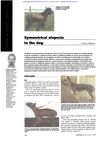
July 1999 in “In Practice”
7 citations
,
July 1999 in “In Practice” This article discusses the diagnostic approach to symmetrical alopecia in dogs, particularly focusing on conditions affecting the endocrine glands and hair follicles, without presenting new research results.