Search
for
Sort by
Research
510-540 / 1000+ results
research Erythrokeratodermia Variabilis
This case study describes a 4-year-old girl's diagnosis of erythrokeratodermia variabilis despite various ineffective treatments, highlighting a rare skin condition with persistent symptoms.
research Localized trichorrhexis nodosa
This article describes a case of localized trichorrhexis nodosa in a patient with otherwise normal hair, highlighting the condition's response to trauma and diagnostic process but reporting no new clinical findings.
research Atrichia With Papular Lesions Confirmed via Genetic Testing: A Case Report
This case report describes a 5-year-old girl with atrichia with papular lesions, whose diagnosis was confirmed through genetic testing identifying mutations in the hairless gene.
research Toe-tourniquet syndrome: a diagnostic dilemma!
This case report aims to raise physician awareness about 'toe-tourniquet' syndrome, which can lead to digit loss if not promptly treated, and to prevent its misdiagnosis as child abuse.
research 924 Efficient genome editing using CRISPR/Cas9 ribonucleoprotein approach in iPS cells for recessive dystrophic epidermolysis bullosa
This study demonstrated that gene-corrected 3D skin constructs from RDEB patient-derived iPSCs, grafted onto immunocompetent mice, showed normal collagen VII expression after two months.

research Erythrocyte deformability and hereditary elliptocytosis
This report presents a case of hereditary elliptocytosis in a 37-year-old woman with iron deficiency anemia, identifying a high percentage of elliptocytes in her blood after treatment.
research Ciliary Madarosis Secondary to Intra-Arterial Chemotherapy for Retinoblastoma Treatment
This article discusses ciliary madarosis as a transient condition secondary to IAC, emphasizing the value of physical and trichoscopic evaluations for diagnosis and prognosis; it does not report new clinical results.
research Ultraviolet-Induced Fluorescence and Sub-Ultraviolet Reflectance Dermatoscopy of Grover’s Disease (Transient Acantholytic Dermatosis): a Retrospective Single-Center Cohort Study
In this study, UVFD and sUVRD techniques revealed distinctive characteristics of GD lesions, suggesting that GD might be more common in younger individuals and females than previously thought, possibly due to underdiagnosis. Incorporating dermatoscopy in exams may help improve GD detection and management.
research Congenital cataract and slowly progressing facial skin lesions in a 5‐year‐old boy
This case report describes a five-year-old boy diagnosed with nevus comedonicus syndrome, a rare skin condition, characterized by asymptomatic skin lesions and a congenital cataract of the right eye, without inflammation or typical signs of related conditions.
research CRISPR/Cas9-Mediated Generation of COL7A1-Deficient Keratinocyte Model of Recessive Dystrophic Epidermolysis Bullosa.
This study reported the creation of isogenic immortalized COL7A1-deficient keratinocyte lines, providing a model for researching Recessive Dystrophic Epidermolysis Bullosa biology and potential therapies.
research Porokeratotic Eccrine Ostial and Dermal Duct Nevus: A Report of Rare Late-Onset Solitary Lesion
This report describes a rare case of porokeratotic eccrine ostial and dermal duct nevus in a 64-year-old woman, successfully treated with CO₂ laser, highlighting its potential occurrence in older adults.
research Congenital atrichia with papular lesions resulting from novel mutations in human hairless gene in four consanguineous families
This study observed four consanguineous families with congenital atrichia with papular lesions and identified three novel mutations in the hairless gene, which may contribute to the disorder.
research 5α Reductase Deficiency—a Rare Cause of Ambiguous Genitalia and Gender Dysphoria
In this case report, a patient with pseudovaginal perineoscrotal hypospadias due to 5α-reductase deficiency presented gender dysphoria, and after genomic sequencing confirmation, injectable testosterone undecanoate treatment successfully developed desired male secondary sexual characteristics.
research Dominant dystrophic epidermolysis bullosa: Seven familial cases
The document concludes that detailed clinical descriptions of seven family cases help understand dominant dystrophic epidermolysis bullosa's symptoms and inheritance.
research Acrodermatitis enteropathica: Case report analyses of zinc metabolism electron microscopic examination and immune function
In this case report, an 11-year-old girl with acrodermatitis enteropathica experienced a complete resolution of symptoms following oral zinc therapy, highlighting its effectiveness in managing this condition.

research Scaling dermatosis in three dogs associated with abnormal sebaceous gland differentiation
This study describes three adult dogs with sebaceous gland dysplasia, reporting that two showed moderate to marked improvement in symptoms with treatment, though ongoing management is required as the condition cannot be cured.
research CRISPR/Cas9-mediated Generation ofCOL7A1-deficient Keratinocyte Model of Recessive Dystrophic Epidermolysis Bullosa
This study developed new immortalized keratinocyte cell lines lacking COL7A1 using CRISPR/Cas9 technology, providing a valuable model to explore the biology and treatment options for recessive dystrophic epidermolysis bullosa.
research A novel nonsense CDH3 mutation in hypotrichosis with juvenile macular dystrophy
This case report identifies a novel nonsense mutation in the CDH3 gene associated with hypotrichosis and juvenile macular dystrophy.
research Acquired perforating dermatosis in renal and diabetic patients
Acquired perforating dermatosis often affects skin in people with kidney issues and diabetes.

research Evidence for multiple, developmentally regulated isoforms of Ptprq on hair cells of the inner ear
This study suggests that Ptprq in the hair bundles may exist as multiple isoforms that are differentially expressed throughout development and affect the organization of stereocilia in the chick inner ear.
research Ischemic onycholysis of the hands
A woman's nail separation was likely caused by poor blood flow, and a treatment for similar conditions might help.
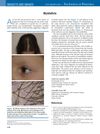
research Monilethrix
This case report describes a 12-year-old girl diagnosed with monilethrix, characterized by fragile, beaded hair shafts, with no effective treatment currently available.

research The disrupted balance between hair follicles and sebaceous glands inHoxc13‐ablated rabbits
This study found that Hoxc13-/- rabbits exhibit complete hair loss on the head and dorsum, providing a potential model for understanding human ECTD-9 and related dermatological conditions.

research A novel finding of hair growth like vellus hairs on glabrous skin of distal phalanx of thumb in Vogt–Koyanagi–Harada disease: A case report
In this case report, a 25-year-old woman with VKHD experienced an unusual occurrence of vellus-like hair growth on her normally hairless palm, observed twice over two years, expanding the known integumentary manifestations of VKHD.
research Acrodermatitis Enteropathica‐like Eruption in an Infant with Nonketotic Hyperglycinemia
This case report describes a rare instance where a child with nonketotic hyperglycinemia developed an acrodermatitis enteropathica-like eruption, likely due to combined zinc and branched chain amino acid deficiencies.

research Trachyonychia in a child with concomitant alopecia areata and lichen planus
This study reports an 8-year-old boy with trachyonychia, lichen planus, and alopecia areata who showed significant improvement in hair growth, nail condition, and skin lesions after 6 months of biweekly pulse systemic corticosteroid therapy.
research Heterozygous Arrhythmogenic Cardiomyopathy-desmoplakin Mutation Carriers Exhibit a Subclinical Cutaneous Phenotype with Cell Membrane Disruption and Lack of Intercellular Adhesion
This study found that individuals with heterozygous truncation-type variants in the *DSP* gene exhibit lower skin temperature and higher transepidermal water loss, with specific microscopic skin changes and pseudomonilethrix.

research Trichoscopy in Unveiling the Triad of Netherton Syndrome
In this case report, a 16-year-old female with Netherton syndrome, a rare genetic disorder, exhibited symptoms such as skin issues, hair abnormalities, and elevated serum IgE levels. The diagnosis was supported by skin biopsy, and treatment included topical therapies, NB-UVB, and infliximab.
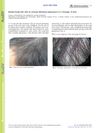
research Banded Scalp Hair with an Unusual Glistening Appearance in a Teenager: A Quiz
A teenager's hair with alternating white and dark bands, known as Pili annulati, is a genetic condition that is usually harmless and often considered attractive.