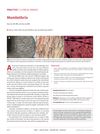
 1 citations
,
July 2018 in “CMAJ. Canadian Medical Association journal”
1 citations
,
July 2018 in “CMAJ. Canadian Medical Association journal” This case report describes a three-year-old girl with a two-year history of hair loss who was previously treated with selenium sulfide shampoo, with no family history of alopecia.
 January 2023 in “Indian dermatology online journal”
 This case study describes a previously unknown association of the PIBIDS complex with autoimmune thyroiditis and autoimmune hemolytic anemia in a five-year-old Indian child.
 1 citations
,
April 2016 in “Journal of The American Academy of Dermatology”
1 citations
,
April 2016 in “Journal of The American Academy of Dermatology” A woman had a delayed allergic reaction to the blood thinner enoxaparin, treated with a steroid cream.
22 citations
,
March 1999 in “International Journal of Clinical Practice” This review discusses the use of topical immunotherapy for severe alopecia areata and resistant viral warts, highlighting diphencyprone's advantages and the need for careful handling to avoid staff sensitisation; it reports no new clinical results.
 1 citations
,
January 2009 in “Actas Dermo-Sifiliográficas”
1 citations
,
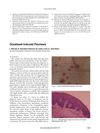
January 2009 in “Actas Dermo-Sifiliográficas” Docetaxel, a chemotherapy drug, was reported to cause psoriasis in a patient for the first time.
 January 2026 in “Cosmoderma”
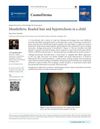
 In this clinical case study, a 9-year-old girl was diagnosed with monilethrix, a hereditary hair shaft disorder characterized by weak, beaded hair, with management focusing on minimizing hair trauma.
 13 citations
,
October 2015 in “Journal of the European Academy of Dermatology and Venereology”
13 citations
,
October 2015 in “Journal of the European Academy of Dermatology and Venereology” The document concludes that early recognition and appropriate treatment of red scalp, red ear, and red scrotum syndromes can lead to remission.
2 citations
,
January 2016 in “İzmir Dr.Behçet Uz çocuk hastanesi dergisi” This case report describes a ten-year-old boy with kerion celsi caused by Trichosporon asteroides, successfully treated with systemic fluconazole over eight weeks, marking the first documentation of this cause in the literature.
9 citations
,
January 2015 in “Veterinary record case reports” This study reports the first successful treatment of a dog infected with Mycobacterium avium subspecies hominissuis using antibiotics, with no zoonotic transmission observed.
 39 citations
,
January 2015 in “Annals of dermatology/Annals of Dermatology”
39 citations
,
January 2015 in “Annals of dermatology/Annals of Dermatology” This review discusses three newly identified forms of epidermolysis bullosa related to mutations in DST-e, EXPH5, and ITGA3, offering insights into their genetic and clinical characteristics but reports no new clinical results.
 September 2016 in “Journal of The American Academy of Dermatology”
 This case study identified the condition as Monilethrix in a 17-year-old female, characterized by a beaded hair appearance and linked to a genetic cause.
 6 citations
,
July 2015 in “International Journal of Dermatology”
6 citations
,
July 2015 in “International Journal of Dermatology” This study observed that multiple familial trichoepitheliomas commonly presented with a cribriform histopathological tumor pattern, differentiating them from solitary trichoepitheliomas.
6 citations
,
January 2008 in “Indian Journal of Dermatology” This case report describes a rare autosomal dominant hair shaft disorder, monilethrix, observed in three consecutive generations of a family, with gradual improvement noted with age.
January 2026 in “Clinical Case Reports” This case report describes a 6-year-old girl diagnosed with the rare concurrence of monilethrix and trichorrhexis nodosa, characterized by sparse, brittle hair, who showed minimal clinical improvement with low-dose oral and topical minoxidil treatment.
 August 2018 in “Journal of The American Academy of Dermatology”
 This study found that while both conventional care and teledermatology showed similar clinical response rates for treating actinic keratosis with imiquimod 5% cream, teledermatology was associated with higher treatment failure and local reaction rates.
 May 2024 in “Indian Dermatology Online Journal”
 This study reports a case of trichobacteriosis pubis, a rare bacterial infection causing malodour in the pubic region, which improved with hair trimming and topical clindamycin, subsequently enhancing the patient's sexual relationship.
 37 citations
,
May 2016 in “JAAD case reports”
37 citations
,
May 2016 in “JAAD case reports” This abstract describes monilethrix, an autosomal dominant genodermatosis with symptoms like hair fragility and keratosis pilaris, and does not report new experimental results.
2 citations
,
August 2007 in “Zoonoses and Public Health” This study documented clinical cases of dermatophytosis in two free-ranging southern chamois in the Eastern Pyrenees, with Trichophyton mentagrophytes identified in both animals.
11 citations
,
July 1984 in “Australian Veterinary Journal” This study found that povidone iodine, thiabendazole ointment, captan ointment, and Burroughs Wellcome Ringworm Ointment were effective against Trichophyton equinum var. autotrophicum in horses, but large-scale use may be limited by practicality and cost.
July 2025 in “Indian Dermatology Online Journal” In this case report, researchers documented a rare instance of trans-epidermal elimination of insulin formulation in a 45-year-old woman with diabetes, suggesting that insulin or its excipients may have caused a granulomatous reaction leading to skin lesions at injection sites and impaired diabetes control.
2 citations
,
January 2015 in “Indian dermatology online journal” This case report describes a 30-year-old woman with vitiligo who developed a rare dermatophyte infection encircling one of her vitiligo patches, possibly due to immunosuppression from her treatment.
35 citations
,
May 2006 in “Journal of Investigative Dermatology” Monilethrix involves multiple genes affecting hair structure, including DSG4 mutations.
July 2025 in “Pediatric Transplantation” In this case study, a rare viral infection called trichodysplasia spinulosa was diagnosed in a 10-year-old girl post-kidney transplant; she was treated successfully with reduced immunosuppression alongside leflunomide and valganciclovir, though the efficacy of valganciclovir remains uncertain.
22 citations
,
November 2002 in “Clinical journal of oncology nursing” This article discusses arsenic trioxide as a treatment for refractory or relapsed acute promyelocytic leukemia, noting its effectiveness and manageable side effects.
April 1992 in “Pediatrics in Review” This review discusses diagnostic methods for superficial fungal infections in children and does not report new clinical results; the authors note the ease and simplicity of these diagnostic approaches.
1 citations
,
January 2022 in “Clinical Cases in Dermatology” This case report describes a 22-year-old Asian man with erosive pustular dermatosis of the scalp, whose lesions improved after treatment with topical tacrolimus and oral isotretinoin.
4 citations
,
January 2022 in “Actas Dermo-Sifiliográficas” This study reports an increase in tinea capitis cases in Spain caused by anthropophilic dermatophytes, associated with immigration from Africa, and highlights potential public health concerns due to easier transmission.
 December 2025 in “Medical & Clinical Case Reports Journal”
 This article suggests that scalp erythrasma caused by Corynebacterium minutissimum may be underdiagnosed and that oral antibiotics used for other conditions could reduce its risk.
 25 citations
,
January 2005 in “Pediatric Dermatology”
25 citations
,
January 2005 in “Pediatric Dermatology” This article discusses the use of methotrexate for treating generalized pustular psoriasis in a 2-year-old child, providing a specific case study but reporting no new clinical results.
January 2015 in “Nasza Dermatologia Online” This case report describes an eight-year-old Kashmiri boy diagnosed with monilethrix, a rare genetic hair disorder, characterized by a beaded appearance and fragility of the hair shaft.