
This handbook of dermatology provides a comprehensive practical manual for dermatologists, but reports no new research findings.
 September 2019 in “Journal of Investigative Dermatology”
 This study found that co-culturing dermal papilla cells in a 3D structure with adipose-derived stem cells may enhance the expression of hair inductivity markers compared to 2D cultures.
 September 2019 in “Journal of Investigative Dermatology”
 This study introduced a reproducible human model using 3D-SeboSkin technology to study hidradenitis suppurativa, allowing better maintenance of skin integrity and replication of biomarker expression patterns compared to traditional skin cultures, suggesting its value for further research.

This study found that human hair follicles can be used to generate induced pluripotent stem cells, which can then efficiently differentiate back into keratinocytes.
 April 2016 in “Journal of Investigative Dermatology”
 This study found that a stimulating cream shampoo enhances the penetration of Minoxidil into hair follicles and scalp in a laboratory setting.
 April 2016 in “Journal of Investigative Dermatology”
 This study identified mefloquine as a potent inducer of lethal ER stress that effectively eliminated vemurafenib-resistant and sensitive melanoma cells, suggesting its potential for repurposing as a melanoma treatment.
 April 2016 in “Journal of Investigative Dermatology”
 This study found that topical phenylephrine, an α1-AR agonist, significantly reduced hair shedding and increased epilation force threshold in women experiencing traction alopecia during cosmetic procedures.
 April 2016 in “Journal of Investigative Dermatology”
 This study found that the peptide derivative beta-Ala-Pro-Dab-NHbenzyl may reduce wrinkles and sebum production in human skin by inhibiting dipeptidyl peptidase 4, suggesting potential for acne and skin inflammation treatment.
 January 2016 in “SpringerBriefs in bioengineering”
 This article discusses the structure and function of the skin's epidermis, detailing its role as a protective barrier and nutrient exchange system, without presenting new research findings.
 November 2009 in “Medical & surgical dermatology”
 This study found that haploinsufficiency of SPINK5 can lead to Netherton syndrome when a single null mutation combines with homozygous G1258A polymorphisms, suggesting it acts as a genuine mutation affecting LEKTI function.

This study found that Botox® was most effective at a 25 U/ml concentration, while Dysport® and Neurobloc® were optimal at 100 U/ml for producing anhidrotic areas after injections.
 October 2007 in “Journal of Investigative Dermatology”
 The document suggests a bacteria plays a significant role in acne rosacea and that white hair can regain color after transplant, meriting more research on reversing grey hair.
 August 2007 in “Journal of Investigative Dermatology”
 This review covers presentations from the 68th Annual Meeting of the Society of Investigative Dermatology and highlights research advances in dermatology, but reports no new clinical results.
 December 1991 in “Annals of the New York Academy of Sciences”
 This article discusses themes in the molecular structure of hair and reports no new research findings.
 June 2019 in “Stem Cell Research”
 This study established a pluripotent stem cell line from a patient with androgenetic alopecia, which can potentially be used to study the disease's pathological mechanisms.
 April 2016 in “Journal of Investigative Dermatology”
 This study found a perfect correlation between laser Doppler velocimetry measurements of scalp blood perfusion after minoxidil application and sulfotransferase enzyme activity in hair follicles, indicating a potential non-invasive test to predict minoxidil response in female pattern hair loss.
 8 citations
,
November 1990 in “Archives of Dermatology”
8 citations
,
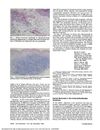
November 1990 in “Archives of Dermatology” This case report details a woman with eosinophilia-myalgia syndrome associated with L-tryptophan ingestion, highlighting skin lesions with abundant dermal mucin.
 8 citations
,
March 2019 in “Drugs - Real World Outcomes”
8 citations
,
March 2019 in “Drugs - Real World Outcomes” This study reported that while general patient characteristics and adverse event incidence for eribulin were comparable between a healthcare claims database and post-marketing surveillance, significant differences in some side effects such as neutropenia were observed.
In this study, melatonin implantation altered BMP2 gene expression associated with hair follicle growth in Inner Mongolia Cashmere Goats, particularly reducing expression during the follicles' resting period.
 1 citations
,
November 2023 in “Journal of neurology”
1 citations
,
November 2023 in “Journal of neurology” This study reports a case of a patient with neuromyelitis optica spectrum disorders treated with eculizumab who developed fatal sepsis after insulin resistance emerged.
November 2006 in “評価・診断に関するシンポジウム講演論文集” This study found that KSR1 is essential for v-Ha-ras-mediated skin tumor formation in mice but not for MT-driven mammary tumor genesis, suggesting its potential as a therapeutic target in Ras/MAPK signaling.
19 citations
,
February 2001 in “Journal of paediatrics and child health” This report documents a 14-year-old Chinese boy with mitochondrial encephalopathy, lactic acidosis, stroke-like episodes, and a de novo A3243G mitochondrial DNA mutation, highlighting the condition's multisystem involvement without ragged red fibers in muscle biopsy.
 June 2024 in “ESMO Gastrointestinal Oncology”
 The BAYONET trial is a phase II study designed to assess the efficacy and safety of combining encorafenib, binimetinib, and cetuximab for patients with BRAF V600E-mutant metastatic colorectal cancer that is resistant to encorafenib plus cetuximab; results are not yet reported.
5 citations
,
June 2020 in “Medicine” This report discusses a 22-year-old patient with MELAS syndrome carrying the m.10158T>C mutation, and highlights the need for extensive genetic testing when initial hot-spot mutation tests are negative.
 December 2023 in “American journal of medical genetics. Part A”
 In this study, researchers identified compound heterozygous variants in the MBTPS1 gene associated with ectodermal dysplasia features in a 14-year-old female, broadening the known disorder spectrum linked to these genetic mutations.
 11 citations
,
November 1990 in “Archives of Dermatology”
11 citations
,
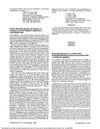
November 1990 in “Archives of Dermatology” This case report describes a patient with eosinophilia-myalgia syndrome, likely linked to L-tryptophan use, who developed a skin rash characterized by cutaneous mucinosis.
1 citations
,
June 2025 in “Journal of Veterinary Internal Medicine” In this case study, a miniature donkey with multisystemic eosinophilic epitheliotropic disease was euthanized due to laminitis despite treatment for pruritus, inappetence, hypertriglyceridemia, and alopecia.
February 2024 in “Frontiers in Cell and Developmental Biology” This study found that eribulin-based chemotherapy resulted in longer median progression-free and overall survival, with fewer side effects, for advanced triple-negative breast cancer patients compared to other chemotherapy options.
 4 citations
,
January 2017 in “Ciência Rural”
4 citations
,
January 2017 in “Ciência Rural” This case report highlights that equine multisystemic eosinophilic epitheliotropic disease should be considered in horses presenting with skin lesions and gastrointestinal symptoms, as illustrated by the progression in a 5-year-old horse despite treatment.
 April 2023 in “Journal of Investigative Dermatology”
 This study demonstrated that the Epidermal Biopotential Sensing System (EBSS) can measure digital biomarkers of pain in mice, suggesting potential applications in assessing pain and screening analgesics in populations with communication difficulties.