 40 citations
,
February 2002 in “International Journal of Dermatology”
40 citations
,
February 2002 in “International Journal of Dermatology” In this study, hair damaged by permanent dye showed signs of recovery over time, with near complete restoration to its original state after eight weeks.
 20 citations
,
June 2011 in “ISRN Dermatology (Print)”
20 citations
,
June 2011 in “ISRN Dermatology (Print)” This case report describes a woman experiencing severe hair loss due to allergic contact dermatitis from a hair dye containing PPD.
 19 citations
,
January 2012 in “Annals of Dermatology”
19 citations
,
January 2012 in “Annals of Dermatology” This article recommends creating a system to educate users about the ingredients and side effects of hair coloring products and does not report new research findings.
13 citations
,
February 2008 This study reports that the newly developed natural dye-based sindoor is safe for skin application and offers a non-toxic alternative to synthetic dye-based sindoor.
9 citations
,
July 2012 in “Dermatitis” Hair dye with para-phenylenediamine can cause skin depigmentation.
 9 citations
,
January 2010
9 citations
,
January 2010 This study reports that a 100% herbal hair dye composed primarily of Cymphomandra betacea, Tagetes erecta, and Aloe vera gel provides permanent hair color without causing hair damage, loss, or skin irritation compared to synthetic dyes.
8 citations
,
January 2018 in “Journal of cosmetic dermatology” This study found that conditioner agents reduced the damage caused by oxidative hair dye, specifically improving protein retention and combability in treated Caucasian hair.
 7 citations
,
January 2013 in “Journal of Cosmetics, Dermatological Sciences and Applications”
7 citations
,
January 2013 in “Journal of Cosmetics, Dermatological Sciences and Applications” This study found that incorporating Argania spinosa kernel oil and/or Theobroma grandiflorum seed butter into hair care formulations reduced protein loss in Caucasian hair dyed with an oxidative product.
 6 citations
,
December 2018 in “Medical principles and practice”
6 citations
,
December 2018 in “Medical principles and practice” This meta-analysis reported that individuals who frequently use hair dye or have used it for over 20 years have an increased risk of developing non-Hodgkin's lymphoma.
6 citations
,
January 2016 in “Indian Journal of Dermatology Venereology and Leprology” This study found that the majority of "hypoallergenic" hair dyes still triggered allergic reactions in patients sensitive to para-phenylenediamine.
6 citations
,
March 2015 in “European Journal of Public Health” This study suggests that long-term use of hair dyes may be associated with higher testosterone levels among premenopausal Japanese women.
 6 citations
,
March 2015 in “Journal of The American Academy of Dermatology”
6 citations
,
March 2015 in “Journal of The American Academy of Dermatology” This article discusses the diagnostic challenges of evaluating hair and scalp conditions in patients using hair dye, emphasizing how dyes can mimic different pathologies and lead to contact dermatitis.
5 citations
,
August 2022 in “Mediators of Inflammation” This study found that combining pulsed dye laser with pingyangmycin improved treatment efficacy, scar repair, skin condition, and patient satisfaction in treating post-acne hyperplastic scars, compared to laser alone, without increasing adverse reactions.
 5 citations
,
February 2019 in “Journal of oceanology and limnology (Online)”
5 citations
,
February 2019 in “Journal of oceanology and limnology (Online)” This study found that adding 7% Ecklonia cava extract to oxidative hair dyes significantly reduced their cytotoxicity and oxidative stress without affecting color performance.
 5 citations
,
June 2013 in “Fashion business”
5 citations
,
June 2013 in “Fashion business” This study found that adding rose hip extract to permanent wave solutions increased wave effectiveness and reduced hair damage, although variations in hair type may affect the results.
5 citations
,
January 2011 in “International Journal of Cosmetic Science” This study found that 1,2,3,4-tetrahydroquinoline derivatives, particularly N-methyl-7-amino-1,2,3,4-tetrahydroquinoline, may be excellent blue dye candidates for human hair, offering superior color purity, stability, and fastness compared to 2,3-dihydroindoles.
 4 citations
,
June 2020 in “JAAD case reports”
4 citations
,
June 2020 in “JAAD case reports” This study presents a rare case of alopecia totalis occurring after the use of permanent hair dye.
 3 citations
,
May 2020 in “Annals of the Academy of Medicine Singapore”
3 citations
,
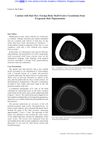
May 2020 in “Annals of the Academy of Medicine Singapore” Hair dye can cause serious scalp issues, including skull erosion.
 2 citations
,
September 2021 in “International Journal of Ayurvedic Medicine”
2 citations
,
September 2021 in “International Journal of Ayurvedic Medicine” In this study, most participants began using chemical hair dyes at a young age, experiencing adverse effects, but continued due to the perceived importance of hair color.
1 citations
,
January 2010 in “LA Referencia (Red Federada de Repositorios Institucionales de Publicaciones Científicas)” In this study, adding conditioning agents PA1, PA2, and PA3 to light blonde oxidative hair dyes improved combability and protein retention of light brown hair without affecting tensile strength, though PA1 and PA2 offered enhanced thermal protection.
1 citations
,
September 2003 in “Annals of Epidemiology” July 2026 in “Our Dermatology Online” This study observed a significant rise and fall in black hair dye dermatitis cases over six years, primarily affecting middle-aged men, with most cases presenting as chronic pigmented lichenoid photodermatitis.

This study examined the use of plant extracts as natural hair dye colourants, highlighting their antioxidant properties and eco-friendly benefits. The authors reported that plant-based dyes effectively deliver vibrant colours and enhance hair health while offering a sustainable alternative to synthetic dyes.
 June 2026 in “Zenodo (CERN European Organization for Nuclear Research)”
 This study formulated an herbal hair dye using the medicinal herb Eclipta alba and other natural ingredients, finding it provided satisfactory coloring effects, conditioning benefits, stability, and safety, which supports its potential as a natural alternative to synthetic hair dyes.
 June 2026 in “Zenodo (CERN European Organization for Nuclear Research)”
 In this study, researchers formulated a herbal hair dye using Eclipta alba and evaluated it for various parameters, finding it provided satisfactory coloring, conditioning, and stability without irritation, supporting its potential as a safer alternative to synthetic dyes.

This study developed a natural herbal hair dye powder using Eclipta prostrata, Nigella sativa, and Aloe Vera, which offers safe and environmentally friendly hair coloring while avoiding harmful effects associated with conventional dyes.
 March 2026 in “Portuguese Journal of Dermatology and Venereology”
 This study observed an unexpected case where a 44-year-old woman developed linear scalp pigmentation, resembling a tattoo, after undergoing a microneedling procedure followed by hair dyeing two days later, emphasizing the need to advise patients on avoiding hair dye application soon after such treatments.
 February 2026 in “PubMed”
 This study reported that para-phenylenediamine and toluene-2,5-diamine are the main sensitizers in hair dye-related allergic contact dermatitis, with significant cross-reactivity to several other compounds.
December 2025 in “Journal of Forensic Sciences” This pilot study found that prebleaching either virgin or previously colored hair only slightly affects the SERS spectra of dyes applied afterward, without impacting the accuracy of dye identification, supporting the technique's robustness for forensic analysis of hair dyes.
 November 2025 in “Indian Journal of Nephrology”
 In this case study, a 43-year-old male with anti-GBM disease experienced a relapse triggered by hair dye, leading to diffuse alveolar hemorrhage; managing this with plasmapheresis, intravenous immunoglobulins, and rituximab suggests rituximab may be beneficial for relapsing cases.