37 citations
,
September 2009 in “JEADV. Journal of the European Academy of Dermatology and Venereology/Journal of the European Academy of Dermatology and Venereology” This study found that diphencyprone is an effective and safe treatment for extensive alopecia areata, especially with long-term therapy and maintenance to reduce relapse risk.
 6 citations
,
May 2020 in “Scientific reports”
6 citations
,
May 2020 in “Scientific reports” In this study, microarray and proteomic analyses indicated that genes involved in immune response, receptor binding, and growth factor activity might influence wool fibre diameter in sheep.
April 2017 in “The journal of investigative dermatology/Journal of investigative dermatology” This study found that TLR3-mediated damage sensing can stimulate prostaglandin and Wnt pathways, potentially coordinating hair follicle regeneration in mice with large skin wounds.
November 2025 in “Journal of Diabetes Investigation” In this case study, a man with Werner syndrome and diabetes saw improved glycemic control and insulin resistance with dapagliflozin, suggesting its potential usefulness for managing diabetes in similar patients.

This study developed a directional pressure-pump hydrogel delivery platform that enhances wound healing in diabetic mechanically dynamic wounds by targeting antibacterial agents and nanozymes directly to the lesion site, disrupting biofilms, mitigating tissue damage, and supporting proper skin closure and vascular remodeling in animal models.
87 citations
,
March 2017 in “Journal of Clinical Investigation” In this study, researchers identified PSENEN mutations that can lead to a form of Dowling-Degos disease, characterized by follicular hyperkeratosis and an increased susceptibility to acne inversa, especially in the presence of certain trigger factors.
June 2026 in “Precision medicine and engineering.” In this study, researchers created a hydrogel that reduces oxidative stress and releases a pro-angiogenic drug in response to enzyme activity, which accelerated healing and improved tissue regeneration in chronic diabetic wounds during in vivo experiments.
83 citations
,
September 2021 in “Advanced functional materials” This study introduced a multifunctional DNA hydrogel dressing that may enhance wound healing by promoting tissue regeneration, nerve repair, and immune response in diabetic infectious wounds.
 March 2005 in “Journal of The American Academy of Dermatology”
 Diphencyprone treatment protocols could be simplified as no harm occurred despite not fully following them.
 47 citations
,
March 2017 in “Materials Science and Engineering: C”
47 citations
,
March 2017 in “Materials Science and Engineering: C” In this study, decellularized human amniotic membrane was found to promote wound healing and reduce scar formation in rats with full-thickness skin defects, compared to traditional clinical treatments.
 November 2023 in “International Journal of Cosmetic Science”
 This study found that a wheat polar lipid complex supplement significantly reduced hair loss and improved hair growth and volume in women experiencing acute hair shedding, including postmenopausal women.
22 citations
,
October 2018 in “Molecular Medicine Reports” In this study, classic PDRN (50-1,500 kDa) was observed to improve wound healing quality in a mouse model by enhancing collagen composition and cell migration.
January 1954 in “DMW - Deutsche Medizinische Wochenschrift”  May 2024 in “Indian Journal of Dermatology”
 In this case report, a 22-year-old female was diagnosed with follicular Dowling-Degos disease based on clinical and histological findings, with symptoms including skin lesions confined to hair follicles. The report emphasizes the importance of differentiating this rare variant from similar conditions for proper management.
58 citations
,
March 2019 in “Frontiers in Pharmacology” This study found that wedelolactone from Eclipta prostrata L. significantly reduced lung inflammation and fibrosis in mice with bleomycin-induced pulmonary fibrosis, suggesting potential therapeutic benefits through AMPK activation.
11 citations
,
December 2013 in “Clinical and experimental dermatology” This study reports a case of a child with congenital skin fragility, alopecia, and cardiomyopathy due to compound heterozygous mutations in the DSP gene causing desmoplakin deficiency.
 6 citations
,
July 2007 in “Developmental Dynamics”
6 citations
,
July 2007 in “Developmental Dynamics” This study reports that Wise is expressed in specific patterns during the morphogenesis of chick embryos, particularly in regions associated with known signaling molecules like Wnt, Bmp, and Shh.
 June 2020 in “The journal of investigative dermatology/Journal of investigative dermatology”
 This study found that low-level pulsed wave red light stimulated collagen and ATP production in human fibroblasts with significantly shorter treatment time than continuous wave light, suggesting enhanced consumer compliance for skin treatments.
 2 citations
,
June 2012 in “Dermatologica Sinica”
2 citations
,
June 2012 in “Dermatologica Sinica” Dermoscopy is useful for diagnosing and monitoring discoid lupus erythematosus by showing specific skin patterns.
June 2025 in “British Journal of Dermatology” This study introduces ALUDWIG, an automated tool for assessing female androgenic alopecia severity from smartphone images, which may offer a more consistent alternative to current scoring methods like the Ludwig scale.
 1 citations
,
March 2019 in “Journal of AOAC INTERNATIONAL”
1 citations
,
March 2019 in “Journal of AOAC INTERNATIONAL” New method quickly and accurately measures dexpanthenol in hair products.
January 2026 in “Biomaterials”  June 2026 in “Lasers in Medical Science”
 This randomized trial found that diode laser achieved more favorable long-term hair removal outcomes but induced more discomfort and transient adverse effects compared to intense pulsed light in women with Fitzpatrick skin types I-IV.
 November 2025 in “Bioengineering”
 In this study, researchers used a 3D printing technique to spatially pattern human dermal papilla cell spheroids in a collagen matrix, enhancing skin and hair regeneration in a mouse model, with notable upregulation of key genes for hair follicle formation compared to traditional cell cultures.
 August 2026 in “Pharmaceutics”
 In this study, researchers developed a dexpanthenol-infused nanotechnological platform within hyaluronic acid hydrogels that promoted wound healing in mice by providing a protective barrier and significantly enhancing skin regeneration, including increased fibroblast activity and tissue remodeling.
June 2026 in “ACS Applied Materials & Interfaces” In this study, carbon dots derived from dandelion herb demonstrated significant antibacterial and biofilm-disrupting capabilities, promoting wound healing in a mouse model infected with S. aureus, while also showing excellent biocompatibility and the ability to modulate reactive oxygen species.
 25 citations
,
August 2010 in “Acta Biomaterialia”
25 citations
,
August 2010 in “Acta Biomaterialia” This study achieved a first by successfully forming large quantities of dermal papilla spheroidal microtissues, which retained their hair induction potential, using a micropatterned culture system.
 7 citations
,
November 2014 in “Histochemistry and Cell Biology”
7 citations
,
November 2014 in “Histochemistry and Cell Biology” This study found that mutant mice with the we/we wal/wal genotype exhibit significant defects in hair shaft structure and epidermis stratification, correlating with postnatal alopecia symptoms.
 26 citations
,
March 2013 in “Journal of Biomedical Materials Research Part A”
26 citations
,
March 2013 in “Journal of Biomedical Materials Research Part A” This study demonstrated that PEGDA hydrogel microwells successfully supported cell survival and proliferation while mimicking hair follicle architecture in vitro, suggesting a potential tool for hair follicle engineering.
 86 citations
,
March 2018 in “ACS Biomaterials Science & Engineering”
86 citations
,
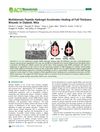
March 2018 in “ACS Biomaterials Science & Engineering” This study found that MDP hydrogel significantly accelerated wound healing and improved tissue formation in diabetic mice compared to a standard clinical hydrogel and control buffer.