 1 citations
,
June 2020 in “Annals of the rheumatic diseases”
1 citations
,
June 2020 in “Annals of the rheumatic diseases” In this study, 93% of patients with inflammatory arthritis remained on the adalimumab biosimilar ABP 501 for 24 weeks after switching from the originator, with some switching back due to adverse reactions or reduced effectiveness.
15 citations
,
July 2010 in “Journal of Allergy and Clinical Immunology” This study found that in mouse models, the novel NF-κB inhibitor DHMEQ improved symptoms of atopic dermatitis as effectively as tacrolimus or betamethasone.
10 citations
,
October 2019 in “Australasian Journal of Dermatology” Secukinumab effectively treated a difficult case of folliculitis decalvans.
 11 citations
,
October 2001 in “Dermatologic Clinics”
11 citations
,
October 2001 in “Dermatologic Clinics” In this study, subcutaneous recombinant human IL-12 showed a 43% partial response rate in early-stage mycosis fungoides patients refractory to previous treatments, with generally mild to moderate adverse events reported.
July 2024 in “Journal of Investigative Dermatology” Brepocitinib improves cicatricial alopecia and reduces key immune markers.
1 citations
,
May 2025 in “BMC Cancer” In this study, the researchers found that different CDK4/6 inhibitors used in treating HR+/HER2- advanced breast cancer have varying safety profiles and impacts on patient quality of life.
18 citations
,
August 2024 in “eLife” This study investigated immune dysregulation in individuals with Down syndrome and found that treatment with the JAK inhibitor tofacitinib improved skin conditions like alopecia areata and reduced autoimmune markers without severe side effects. Additional research is necessary to understand its broader impacts.
 12 citations
,
February 2003 in “European Urology Supplements”
12 citations
,
February 2003 in “European Urology Supplements” Dutasteride reduces DHT more effectively than finasteride.
 1 citations
,
May 2025 in “Frontiers in Medicine”
1 citations
,
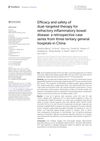
May 2025 in “Frontiers in Medicine” In this case series, dual-targeted therapy was observed to provide promising clinical responses in refractory inflammatory bowel disease, with 88.23% to 100% response rates across 9 months and an endoscopic response in 88.89% of evaluated patients, though some adverse events occurred.
 68 citations
,
November 2015 in “The Journal of Allergy and Clinical Immunology”
68 citations
,
November 2015 in “The Journal of Allergy and Clinical Immunology” In this study, three patients with extensive alopecia areata showed varying degrees of hair regrowth after 20 weeks of treatment with ustekinumab, a cytokine-targeting therapy.
 April 2023 in “Journal of Investigative Dermatology”
 This study found that the oral IRAK4-inhibitors BAY 1834845 and BAY 1830839 reduced skin inflammation and systemic inflammatory responses in healthy volunteers, showing similar pharmacodynamic effects to prednisolone when challenged with topical imiquimod and intravenous LPS.
10 citations
,
January 2023 in “SAGE Open Medical Case Reports” In this case report, a 23-year-old man with Crohn's disease experienced near-complete resolution of alopecia universalis after 7 months of upadacitinib treatment, suggesting potential benefits for treating concurrent alopecia areata and Crohn's disease.
June 2008 in “Drugs & therapy perspectives” Dutasteride effectively treats benign prostatic hyperplasia, improving symptoms and quality of life.
 August 2024 in “Clinical Cosmetic and Investigational Dermatology”
 In this case report, a nine-year-old child with vitiligo and alopecia areata was successfully treated with upadacitinib and UVB, resulting in a significant reduction in the affected areas, suggesting a promising treatment approach for similar pediatric cases.
 6 citations
,
August 2013 in “Joint Bone Spine”
6 citations
,
August 2013 in “Joint Bone Spine” Tocilizumab treatment was associated with significant hair regrowth in one patient and temporary hair loss followed by regrowth in another.
14 citations
,
January 2017 in “Dermatology Online Journal” This case report describes a patient with psoriasis who developed alopecia with unique histological features after anti-TNF therapy, suggesting that such effects may require considering treatment suspension for severe cases.
 March 2024 in “EMBO molecular medicine”
 This study found that the antiviral drug daclatasvir significantly improved fibrosis and quality of life in a mouse model of recessive dystrophic epidermolysis bullosa, suggesting potential for treating this and other fibrotic diseases.
1 citations
,
January 2024 in “Pharmaceuticals” The researchers reported that dPGS-PCL as a carrier improved the penetration of tofacitinib in an ex-vivo human skin model compared to free tofacitinib, but did not show significant differences in inhibiting IL-6 and IL-8 during short incubation.
1 citations
,
October 2025 in “Journal of Investigative Dermatology” In this study of women with frontal fibrosing alopecia, delgocitinib cream improved the molecular signature of lesions and demonstrated potential as a treatment, showing significant transcriptomic changes and some clinical improvements over 12 weeks compared to a cream vehicle.
This article reviews numerous drug reactions and interactions for various medications and does not present new research findings.
September 2023 in “Journal of the American Academy of Dermatology” This study evaluated the effect of guselkumab on moderate to severe plaque psoriasis and found that median PASI improvements increased from around 60% at week 4 to over 90% by week 12 of treatment across multiple clinical trials.
1 citations
,
January 2025 in “Dermatologic Therapy” This study analyzed FAERS data to explore the risk and onset patterns of autoimmune skin diseases associated with immune checkpoint inhibitors, finding a strong association particularly with bullous pemphigoid and emphasizing the need for vigilant monitoring of these adverse effects.
June 2026 in “Skin Appendage Disorders” This review discusses diffuse unpatterned alopecia (DUPA) as an understudied variant of androgenetic alopecia, summarizing its presentation and management while calling for further research to better understand its distinct characteristics.
2 citations
,
October 2025 in “Frontiers in Medicine” This study found that deuruxolitinib may effectively improve hair regrowth and patient satisfaction in moderate to severe alopecia areata, but careful monitoring is needed due to manageable side effects and concerns about long-term safety.
November 2025 in “The Journal of Immunology” In a murine model of alopecia areata, this study observed that the IL-2 fusion protein HCW9302 helped prevent disease development by expanding regulatory T cells and reducing disease-causing effector T cell infiltrates, suggesting potential for using IL-2 fusion proteins in alopecia areata treatment.
 February 2026 in “Dove Medical Press (Taylor and Francis Group)”
 This case report highlights two instances of alopecia areata, demonstrating diverse presentations, and suggests upadacitinib as a promising treatment option, resulting in hair regrowth within 3–6 months, without worsening sarcoidosis-related skin lesions.
 3 citations
,
May 2020 in “JAAD Case Reports”
3 citations
,
May 2020 in “JAAD Case Reports” This report discusses two patients with plaque psoriasis who developed hypertrichosis, or excessive hair growth, while undergoing interleukin-17A inhibitor therapy.
25 citations
,
March 2021 in “Australasian Journal of Dermatology” This case study reports a 70-year-old man with treatment-resistant pityriasis rubra pilaris achieving complete clinical remission with ustekinumab, adding to evidence supporting biologic therapy when TNF inhibitors are unsuitable.
6 citations
,
October 2023 in “JAAD Case Reports” This study describes dissecting cellulitis of the scalp (DCS) as a rare and aggressive form of chronic scalp inflammation presenting with pustules and nodules, commonly affecting males and African Americans, and leading to significant quality of life impacts and psychological distress.
 February 2023 in “European Journal of Dermatology”
 In this retrospective study from North France, apremilast was used in patients with psoriasis and recent cancer, showing a good safety profile and improved quality of life, though with 65.2% experiencing non-serious adverse events. The need for further research on oncological safety was highlighted.