May 2026 in “Journal of Fish Biology” In this study, feeding Gymnocypris eckloni with Flammulina velutipes residues enhanced foregut morphology and beneficially altered gut microbiota, highlighting potential improvements in intestinal health for aquaculture use.
 May 2026 in “Research Square”
 This research reports that the polyG fragment within the Hoxc13 protein alters its gene regulatory functions, which could have influenced mammalian hair evolution by affecting pathways related to hair follicle development.
 March 2026 in “Preprints.org”
 This study investigated the secretome of adipose mesenchymal stem cells and fibroblasts used in skin care products, finding 16 therapeutic pathways involving numerous signaling mechanisms, which may offer skin benefits through anti-inflammatory and regenerative effects.
 March 2026 in “Journal of Nanotheranostics”
 This review highlights how nanotechnology enhances CRISPR-Cas9's potential for cancer treatment by improving delivery and stability, addressing key challenges like immunogenicity and delivery inefficiencies, and discusses recent advancements in stimuli-responsive nanoplatforms for precise genome editing.
In this study, researchers developed a photocurable polyurethane resin for 3D printing, creating high-resolution elastomeric microwell arrays that effectively promote uniform spheroid formation and growth of A549 cells, which could aid in disease modeling and organoid research.
November 2025 in “Journal of Investigative Dermatology” Radiation-induced hair loss may be caused by hair growth stopping and inflammation in blood vessels.
 October 2025 in “International journal of research and scientific innovation”
 This case report highlights the importance of considering lupus pneumonitis as a differential diagnosis for respiratory symptoms in systemic lupus erythematosus, especially in areas endemic to tuberculosis.
August 2025 in “Annals of the Rheumatic Diseases” This study observed that the relationships between various criteria used to classify systemic lupus erythematosus are more consistent with chance than predictable patterns, although connections within the same organ domain are relevant.
 July 2025 in “Cermin Dunia Kedokteran”
 This study highlights nasopharyngeal carcinoma as the fourth most common cancer in Indonesia, noting that its etiology involves genetic and environmental factors, while early detection often utilizes serology and imaging, with diagnosis confirmed by biopsy and histopathology.
 June 2025 in “Rapid Communications in Mass Spectrometry”
 In this study, researchers developed a simplified and reliable method to prepare human hair shaft samples, achieving over 75% protein extraction efficiency and improved keratin sequence coverage, with the approach showing high reproducibility across different labs and operators.
 January 2025 in “Parasites & Vectors”
 This observational study identified L. infantum infection in meerkats housed in two zoological parks in Madrid, marking the first such report for this species, though the disease persisted in one individual despite treatment.
November 2024 in “Forensic Sciences” This review highlights the potential for using the Y chromosome in epigenetic analyses to better understand male-specific aging and disease mechanisms.
November 2024 in “Journal of Investigative Dermatology” Scalp hair follicle cells help protect and heal skin in certain skin conditions.
 June 2024 in “ESMO Gastrointestinal Oncology”
 The BAYONET trial is a phase II study designed to assess the efficacy and safety of combining encorafenib, binimetinib, and cetuximab for patients with BRAF V600E-mutant metastatic colorectal cancer that is resistant to encorafenib plus cetuximab; results are not yet reported.
 February 2024 in “PloS one”
 This study found that certain nutraceuticals did not interfere with tamoxifen's inhibition of estrogen in breast cancer cells and may enhance its effects, suggesting potential as an adjuvant therapy for hair loss in patients undergoing endocrine therapy.
 February 2024 in “BioMetals”
 This review found substantial data suggesting that heavy metals may influence tumor development and progression in cancers such as breast, lung, prostate, and gastric, though noted limitations and gaps in research data require further investigation.
 February 2024 in “Rheumatology & autoimmunity”
 This case report documents a rare instance where homonymous hemianopia was the first manifestation of systemic lupus erythematosus in a 42-year-old woman, suggesting its potential inclusion as an initial diagnostic indicator in SLE.
 June 2023 in “Frontiers in Cardiovascular Medicine”
 This review identified two promising therapeutic targets for drug repurposing to treat refractory angina in patients with angina pectoris without obstructive coronary artery disease: endothelin-1 receptor blockers and soluble guanylate cyclase stimulators.
 April 2023 in “Journal of Investigative Dermatology”
 This study found that alopecia areata patients have higher odds of certain comorbidities like ulcerative colitis and vitiligo, while showing lower odds for conditions like hypertension and type 2 diabetes compared to healthy controls.
 April 2023 in “Journal of Investigative Dermatology”
 This study found that mitochondrial dysfunction in the epidermis contributes to aging-related changes in hair follicles among mice, with aged mice showing reduced hair density and delayed regrowth, suggesting that maintaining mitochondrial function may help prevent age-related organ decline.
 January 2023 in “Pesquisa Veterinária Brasileira”
 This study reports that hypotrichosis congenita in Hereford cattle is associated with a KRT71 mutation, leading to color dilution follicular dysplasia.
 September 2022 in “Research Square (Research Square)”
 This study found that caffeic acid treatment mitigated the negative effects of acrylamide toxicity in Wistar rats by normalizing tissue and serological indices.
August 2022 in “Journal of Investigative Dermatology” Baricitinib reduces inflammation and mitochondrial damage in skin cells.
 August 2022 in “Frontiers in genetics”
 This study identified a novel bi-allelic missense variant in the DSC3 gene linked to severe Hypotrichosis with Recurrent Skin Vesicles in a Saudi child, supporting its role in the condition.
 July 2022 in “Journal of the Dermatology Nurses' Association”
 This editorial summarizes key dermatological insights and learnings from the 2022 Dermatology Nurses' Association Convention, covering conditions like lichen sclerosus and melanoma, and issues related to nail disorders and skin of color.
April 2022 in “SDÜ Tıp Fakültesi Dergisi” In this study, sodium benzoate at the No Adverse Effect Level dose adversely affected kidney and liver function and increased oxidative stress and genotoxicity in prepubertal rats.
 April 2022 in “JOURNAL OF RESEARCH AND REVIEW IN SCIENCE”
 This review examines existing scientific literature on African plants with anti-cancer properties and reports no new experimental results.
April 2022 in “Book Publisher International (a part of SCIENCEDOMAIN International)” This manuscript proposes a hypothesis that the enzyme catalase added to processed meats may emit electromagnetic fields and contribute to cancer development.
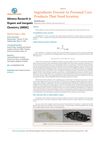
Certain ingredients in personal care products, like formaldehyde, oxidative hair dyes, and sulfates, pose health risks and need careful review.
 February 2022 in “Research Square (Research Square)”
 In this cell-based study, researchers found that certain nutraceuticals combined with tamoxifen may influence estrogen receptor expression, potentially offering a protective effect and promoting hair growth during breast cancer therapy.