 December 2005 in “Endocrine-related cancer”
 This case report describes a 57-year-old woman's virilizing adrenal tumor effectively treated with the antiandrogen cyproterone acetate, which led to symptom reversal and tumor resolution.
 September 2025 in “SKIN The Journal of Cutaneous Medicine”
 This study reports a case of alopecia areata in a 14-year-old male using isotretinoin for acne, illustrating an unexpected side effect not typically linked to the drug, highlighting the importance of monitoring and addressing hair loss risks during treatment.
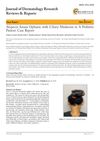 July 2025 in “Journal of Dermatology Research Reviews & Reports”
 In this case study, a 10-year-old girl with infantile ophiastic alopecia areata and ciliary madarosis showed excellent hair and eyelash regrowth after 56 days of treatment involving oral corticosteroids, topical minoxidil, and clobetasol hair lotion, following an initial diagnosis and psychological evaluation.
This case report details a 47-year-old female with atopic dermatitis who developed alopecia areata after six months on dupilumab therapy; treatment discontinuation and other interventions led to complete hair regrowth, suggesting dupilumab may trigger alopecia areata in patients with atopic or autoimmune predispositions.
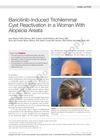
Baricitinib may reactivate trichilemmal cysts in people with a history of these cysts.
 February 2025 in “Frontiers in Veterinary Science”
 This case report highlights the successful use of Prussian Blue to treat a dog suffering from thallium intoxication, demonstrating the importance of early diagnosis and targeted therapy in veterinary care for improving recovery outcomes.
 October 2023 in “Journal of the Endocrine Society”
 This study reported a rare case where a pheochromocytoma produced ACTH, leading to cyclic Cushing syndrome, and underscores the importance of considering this possibility in cases of ACTH-dependent hypercortisolism with an adrenal mass.
 October 2023 in “Journal of the Endocrine Society”
 This case report highlights the potential benefits of unilateral adrenalectomy in treating primary bilateral macronodular adrenal hyperplasia, noting a high rate of remission and low risk of recurrence.
 January 2023 in “Research Square (Research Square)”
 This study suggests that measuring cortisol levels in hair may serve as a useful biomarker for assessing mood in individuals with bipolar disorder over recent months.
 November 2022 in “Journal of the Endocrine Society”
 This case report describes a rare instance of virilizing androgen production due to an ovarian serous cystadenoma in a 59-year-old woman, with testosterone levels normalizing after its removal.
 November 2022 in “Journal of the Endocrine Society”
 This case report highlights the diagnostic challenge of identifying androgen-secreting ovarian Leydig cell tumors in postmenopausal women when imaging fails to reveal masses, emphasizing the usefulness of ovarian vein sampling for localization.
 February 2021 in “Endocrinology, diabetes & metabolism case reports”
 This case report describes a postmenopausal woman with hirsutism and hair loss attributed to ovarian stromal hyperplasia; surgical removal of the ovaries normalized testosterone levels and resolved symptoms.

This article discusses vaccination coverage for BCG, Polio, and Hepatitis B in Juiz de Fora using SUS data and reports no new results; the authors aim to hypothesize reasons for coverage variation.
 June 2020 in “The journal of investigative dermatology/Journal of investigative dermatology”
 This pilot study suggests that a new preparation of platelet-rich plasma gel may improve symptoms and tissue regeneration in patients with en coup de sabre scleroderma, though further trials are needed to clarify its role.
 January 2020 in “Journal of South Asian Federation of Obstetrics and Gynaecology”
 In this case study, laparoscopic bilateral salpingo-oophorectomy was associated with reduced androgen levels and partial reversal of male-pattern hair loss in a postmenopausal woman with ovarian hyperandrogenism.
 January 2014 in “European Geriatric Medicine”
 A postmenopausal woman's virilization was caused by a rare ovarian tumor that was hard to detect but was successfully treated with surgery.
 October 2010 in “Reproductive Biomedicine Online”
 A new method can almost perfectly distinguish adenomyosis from similar conditions using blood tests.
 August 1996 in “Journal of Pediatric and Adolescent Gynecology”
 This article discusses the various manifestations and diagnostic challenges of polycystic ovarian syndrome and reviews its associated symptoms and clinical heterogeneity but reports no new clinical findings.

This abstract does not provide any research results; it outlines website navigation and access instructions for the JAMA network.
This study found that αvβ6 integrin inhibits keratinocyte proliferation during wound healing and hair regeneration, suggesting its downregulation may enhance recovery and influence epidermal stem cell behavior.
 1540 citations
,
October 2008 in “Fertility and Sterility”
1540 citations
,
October 2008 in “Fertility and Sterility” This review discusses the definition of polycystic ovary syndrome proposed by the AE-PCOS Society Task Force, emphasizing hyperandrogenism, ovarian dysfunction, and excluding related disorders, while noting potential variations needing more research.
 1533 citations
,
October 2008 in “Endocrine reviews”
1533 citations
,
October 2008 in “Endocrine reviews” This research highlights that engineered mice lacking the vitamin D receptor show multiple health issues similar to human vitamin D deficiency, underscoring the widespread impacts of the vitamin D endocrine system.
 1461 citations
,
March 2004 in “Annals of oncology”
1461 citations
,
March 2004 in “Annals of oncology” This study found that in first-line treatment of metastatic breast cancer, pegylated liposomal doxorubicin (PLD) provided similar progression-free survival to doxorubicin with significantly less cardiotoxicity.
 1415 citations
,
October 2007 in “European Journal of Epidemiology”
1415 citations
,
October 2007 in “European Journal of Epidemiology” This article reviews the objectives and design of the Rotterdam Study and summarizes key findings across its focus on various diseases, without reporting new experimental results.
 1341 citations
,
January 2014 in “Cardiology Research and Practice”
1341 citations
,
January 2014 in “Cardiology Research and Practice” Managing metabolic syndrome needs both lifestyle changes and medical treatments.
 1308 citations
,
March 1998 in “Journal of bone and mineral research”
1308 citations
,
March 1998 in “Journal of bone and mineral research” This review discusses the molecular role of the vitamin D receptor in regulating various biological actions such as bone mineralization and reports no new clinical results, highlighting the complexity of vitamin D's function in multiple tissues.
 1265 citations
,
October 2013 in “The Journal of Clinical Endocrinology and Metabolism”
1265 citations
,
October 2013 in “The Journal of Clinical Endocrinology and Metabolism” This guideline from the Endocrine Society recommends using the Rotterdam criteria for diagnosing polycystic ovary syndrome and outlines first-line treatments, emphasizing hormonal contraceptives and lifestyle intervention.
 991 citations
,
January 2011 in “Nature Reviews Endocrinology”
991 citations
,
January 2011 in “Nature Reviews Endocrinology” This paper reviews the diagnostic criteria, associated morbidities, and possible evolutionary advantages of polycystic ovary syndrome, but does not report any new findings.
 947 citations
,
February 2004 in “The Journal of Clinical Endocrinology and Metabolism”
947 citations
,
February 2004 in “The Journal of Clinical Endocrinology and Metabolism” In this study, polycystic ovary syndrome was the most prevalent cause of androgen excess, and suppressive hormonal therapy improved hirsutism, menstrual dysfunction, and acne in most patients, though side effects were common.
 581 citations
,
February 1998 in “The American Journal of Medicine”
581 citations
,
February 1998 in “The American Journal of Medicine” This review discusses the potential adverse effects of herbal remedies, such as allergic reactions and drug interactions, and reports no new clinical findings; the authors suggest the risks might be underestimated.