 June 2017 in “Çocuk Enfeksiyon Dergisi/Journal of Pediatric Infection”
 This report describes two cases of urticarial id reaction linked to tinea capitis profunda, highlighting a potential new etiology for this rare condition.
December 2016 in “Indonesian Journal of Tropical and Infectious Disease/Indonesian Journal of Tropical an Infectious Disease” In this case report, a two-year-old girl with kerion type of tinea capitis successfully achieved clinical and mycologic cure with double pulse dose terbinafine and 2% ketoconazole shampoo over two months, with excellent tolerability and no side effects.
January 2016 in “Elsevier eBooks” This article discusses dermatophycosis, a fungal infection affecting various animals, and outlines its transmission, diagnosis, treatment, and prevention methods, but reports no new research findings.
 February 2010 in “Journal of The American Academy of Dermatology”
 NB-002 is a promising new topical treatment for fungal nail infections, showing better results than a non-medicated option.
March 2004 in “Journal of the American Academy of Dermatology” A rare fungal infection caused hair loss in a North American infant.
July 2000 in “The Pediatric Infectious Disease Journal” This case report highlights tinea faciei as a potential diagnosis for vesicular lesions in neonates, suggesting its consideration over more invasive diagnostics for similar presentations.
 June 2026 in “IP Indian Journal of Clinical and Experimental Dermatology”
 This bibliometric analysis of the IP Indian Journal of Clinical and Experimental Dermatology reveals a steady annual publication growth rate of 5.49% from 2019 to 2025, moderate citation impact, and limited international collaboration.
 March 2024 in “Brazilian Journal of Veterinary Pathology”
 This case report reviews the clinical presentation and diagnostic evaluations of a Samoyed dog with non-pruritic alopecia, but no new results were reported.
 January 2024 in “Editora In Vivo eBooks”
 In this case report, researchers document a female dog in tropical conditions with dermatophytosis, a zoonotic fungal infection common in hot and humid climates, showing symptoms like alopecia on the neck and ear tips.
 November 2023 in “Jundishapur journal of health sciences”
 This case report describes three instances of severe tinea favosa transmitted by Trichophyton schoenleinii in Afghan immigrants in Iran, highlighting an emerging health concern due to its potential to re-emerge in the region among immigrant populations.
 July 2022 in “Journal of Veterinary Medical Research”
 This research outlines the significant morbidity and economic impact of dermatophytosis, a contagious fungal disease affecting skin, hair, and nails, with heightened severity in immune-compromised individuals and poor environmental conditions.
March 2021 in “LA Referencia (Red Federada de Repositorios Institucionales de Publicaciones Científicas)” This case report highlights the successful treatment of dermatophytosis in a Shih Tzu caused by Trichophyton rubrum, suggesting it should be considered in differential diagnoses for crusted skin lesions in dogs.
 March 2021 in “Jurnal Biomedik : JBM”
 This literature review found that systemic antifungals, including griseofulvin, terbinafine, and azole derivatives, are effective against dermatophytosis, though their effectiveness varies with the type of infection and treatment duration.
 March 2021 in “Mansoura Veterinary Medical Journal /Mansoura Veterinary Medical Journal”
 This review discusses the widespread issue of dermatophytosis in humans and animals, particularly noting its prevalence in dogs and cats, but reports no new clinical results.
 November 2018 in “International Journal of Research in Dermatology”
 This study reported a 15% prevalence of tinea capitis among primary school children in Hyderabad, with various dermatophyte species identified as causative agents.
 September 2010 in “Companion Animal”
 This article reviews a clinician's approach to diagnosing and managing canine alopecia and reports no new clinical findings.
November 2021 in “CRC Press eBooks” This article reviews the clinical challenges in diagnosing tinea capitis due to its varying symptoms and reports no new clinical findings, emphasizing the need for careful differential diagnosis.
November 2014 in “The Pediatric Infectious Disease Journal” This case study of a 3-and-a-half-year-old girl with skin lesions revealed a diagnosis of extensive suppurative folliculitis with mixed granulomatous reaction upon further examination of hair follicles.
 March 2014 in “Pediatric Clinics of North America”
 The document discusses how to identify and manage common skin conditions in children.
 November 1966 in “British Journal of Dermatology”
 This conference proceeding abstract provides no new research results, focusing only on event details from the British Association of Dermatology's Forty-Sixth Annual Meeting held in Oxford in 1966.
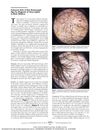 108 citations
,
March 2011 in “Archives of Dermatology”
108 citations
,
March 2011 in “Archives of Dermatology” Corkscrew hair may be a new sign for quickly diagnosing scalp fungus in black children.
24 citations
,
August 2007 in “Journal of pediatric surgery” This report of two pediatric cases suggests that careful diagnosis of scalp lesions as possible dermatophytic infections is crucial to avoid inappropriate surgical treatment and facilitate proper conservative management.
23 citations
,
January 2016 in “Clinical & Biomedical Research” This review covers the epidemiology, causes, prevention, treatment, and prognosis of dermatophytoses and reports no new clinical results.
 23 citations
,
March 1989 in “The Veterinary clinics of North America. Food animal practice”
23 citations
,
March 1989 in “The Veterinary clinics of North America. Food animal practice” This review discusses dermatological issues in llamas, detailing common findings, parasites, and disorders, but reports no new clinical results; it highlights the need for recognizing normal skin variations and discusses potential treatments like zinc therapy for certain conditions.
 12 citations
,
July 2014 in “International Journal of STD & AIDS”
12 citations
,
July 2014 in “International Journal of STD & AIDS” This study found that dermatological manifestations in HIV-positive individuals, such as infectious and non-infectious dermatoses, were significantly associated with CD4 T cell count.
6 citations
,
February 2019 in “Journal of dermatology” This report details a rare case of favus in Japan, identifying Trichophyton schoenleinii in a 63-year-old woman through DNA sequencing, who was successfully treated with oral terbinafine and topical luliconazole.
 6 citations
,
September 1994 in “Veterinary Clinics of North America: Small Animal Practice”
6 citations
,
September 1994 in “Veterinary Clinics of North America: Small Animal Practice” This review examines skin diseases affecting the pinna of dogs and cats, highlighting those unique to this area and noting its role as a common initial site for several conditions; it reports no new results.
5 citations
,
August 2002 in “Veterinary Dermatology” In this study, a combination of terbinafine and mitotane was used to treat a dog with pituitary-dependent hyperadrenocorticism and dermatophytosis, showing regrowth of hair and negative fungal cultures without detectable adverse effects.
2 citations
,
September 2019 in “Journal of the American Academy of Dermatology” USB videodermatoscopes are a practical and affordable alternative for diagnosing skin conditions.
2 citations
,
January 2017 in “Ciência Rural” This case study documented a capuchin monkey with dermatophytosis caused by Microsporum canis, successfully treated with itraconazole, marking the first such report and treatment description for this species.