 January 2006 in “mediaTUM – the media and publications repository of the Technical University Munich (Technical University Munich)”
 This study found that carbon and nitrogen isotope analysis of cattle hair reflects dietary and farm system differences, offering insights into cattle nutritional ecology and agroecosystem characteristics.
 30 citations
,
March 2017 in “PLoS ONE”
30 citations
,
March 2017 in “PLoS ONE” In this study, adding δ34S isotope analysis to models modestly improved precision in estimating grizzly bears' salmon and terrestrial diets, but contributed little new information.
 10 citations
,
August 2020 in “Drug metabolism and drug interactions”
10 citations
,
August 2020 in “Drug metabolism and drug interactions” This case series found that patients with the NUDT15 415C>T variant experienced severe azathioprine toxicity, suggesting genotype-based dosing could reduce adverse effects.
8 citations
,
April 2018 in “Journal of the European Academy of Dermatology and Venereology” This letter discusses azathioprine-induced alopecia and leukopenia potentially linked to NUDT15 polymorphisms, reporting no new clinical results.
This article describes the "naked" mouse mutation, which results in hair loss and is linked to chromosome 15, noting similarities and differences with human ectodermal dysplasia, but provides no new experimental findings.
86 citations
,
November 2015 in “Journal of Gastroenterology” This study reported that the NUDT15 R139C genetic variant was significantly associated with thiopurine-induced leukocytopenia in Japanese inflammatory bowel disease patients, independent of 6-thioguanine nucleotide levels.
 November 2022 in “Journal of the Endocrine Society”
 This case report highlights a novel NR5A1 gene variant associated with a severe 46,XY disorder of sex development, stressing the importance of genetic screening in similar cases.
36 citations
,
March 2011 in “Stem Cell Reviews and Reports” July 2024 in “Journal of Investigative Dermatology” In these two clinical trials, DS-2325a, a KLK5 inhibitor, was found to be generally safe and well tolerated in healthy volunteers, with mild and non-serious adverse events, suggesting its potential for further development as a treatment for Netherton Syndrome.
December 2023 in “International Journal of Dermatology” This study found an increased risk of asthma and allergic rhinitis in individuals with hidradenitis suppurativa.
 24 citations
,
October 1995 in “The Journal of clinical endocrinology and metabolism/Journal of clinical endocrinology & metabolism”
24 citations
,
October 1995 in “The Journal of clinical endocrinology and metabolism/Journal of clinical endocrinology & metabolism” This study found that the LH response to nafarelin effectively distinguished gonadotropin deficiency from constitutional delay of puberty, performing comparably to the sleep test and offering certain advantages.
 January 2025 in “Nanoscale”
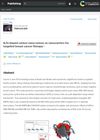
 This study reports that a new boron/nitrogen-doped carbon nano-onion-based delivery system for doxorubicin enhanced its uptake and anticancer effects in specific cancer cell types, while reducing cardiotoxicity in human heart cells.
 August 2023 in “Research Square (Research Square)”
 This study found that among patients with inflammatory bowel disease, those with the NUDT15 mutation had a reduced tolerance for thiopurine dosage over the long term and were more likely to require hospitalization and surgery compared to those without the mutation.
3 citations
,
August 2021 in “Clinical Case Reports” This case report describes a patient with a NUDT15 minor variant who experienced severe myelosuppression due to azathioprine, emphasizing typical symptoms as clues to the adverse reaction.
6 citations
,
April 2018 in “Transplantation proceedings” This case report describes severe agranulocytosis and alopecia in a Japanese woman after starting azathioprine, highlighting the potential role of NUDT15 genetic screening in preventing adverse reactions to the drug.
April 2018 in “Journal of Investigative Dermatology” In this study, researchers found that the NUDT15 R139C gene variant is a significant genetic risk factor for azathioprine-induced severe myelotoxicity in Japanese patients with dermatological conditions, suggesting that screening for this variant may help prevent adverse reactions in East-Asian populations.
39 citations
,
September 2018 in “American Journal of Medical Genetics Part A” This case report describes a 32-month-old girl with a newly identified pediatric disorder linked to a de novo mutation in the ODC1 gene, mirroring symptoms seen in a transgenic mouse model.
41 citations
,
July 2016 in “Journal of Investigative Dermatology” This study identified molecular differences between dysplastic nevi and common melanocytic nevi, including altered keratinocyte differentiation, increased hair follicle-related molecule expression, and distinct immune microenvironment characteristics in dysplastic nevi.
2 citations
,
July 2021 in “UNC Libraries” This study suggests that residues Val-889 and Arg-752 in the androgen receptor's steroid binding domain are crucial for NH2-/carboxyl-terminal interaction, affecting receptor stability and function.
 40 citations
,
January 2017 in “Intestinal Research”
40 citations
,
January 2017 in “Intestinal Research” This study found that among Japanese IBD patients, the NUDT15 p.Arg139Cys variant was significantly associated with thiopurine-induced leukopenia and severe hair loss, suggesting its genotyping is important for predicting these adverse events.
1 citations
,
May 2023 in “Frontiers in Pharmacology” In this study, a case of a young Chinese female with a specific NUDT15 genetic variant experienced severe azathioprine-induced myelosuppression and alopecia while treating systemic lupus erythematosus, highlighting the need for routine blood monitoring during treatment to manage AZA intolerance associated with genetic factors.
46 citations
,
November 1998 in “Experimental Cell Research” This study found that K15 is variably expressed in sheep and mouse hair follicles, with specific patterns suggesting a role in the early stages of keratinocyte differentiation.
 23 citations
,
December 2017 in “Scientific Reports”
23 citations
,
December 2017 in “Scientific Reports” This study found that the ARL15 gene affects adipocyte differentiation and adiponectin secretion, and suggests that ARL15 haploinsufficiency may predispose individuals to lipodystrophy.
 7 citations
,
June 2011 in “Movement Disorders”
7 citations
,
June 2011 in “Movement Disorders” A specific gene mutation is linked to a hereditary form of dystonia that responds well to certain medications.
15 citations
,
June 2019 in “Biochemical Journal” This study identified a heterozygous de novo mutation in the ODC1 gene causing a new disorder characterized by overgrowth and developmental delay, and suggests that DFMO treatment may help manage elevated ODC activity and putrescine levels.
47 citations
,
October 2021 in “Journal of Nanobiotechnology” This study found that hollow polydopamine nanoparticles enhanced the regenerative potency of the peptide RL-QN15, suggesting potential for improved therapeutic approaches in skin wound healing.
227 citations
,
January 1998 in “Journal of biological chemistry/The Journal of biological chemistry” This study suggests that the residues Val-889 and Arg-752 in the androgen receptor steroid binding domain are crucial for the intermolecular interaction necessary for receptor dimerization and function.
 42 citations
,
October 2009 in “The journal of investigative dermatology/Journal of investigative dermatology”
42 citations
,
October 2009 in “The journal of investigative dermatology/Journal of investigative dermatology” In this study, researchers identified two distinct homozygous mutations in the KRT85 gene among consanguineous Pakistani families with pure hair and nail ectodermal dysplasia, highlighting variations in severity and potential impacts on the K85 protein function.
 May 2021 in “Journal of Advances in Internal Medicine”
 This case report describes a 13-year-old with DSD raised as female, exhibiting hoarseness and clitoral enlargement, with hormonal assessments not indicating common related deficiencies.
13 citations
,
August 2016 in “Reproduction” In this study, nandrolone decanoate treatment in rats caused persistent diestrus and altered steroid receptor expression and sex hormones, especially at higher doses, with partial reversibility at lower doses over time.