 3 citations
,
September 2010 in “Acta Médica Portuguesa”
3 citations
,
September 2010 in “Acta Médica Portuguesa” This review explores the psychosocial impact of PCOS symptoms on health-related quality of life, emphasizing the need for multidisciplinary care and individual perspectives, but reports no new research findings.
 3 citations
,
May 2002 in “Therapeutische Umschau”
3 citations
,
May 2002 in “Therapeutische Umschau” This article discusses the challenges in diagnosing and treating diffuse hair loss in women and emphasizes the importance of distinguishing between androgenetic alopecia, chronic telogen effluvium, and psychogenic pseudo effluvium, but reports no new clinical results.
 2 citations
,
August 2023 in “Die Dermatologie”
2 citations
,
August 2023 in “Die Dermatologie” This review discusses the molecular pathology of progeroid syndromes and reports no new results; the authors emphasize understanding these mechanisms to develop treatments and potentially improve quality of life for affected individuals.
 2 citations
,
April 2022 in “Revista Eletrônica Acervo Médico”
2 citations
,
April 2022 in “Revista Eletrônica Acervo Médico” This review discusses various alternative treatments for androgenetic alopecia, including pharmacological, surgical, and herbal therapies, without presenting new clinical findings.
 2 citations
,
November 2020 in “Der Hautarzt”
2 citations
,
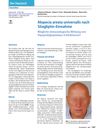
November 2020 in “Der Hautarzt” This case report suggests an association between the use of Sitagliptin, a DPP-4 inhibitor, and the development of alopecia universalis in a diabetic patient.
 2 citations
,
November 2019 in “Journal für Klinische Endokrinologie und Stoffwechsel”
2 citations
,
November 2019 in “Journal für Klinische Endokrinologie und Stoffwechsel” This review discusses the complex and variable presentation of polycystic ovary syndrome, emphasizing the need for consistent diagnostic criteria and individualized treatment strategies but reports no new clinical results.
 2 citations
,
January 2012 in “Journal für Kardiologie (Krause & Pachernegg GmbH)”
2 citations
,
January 2012 in “Journal für Kardiologie (Krause & Pachernegg GmbH)” This review discusses therapeutic principles for managing hirsutism and androgenetic alopecia during the menopausal transition and peri-/postmenopause but reports no new clinical results.
 2 citations
,
August 2002 in “Zeitschrift für Hautkrankheiten”
2 citations
,
August 2002 in “Zeitschrift für Hautkrankheiten” This review discusses the concept of telogen effluvium and emphasizes that its diagnosis requires detailed clinical evaluation and tests to identify underlying causes; no new clinical results are reported.
 1 citations
,
September 2021 in “Gynäkologische Endokrinologie”
1 citations
,
September 2021 in “Gynäkologische Endokrinologie” This review explains various types of hair loss and unwanted hair growth in women, emphasizing the complexity of treatment due to their diverse causes, but it reports no new clinical results.
 1 citations
,
July 2021 in “Anais Brasileiros de Dermatologia”
1 citations
,
July 2021 in “Anais Brasileiros de Dermatologia” This study suggests that observing the acute telogen effluvium triad—frontal fringe, temporal recess, and occipital fringe—can aid in diagnosing telogen effluvium during resolution phases, despite challenges like negative pull tests.
 1 citations
,
May 2021 in “Journal Für Ästhetische Chirurgie”
1 citations
,
May 2021 in “Journal Für Ästhetische Chirurgie” This source discusses the importance of preoperative preparation, including thorough informed consent and consultation, to prevent patient dissatisfaction and legal issues following autologous hair transplantation, as a defined specialist standard for the procedure does not currently exist.
 1 citations
,
December 2017 in “Hygeia - Revista Brasileira de Geografia Médica e da Saúde”
1 citations
,
December 2017 in “Hygeia - Revista Brasileira de Geografia Médica e da Saúde” This study discusses potential connections between geography, stress, and alopecia areata, suggesting that stress is a key factor influencing the condition, alongside geographic factors.
 1 citations
,
February 2016 in “Revista Brasileira de Ginecologia e Obstetrícia”
1 citations
,
February 2016 in “Revista Brasileira de Ginecologia e Obstetrícia” This study demonstrated a significant association between high lipid accumulation product (LAP) and hirsutism in women with polycystic ovary syndrome (PCOS).
 1 citations
,
December 2005 in “Therapeutische Umschau”
1 citations
,
December 2005 in “Therapeutische Umschau” This article reviews anti-aging strategies in dermatology, emphasizing the role of skin as a model for studying aging and promoting preventive and therapeutic interventions, but it does not present new findings.
 1 citations
,
August 2002 in “Zeitschrift für Hautkrankheiten”
1 citations
,
August 2002 in “Zeitschrift für Hautkrankheiten” Male androgenetic alopecia involves hair follicle miniaturization due to DHT, with potential treatments using inhibitors and blockers.
 1 citations
,
May 2002 in “Therapeutische Umschau”
1 citations
,
May 2002 in “Therapeutische Umschau” This review discusses common hair diseases in children, highlighting diagnostic tools and treatments, but reports no new clinical results.
 1 citations
,
September 2022
1 citations
,
September 2022 This case report describes a patient who developed drug-induced lupus erythematosus after treatment with a monoclonal antibody combination against the SARS-CoV-2 surface protein, highlighting the need for careful follow-up.
 June 2026 in “Revista Ibero-Americana de Humanidades, Ciências e Educação”
 This study concluded that 5% topical Minoxidil remains a first-line treatment for female androgenetic alopecia by increasing hair density and thickness, while low-dose oral Minoxidil and combination therapies may also be effective.
 March 2026 in “Journal of Pakistan Association of Dermatologists”
 This study found that low-dose oral minoxidil was more effective than topical minoxidil in increasing hair density and patient satisfaction among men with androgenetic alopecia, with fewer local side effects and better compliance reported over six months.
 February 2026 in “Brazilian Journal of Implantology and Health Sciences”
 This integrative literature review revealed that chronic stress, characterized by elevated cortisol levels, negatively impacts hair follicle integrity and contributes to alopecia by promoting the premature transition from the growth phase to the resting phase of the hair cycle.
This report details a refined hair transplantation method called direct no-shave follicular unit excision (DNS FUE), which avoids donor-site shaving and minimizes follicular trauma while yielding high patient satisfaction.
 December 2025 in “Editora Pasteur eBooks”
 A combined medical and aesthetic approach is crucial for effectively managing PCOS and its skin-related issues.
 December 2025 in “Revista em Agronegócio e Meio Ambiente”
 This study investigated the effects of ultrasound-assisted extraction on sunflower seed oil mixed with defective green coffee grains, finding that higher coffee grain ratios decreased oil yield but increased phenolic content and antioxidant activity, with potential applications for wound treatment.
 November 2025 in “Aurum Revista Multidisciplinar”
 This study found that microneedling combined with growth factors significantly improved blood circulation, hair thickness, strand resistance, and psychological well-being in patients with androgenetic alopecia, suggesting this combination as a promising and safe treatment option.
This study reviews existing literature on regenerative therapy for androgenetic alopecia, highlighting that integrating growth factors, biotin, D-pantenol, and other active ingredients using the Vittahair protocol may enhance hair follicle regeneration, increase hair density, and improve hair quality, providing a precise and evidence-based treatment alternative.
 October 2025 in “Revista Ibero-Americana de Humanidades, Ciências e Educação”
 In this study, researchers found significant neuropsychiatric complications from dengue infection, such as anxiety, depression, and even mania, during acute and recovery phases, linked to inflammatory responses and potential direct viral effects on the central nervous system.
 September 2025 in “Ensaios USF”
 This study developed a solid shampoo formulation with conditioning properties, highlighting its feasibility and environmental benefits compared to conventional shampoos due to biodegradable packaging and no water in its composition, thus offering a sustainable alternative in the cosmetic industry.
 August 2025 in “Editora Pasteur eBooks”
 Combining conventional and integrative treatments can help reduce hair loss and improve hair growth in women with androgenic alopecia.
 May 2024 in “International journal of research in dermatology”
 This study found that vitamin D deficiency was significantly more prevalent among men with androgenetic alopecia in eastern Uttar Pradesh, India, than in age-matched controls, suggesting a potential link between vitamin D levels and the condition's pathogenesis.
 April 2024 in “Más dermatología”
 This study reported that bioactive peptides from skin collagen, obtained through selective hydrolysis, improve skin collagen synthesis and remodeling, while inhibiting its breakdown by metalloproteinases, showing benefits such as enhanced skin hydration, elasticity, healing, and hair restoration, without associated adverse effects.