49 citations
,
November 2013 in “The Journal of Steroid Biochemistry and Molecular Biology” This study found that 1,25-dihydroxyvitamin D3/VDR inhibits β-catenin's role in keratinocyte proliferation but enhances its role in hair follicle differentiation.
48 citations
,
April 2018 in “JEADV. Journal of the European Academy of Dermatology and Venereology/Journal of the European Academy of Dermatology and Venereology” This study found that individuals with alopecia areata had significantly lower serum vitamin D levels and a higher prevalence of vitamin D deficiency compared to people without the condition.
 48 citations
,
January 2015 in “Indian Journal of Dermatology, Venereology and Leprology”
48 citations
,
January 2015 in “Indian Journal of Dermatology, Venereology and Leprology” This review discusses the various roles of vitamin D in skin disorders, including established use in psoriasis and potential applications for atopic dermatitis and skin cancer prevention, but reports no new clinical results.
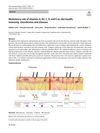 47 citations
,
September 2023 in “Pharmacological Reports”
47 citations
,
September 2023 in “Pharmacological Reports” In this review, researchers explored the roles of vitamins A, B3, C, D, and E in skin immunity, highlighting their potential as therapeutics for skin diseases due to their antioxidant, anti-inflammatory, and antimicrobial properties.
47 citations
,
September 2002 in “Journal of Bone and Mineral Research” This study found that a specific VDR amino acid substitution in children with hereditary vitamin D-resistant rickets disrupts ligand binding and gene activation but does not impair hair follicle development.
47 citations
,
February 1998 in “Journal of bone and mineral research” In this study, researchers identified a unique Arg30stop mutation in the vitamin D receptor gene that causes hereditary vitamin D-resistant rickets in a young French-Canadian boy by truncating the receptor and causing hormone resistance.
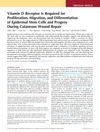 46 citations
,
May 2018 in “The journal of investigative dermatology/Journal of investigative dermatology”
46 citations
,
May 2018 in “The journal of investigative dermatology/Journal of investigative dermatology” This study found that the vitamin D receptor is essential for the self-renewal, migration, and differentiation of epidermal stem cells during skin wound healing in mice.
45 citations
,
December 2006 in “Baillière's best practice and research in clinical endocrinology and metabolism/Baillière's best practice & research. Clinical endocrinology & metabolism” This review discusses the multifaceted role of vitamin D in the body, noting its influence on calcium balance, hair cycle maintenance, cell proliferation, cardiovascular function, and immune modulation, with no new clinical results reported.
 42 citations
,
July 2007 in “Journal of Biological Chemistry”
42 citations
,
July 2007 in “Journal of Biological Chemistry” This study found that most pathogenic HR mutants associated with atrichia with papular lesions had abolished corepressor activity due to defective interactions with histone deacetylases.
 40 citations
,
April 2013 in “Dermato-endocrinology”
40 citations
,
April 2013 in “Dermato-endocrinology” In this study, researchers observed vitamin D insufficiency in many patients with Alopecia Areata, suggesting its potential role in managing this autoimmune condition.
 37 citations
,
October 2021 in “Nutrients”
37 citations
,
October 2021 in “Nutrients” This study discusses the potential association between low vitamin D levels and insulin resistance, suggesting that vitamin D deficiency may contribute to disorders like obesity and diabetes, but emphasizes the need for further research to confirm these links.
 37 citations
,
June 2018 in “Clinical and Experimental Medicine”
37 citations
,
June 2018 in “Clinical and Experimental Medicine” This study found that patients with alopecia areata had significant systemic inflammation and vitamin D deficiency, with both conditions more pronounced as disease severity increased.
37 citations
,
August 2015 in “The Journal of Steroid Biochemistry and Molecular Biology” This study found that in a mouse model with hereditary 1,25-dihydroxyvitamin D resistant rickets, a mutant vitamin D receptor lacking hormone-binding ability could restore normal hair cycling and affect parathyroid hormone regulation.
37 citations
,
August 2011 in “Journal of Bone and Mineral Research” This study reported a case of hereditary vitamin D–resistant rickets caused by a single heterozygous missense mutation in the VDR gene, showing dominant-negative effects and reduced response to 1,25-dihydroxyvitamin D3.
 37 citations
,
April 2011 in “Journal of Biological Chemistry”
37 citations
,
April 2011 in “Journal of Biological Chemistry” This study discovered a novel interaction between the vitamin D receptor and LEF1, essential for normal Wnt signaling in keratinocytes, which is crucial for regular hair cycling.
37 citations
,
October 2006 in “Archives of Biochemistry and Biophysics” This study describes a patient with hereditary vitamin D resistant rickets (HVDRR) who, despite having a truncated vitamin D receptor, did not exhibit typical hair or skin abnormalities, suggesting possible compensation via interactions with other proteins.
 36 citations
,
January 2017 in “Journal of Obstetrics and Gynaecology Research”
36 citations
,
January 2017 in “Journal of Obstetrics and Gynaecology Research” This review discusses the association between vitamin D receptor polymorphisms and polycystic ovary syndrome, noting the need for further research on their impact on the disorder's manifestations.
36 citations
,
January 2010 in “Journal of Pediatric Endocrinology and Metabolism” This study identified a novel nonsense mutation in the VDR gene in two patients with hereditary vitamin D resistant rickets and alopecia, leading to resistance to 1,25-dihydroxyvitamin D3.
36 citations
,
February 2007 in “Journal of biological chemistry/The Journal of biological chemistry” This study found that vitamin D receptor activation in primary keratinocytes can occur independently of the 1,25-dihydroxyvitamin D3 ligand, likely through interaction with retinoid X receptors.
32 citations
,
December 2017 in “Journal of the American Academy of Dermatology” Alopecia areata patients often have low vitamin D levels.
 32 citations
,
December 2017 in “International Journal of Molecular Sciences”
32 citations
,
December 2017 in “International Journal of Molecular Sciences” This review suggests that decreased serum 25-hydroxyvitamin D levels may play a role in different types of non-scarring alopecia, but further studies are needed to explore vitamin D supplementation as a therapeutic option.
 31 citations
,
January 2007 in “Journal of biological chemistry/The Journal of biological chemistry”
31 citations
,
January 2007 in “Journal of biological chemistry/The Journal of biological chemistry” This study found that c-Jun is essential for vitamin D receptor expression, and the vitamin D receptor inhibits c-Jun-dependent cell death through non-classical mechanisms independent of vitamin D3.
31 citations
,
September 2003 in “International Journal of Dermatology” This report describes two Saudi brothers with Vitamin D-dependent rickets Type II and emphasizes the association of this disorder with alopecia.
30 citations
,
January 2005 in “Elsevier eBooks” Vitamin D affects skin and hair by influencing cell behavior and melanin production.
 29 citations
,
December 2017 in “International Journal of Dermatology”
29 citations
,
December 2017 in “International Journal of Dermatology” This study found that vitamin D deficiency in patients with alopecia areata was associated with greater disease severity and longer duration, but not with disease pattern or vitamin D receptor expression.
29 citations
,
February 2010 in “The Journal of Steroid Biochemistry and Molecular Biology” In this study, researchers observed that the absence of a functional vitamin D receptor in mice leads to impaired hair follicle regeneration due to defects in keratinocyte stem cells, resulting in alopecia.
29 citations
,
January 2003 in “KARGER eBooks” In this study, researchers concluded that hereditary 1,25-dihydroxyvitamin D-resistant rickets, characterized by specific mutations in the vitamin D receptor gene, may resolve metabolic abnormalities with age, though associated alopecia remains.
29 citations
,
June 2000 in “Endocrinology” This study suggests that alopecia in vitamin D receptor null mice is due to impaired initiation of the hair cycle rather than defects in keratinocyte proliferation or differentiation.
28 citations
,
April 2017 in “Journal of cosmetic dermatology” This study found that while vitamin D deficiency is not the sole cause of alopecia areata, it may worsen the disease, suggesting supplementation could help in pediatric cases.
 28 citations
,
March 2017 in “Endocrinology”
28 citations
,
March 2017 in “Endocrinology” In this study, the researchers found that vitamin D and calcium signaling in keratinocytes are essential for normal skin regeneration after wounding, with deficiencies significantly delaying wound closure and re-epithelialization in mice.