 32 citations
,
July 2017 in “Wiley Interdisciplinary Reviews-Developmental Biology”
32 citations
,
July 2017 in “Wiley Interdisciplinary Reviews-Developmental Biology” This review discusses the emerging roles of transit-amplifying cells in tissue regeneration and cancer formation, highlighting their significance beyond a mere transitional state in hair follicles and the hematopoietic system.
 December 2000 in “British Journal of Dermatology”
 This article contains no abstract or new findings.
![Distribution of 1,25-Dihydroxyvitamin D3[22-Oxa] In Vivo Receptor Binding in Adult and Developing Skin](/images/assets/d9b990e6-6243-4abe-b868-68801a5844f7/small/35023.jpg) 15 citations
,
January 1995 in “Archives of dermatological research”
15 citations
,
January 1995 in “Archives of dermatological research” In this study, OCT showed strong nuclear binding in certain skin cells, suggesting similar genomic effects to vitamin D with potential therapeutic benefits due to its lower calcaemic effect.
January 2009 in “Epsilon: Revista de la Sociedad Andaluza de Educación Matemática "Thales"” This report describes a Cronkhite-Canada syndrome patient with severe sepsis and disseminated intravascular coagulation successfully treated using combined therapies, including recombinant human soluble thrombomodulin.
 April 2023 in “Journal of the American Academy of Dermatology”
 This study aimed to evaluate the outcomes of switching between two JAK inhibitors, tofacitinib and baricitinib, in treating alopecia areata, due to the lack of data on their comparative efficacy.
 39 citations
,
May 2004 in “Clinics in Dermatology”
39 citations
,
May 2004 in “Clinics in Dermatology” This article reviews treatment options for cutaneous T-cell lymphoma, including skin-directed therapies and aggressive treatments for advanced cases, but reports no new clinical results.
 10 citations
,
November 2018 in “Genetics in medicine”
10 citations
,
November 2018 in “Genetics in medicine” This study identified a genetic variant in the CTS6 gene associated with a hypotrichosis syndrome, emphasizing the significant role of cystatin M/E in hair and skin health.
71 citations
,
May 2006 in “The journal of investigative dermatology/Journal of investigative dermatology” In this study, researchers found that trichothiodystrophy hair brittleness is linked to abnormalities in sulfur content and structural organization, making it prone to breakage.
In this study, deleting the -catenin gene in vitamin D receptor-null mice did not prevent tumor development, suggesting -catenin's predicted protective role was not observed.
 January 2020 in “Przegla̧d dermatologiczny”
 A 5-year-old boy was diagnosed with congenital triangular alopecia, a type of hair loss without skin changes, usually starting between ages 2-5, with no specific treatment.
44 citations
,
May 2023 in “MedComm” This review highlights the potential of PROTAC technology in drug discovery for previously undruggable targets, particularly in cancer therapy, while emphasizing the urgent need to discover more E3 ligase recruiters to optimize targeted protein degradation.
July 2024 in “Journal of Investigative Dermatology” Targeting TCR-Vβ2 in cutaneous T cell lymphoma shows promise for safer, more specific treatment.
 1 citations
,
January 2024 in “Wiadomości Lekarskie”
1 citations
,
January 2024 in “Wiadomości Lekarskie” This study evaluated a new computer-aided detection system for identifying Breast Arterial Calcification in mammograms, achieving 70% accuracy, but highlighted the need for a larger dataset to explore its relationship with cardiovascular diseases.
 108 citations
,
March 2011 in “Archives of Dermatology”
108 citations
,
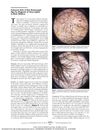
March 2011 in “Archives of Dermatology” Corkscrew hair may be a new sign for quickly diagnosing scalp fungus in black children.
6 citations
,
October 1998 in “Experimental Dermatology” This study found that exogenous EGF inhibited hair follicle development and decreased follicle density in both Tabby and normal mice, suggesting interactions between EGF and the Ta peptide influence normal skin phenotype.
35 citations
,
September 2003 in “Archives of dermatology” This study proposed that the tiger tail phenomenon in trichothiodystrophy hair is caused by regular undulations of hair fibers, altering the optical properties seen under polarized light.
 July 2023 in “Experimental Dermatology”
 I cannot summarize the document because it is not accessible.
1 citations
,
March 2023 in “Journal of the Turkish Academy of Dermatology” This report suggests a possible association between temporal triangular alopecia and sebaceous nevus, and identifies a pinkish background as a new trichoscopic finding for TTA.
 November 2025 in “Mendeley Data”
 In this study, tofacitinib and baricitinib showed comparable efficacy and tolerability under unorthodox weight-stratified dosing in pediatric patients with moderate-to-severe alopecia areata over 24 weeks; however, the unorthodox baricitinib regimen yielded a lower effectiveness in severe cases, emphasizing the importance of adherence to guideline-recommended dosing.
February 2026 in “UiTM Institutional Repositories (Universiti Teknologi MARA)” This study found that cis-urocanic acid can engage in non-enzymatic reactions with reactive sulphur species, forming new metabolites, and suggests sulphide donors may protect against UVB-related toxicity.
3 citations
,
January 2021 in “Molecular genetics & genomic medicine” In this study, novel mutations in the BTD gene were identified in a patient with profound biotinidase deficiency, highlighting the importance of biotinidase activity measurement and mutation analysis for early diagnosis.
32 citations
,
August 2016 in “Journal of the American Academy of Dermatology” This letter discusses congenital triangular alopecia (TTA), a non-scarring hair loss condition often seen in children, without reporting new clinical findings.
8 citations
,
January 2023 in “International journal of molecular sciences” This study reveals that transglutaminase activity is widespread in integumentary structures of mammals and birds, suggesting it plays a significant role in the cornification of hard skin appendages like nails and feathers.
 1 citations
,
March 2004 in “Clinical Medicine”
1 citations
,
March 2004 in “Clinical Medicine” Learn how to avoid mistakes in consultant evaluations.
December 2025 in “Current Issues in Molecular Biology” In this systematic review, animal studies showed that cytarabine causes multi-organ toxicities, notably neurotoxicity, linked to oxidative stress and other mechanisms, though study quality raises concerns about reliability and translation to human outcomes.
 11 citations
,
March 2024 in “Cell and Tissue Research”
11 citations
,
March 2024 in “Cell and Tissue Research” In this review, researchers summarize the methods for characterizing telocytes, outline their physiological roles and implications in diseases, and discuss potential future studies including precise markers and targeted therapies.
October 1993 in “The Journal of Clinical Pharmacology”  5 citations
,
July 2019 in “Photodiagnosis and photodynamic therapy”
5 citations
,
July 2019 in “Photodiagnosis and photodynamic therapy” This study reports a case of a 59-year-old female with refractory follicular mucinosis and diffuse scalp alopecia who achieved complete clinical remission following treatment with a combination of topical tacalcitol and photodynamic therapy.
15 citations
,
January 2012 in “International journal of trichology” This study found that the HairCheck® device, demonstrating high correlation between its Hair Mass Index and hair characteristics such as strand number and diameter, may be an effective tool for assessing hair mass changes in alopecia patients.
3 citations
,
October 2024 in “Animals” This study identified three genes in the ovine KAP13 family on chromosome 1 and found that a specific allele of KRTAP13-2 is associated with improved wool fibre diameter uniformity in Chinese Tan sheep, suggesting its potential use as a marker for enhancing wool traits.