 May 2020 in “International Journal of Engineering Applied Sciences and Technology”
 This study explored the antimicrobial potential of natural bioactive materials such as Citrus lemon, Garlic, Baeckea frutescens, Neem, and Eclipta Alba, highlighting their eco-friendly and non-toxic properties for combating harmful bacteria.
 January 2020 in “Asian journal of applied science and technology”
 This source provides an overview of the dietary recommendations for macronutrient intake and the benefits of plant-based diets, including meeting essential amino acid needs through combining plant proteins and the advantages of consuming complex carbohydrates and adequate fiber for health.
 January 2020 in “JoLS Journal of Life Sciences”
 This study found that a mixture of Red-BCQ and Agnex extract promoted greater hair growth and antioxidant effects in C57BL/6 mice compared to other groups, including minoxidil treatment.
 December 2019 in “University of Malaya Students Repository”
 This study found that Soxhlet extraction is more effective at removing the toxin mimosine from Leucaena leucocephala, and mimosine shows promise as a biodiesel additive due to its antioxidative properties.

This handbook of dermatology provides a comprehensive practical manual for dermatologists, but reports no new research findings.
 May 2019 in “Journal of Cosmetic Dermatology”
 This study found significant but inconsistent differences in online ratings for hair restoration surgeons based on their surgical and nonsurgical residency backgrounds, highlighting key factors influencing patient satisfaction.
This study found that anise ethanol extract at 10% and 20% doses positively influenced hair growth in mice, showing effects similar to Minoxidil.
 December 2017 in “Springer eBooks”
 Transplant patients often get skin problems, with treatments varying by condition.
 January 2017 in “Springer eBooks”
 The document explains various skin conditions and their treatments.
 September 2016 in “Springer eBooks”
 This review discusses how physical appearance, including skin, facial features, and physique, is linked to aging and health risks, but reports no new experimental results.
 April 2016 in “Journal of Urology and Nephrology Open Access”
 This abstract discusses treatment options for benign prostatic hyperplasia and provides no new clinical results.
 January 2016 in “Dermatology Review”
 This review details various skin manifestations linked to different endocrine disorders but does not report any new clinical results.
 July 2013 in “Our Dermatology Online”
 In this study, minoxidil 2% solution was more effective than tacrolimus 0.1% ointment for promoting hair regrowth in mild to moderate patchy alopecia areata.

Use the least toxic, most specific treatments for skin diseases, considering side effects and individual patient needs.
 December 2011 in “Drug Research”
 The document shows the state of pharmaceutical patents as of 1999, focusing on treatments for various diseases.
 January 2010 in “Elsevier eBooks”
 The document concludes that different types of hair loss have specific treatments, and early diagnosis is crucial for preventing permanent hair loss.

This article reviews the synthesis and properties of isotretinoin, tazarotene, minoxidil, and finasteride, and reports no new findings.
 June 2002 in “Seminars in Cutaneous Medicine and Surgery”
 Hair transplantation has improved to more natural-looking results and is complemented by effective non-surgical treatments, with ongoing research into hair follicle cloning.
 September 1995 in “American Journal of Contact Dermatitis”
 Antiyeast treatments work better for seborrheic dermatitis than steroids, and other findings include increased skin bacteria under plastic wrap, a nasal cell defect in Staphylococcus aureus carriers, quick resolution of certain skin reactions, high rubber latex allergy in spina bifida patients, and glyceryl monopentadecanoate's effectiveness for male hair loss.
 January 1990 in “Springer eBooks”
 Some chemicals can permanently or temporarily remove color from skin and hair, which can be distressing and is not well-regulated in cosmetics.
 January 1989 in “Side effects of drugs annual”
 This chapter reviews studies on the side effects of cytostatics and immunosuppressive drugs, detailing various toxicities such as cardiovascular, pulmonary, and neurotoxicity, but provides no new clinical results.
 January 1982 in “Journal of The American Academy of Dermatology”
 Experts discussed treatments for skin conditions in children, emphasizing hydration, cautious medication use, and early intervention for infections.
 November 1966 in “British Journal of Dermatology”
 This conference proceeding abstract provides no new research results, focusing only on event details from the British Association of Dermatology's Forty-Sixth Annual Meeting held in Oxford in 1966.
April 2017 in “Journal of Investigative Dermatology” Deleting Crif1 in mouse skin disrupts skin balance and hair growth.
 April 2017 in “Journal of Investigative Dermatology”
 This study demonstrated that mitochondrial function in keratinocytes is crucial for maintaining skin homeostasis and hair follicle development, as its impairment led to disrupted hair morphogenesis and early death in mice.
 1 citations
,
December 2019 in “JURNAL BIOSAINS”
1 citations
,
December 2019 in “JURNAL BIOSAINS” This study evaluated krokot extract as a hair tonic and found it to be microbiologically safe, effective at extending and increasing hair weight, non-irritating, and generally well-received in terms of aroma and color when tested on rabbits.
43 citations
,
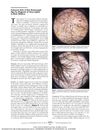
September 2001 in “Annals of Neurology” This study found that somatic mosaic mutations in the doublecortin gene may cause subcortical band heterotopia in male patients, and molecular analysis using hair roots is a useful detection method.
 108 citations
,
March 2011 in “Archives of Dermatology”
108 citations
,
March 2011 in “Archives of Dermatology” Corkscrew hair may be a new sign for quickly diagnosing scalp fungus in black children.
 12 citations
,
December 2022 in “Annals of Phytomedicine An International Journal”
12 citations
,
December 2022 in “Annals of Phytomedicine An International Journal” This review discusses the historical and potential medical uses of Cyperus rotundus rhizomes, but reports no new clinical results and emphasizes the need for further study on its pharmacognostic properties.
 27 citations
,
December 2013 in “Endocrinology”
27 citations
,
December 2013 in “Endocrinology” This study established a mouse model for Cushing's syndrome due to a specific Crh mutation, which may help explore the effects of glucocorticoid excess and evaluate treatments for corticosteroid-induced osteoporosis.