 August 2025 in “Frontiers in Pharmacology”
 This study identified three Ayurvedic compounds that may serve as potential treatments against the macrolide-resistant enzyme murE of *Tropheryma whipplei*, addressing challenges in treating Whipple disease.
 July 2025 in “E-methodology”
 This study explored AI's potential in trichology services, finding it beneficial for diagnostics and treatment supervision, but noted the importance of addressing legal considerations, particularly in the Polish market.
 January 2025 in “Directory of Open access Books (OAPEN Foundation)”
 This book reviews the symptoms, diagnosis, and treatments for Polycystic Ovary Syndrome, providing a comprehensive exploration but reports no new clinical results.
 January 2025 in “Bright Sky Publications eBooks”
 This abstract does not report specific research findings but describes a book titled "Medical Physics and Laser Technology: Advancements and Applications in Modern Healthcare," authored by Zahraa Zuhair Ghafel Saeid and colleagues, which is available for purchase.
 November 2024 in “Image Analysis & Stereology”
 This study introduced a novel, weakly supervised method for segmenting hair in Scanning Electron Microscope images using simple image-level annotations, achieving over 30% improvement in mean Hausdorff Distance compared to Unet and SAM, while enhancing interpretability and refinement.
 August 2024 in “Biomolecules & Therapeutics”
 In this study, the researchers reported that a newly developed PYGL inhibitor, HTPI, enhanced hair growth in an ex-vivo culture by reducing oxidative damage in hDPCs and inhibiting glycogen degradation in hORSCs, showing potential as a treatment for hair loss comparable to minoxidil.
 January 2024 in “Uttar Pradesh journal of zoology”
 In this study, researchers found that chemical treatments like bleaching can cause severe damage to the hair cuticle, with previously modified hair showing complete deterioration compared to the partial degradation seen in virgin hair, highlighting the need for mindful cosmetic practices.
 November 2023 in “Borneo Journal of Pharmacy”
 In this study, researchers used scanning electron microscopy to analyze hair damage from 3% hydrogen peroxide and UVB radiation, observing that Caesalpinia sappan hair tonic formulations coated and interacted with the hair cuticle, potentially modifying hair fiber damage.
 October 2023 in “International Journal For Multidisciplinary Research”
 This review discusses the increased health risks associated with polycystic ovary syndrome and highlights the effectiveness of exercise, a healthy diet, and weight management in reversing obesity-related reproductive issues.
 September 2023 in “International journal of medicine”
 This study reviewed the current status and future scope of artificial intelligence in healthcare, highlighting its potential to revolutionize medical practices through improved affordability, efficiency, and speed, as well as its applicability in various fields such as imaging, diagnosis, and individualized care.
 February 2023 in “International Journal of Multimedia Computing”
 In this study, improved hidden Markov algorithms based on Bayesian methods enhanced the resolution and segmentation accuracy of low-dose CT images significantly more than naive Bayesian methods.

This study suggests that pre-trained Transformers only outperform syntactic and lexical neural networks on unseen DarkNet sentences after extreme domain adaptation, indicating unexpected advantages from their massive pre-training corpora.
 October 2022 in “Journal of experimental and clinical medicine”
 This review covers the potential of repurposing existing drugs for treating COVID-19 and updates on virus- and host-targeting drug candidates, reporting no new experimental results.
 July 2022 in “Bőrgyógyászati és Venerológiai Szemle”
 This review discusses recent advancements in mobile technology and artificial intelligence for dermatology, offering an overview of their current applications but reports no new clinical findings.
 January 2022 in “Dermatology Review”
 This study found that patients with chronic kidney disease-associated pruritus had elevated serum levels of interleukin 31, suggesting a possible role of this cytokine in the condition.
 January 2021 in “arXiv (Cornell University)”
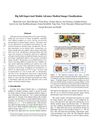
 This study found that self-supervised pretraining significantly improves accuracy in medical image classifiers for dermatology and chest X-ray tasks, outperforming supervised baselines and showing robustness to distribution shifts with limited labeled data.
 June 2020 in “Journal of Investigative Dermatology”
 This study observed that insurance coverage for oral tofacitinib in alopecia areata patients was difficult to obtain, with 71% of patients ultimately not receiving approval despite the drug's efficacy as an off-label treatment.

This thesis explores how optical coherence tomography and advanced imaging methods may address clinical needs in fields like interventional pulmonology and dermatology, highlighting their potential for disease assessment and staging.
 January 2016 in “Dermatology Review”
 This review details various skin manifestations linked to different endocrine disorders but does not report any new clinical results.
 March 2015 in “Polish Journal of Public Health”
 This study found that capillaroscopic patterns varied among patients with systemic scleroderma, psoriasis, psoriatic arthritis, and alopecia, suggesting potential microcirculation disturbances; however, no correlations were observed with serum angiogenic markers.
 February 2004 in “Dermatologic Surgery”
 This study found that deep plane fixation in scalp surgeries allowed for tension-reduced wound closures and increased tissue excision compared to techniques without deep plane fixation.
 July 2002 in “Dermatologic Surgery”
 This study found that understanding the surgical anatomy of the scalp significantly improves outcomes in scalp surgery by reducing complications like unsightly scars and distorted hair patterns.
 September 2001 in “Dermatologic Surgery”
 This review derived guidelines for scalp surgery suggesting improved outcomes when avoiding neurovascular structures, preserving tissue integrity, and maintaining hair direction, but it reports no new clinical results.
 90 citations
,
January 1979 in “International review of cytology”
90 citations
,
January 1979 in “International review of cytology” This chapter reviews the complexity of hair and wool follicle formation, emphasizing the importance of cytological studies to understand the relationship between cellular components.
 51 citations
,
June 2021 in “Signal Transduction and Targeted Therapy”
51 citations
,
June 2021 in “Signal Transduction and Targeted Therapy” This review article summarizes recent strategies to enhance the precise control of CRISPR/Cas9 gene editing, addressing tissue-specific challenges and off-target effects by exploring various activation methods like cell-specific promoters and small molecules.
 47 citations
,
August 2014 in “The Journal of Clinical Endocrinology and Metabolism”
47 citations
,
August 2014 in “The Journal of Clinical Endocrinology and Metabolism” This study suggests that variations in PCOS phenotypes observed across different ethnic groups may be due to a genetic gradient resulting from historical human migrations and genetic drift.
 46 citations
,
November 2011 in “Forest Ecology and Management”
46 citations
,
November 2011 in “Forest Ecology and Management” This study observed that the reproductive phenology of Ficus species in Northern Thailand varied seasonally, with female trees producing the most figs during the rainy season, while male trees' fig production peaked earlier.
 44 citations
,
September 2014 in “Cell Death & Differentiation”
44 citations
,
September 2014 in “Cell Death & Differentiation” This review discusses the role of tumor suppressors in controlling tumor-associated inflammation and suggests that targeting this inflammation may counteract the effects of tumor suppressor loss.
 36 citations
,
November 2019 in “Molecular biology and evolution”
36 citations
,
November 2019 in “Molecular biology and evolution” This study suggests that the keratins found in reptile and bird skin appendages evolved independently from mammalian hair keratins, highlighting convergent evolution in these species.
 23 citations
,
January 2010 in “Journal of Medical Primatology”
23 citations
,
January 2010 in “Journal of Medical Primatology” This study found that alopecia in captive Rhesus macaques may be linked to chronic hypersensitivity dermatitis with CD4+ cell inflammation, possibly influenced by altered housing and reduced pathogen exposure.