 4 citations
,
June 2019 in “International Journal of Cosmetic Science”
4 citations
,
June 2019 in “International Journal of Cosmetic Science” This study developed mathematical models showing that heat penetrates individual hair quickly but takes longer to reach the center of hair bundles, helping understand potential damage from high-temperature styling tools.
2 citations
,
March 1997 in “Veterinary Dermatology” This case report describes multiple skin tumors in an 11-year-old Doberman Pinscher with color dilution alopecia, but it remains unclear if the condition increases risk for such tumors.
28 citations
,
May 2000 in “Proceedings of the National Academy of Sciences” This study demonstrated that the highly divergent WDSV rv-cyclin significantly stimulates eukaryotic cell proliferation, leading to hyperplastic skin lesions in transgenic mice.
5 citations
,
January 2019 in “Methods in molecular biology” In this study, researchers showed that multiphoton microscopy with fluorescent protein tagging enables single-cell imaging and tracking in live transgenic mice, offering new insights into cell dynamics in stem cell research compared to traditional histological methods.
January 2017 in “British journal of dermatology/British journal of dermatology, Supplement” 29 citations
,
June 2010 in “The Journal of Dermatology” This report documents a novel alanine to valine substitution in the GJB2 gene in a Japanese girl with severe keratitis–ichthyosis–deafness syndrome, suggesting a potential link to her severe recurrent infections and immunodeficiency.
 August 2025 in “Journal of IMAB - Annual Proceeding (Scientific Papers)”
 This study describes a successful reconstructive A-T flap surgery on a 74-year-old male with a 35mm basal cell carcinoma on the scalp, resulting in a 50mm defect, with no complications and optimal functional and cosmetic outcomes reported.
11 citations
,
May 2011 in “The Journal of Dermatology” This case report describes a possible association between Vogt-Koyanagi-Harada disease and linear IgA/IgG bullous dermatosis in a 35-year-old Japanese male, though coincidence cannot be ruled out.
 17 citations
,
September 2010 in “Pediatric dermatology”
17 citations
,
September 2010 in “Pediatric dermatology” This report describes a case of widespread Porokeratotic eccrine and hair follicle nevus in a 15-year-old woman with keratitis-ichthyosis-deafness syndrome, involving both eccrine ostia and hair follicle infundibula.
 May 2020 in “Hair transplant forum international”
 This article discusses linear morphea en coup de sabre and emphasizes the need for hair transplant surgeons to consider potential calvarial abnormalities when planning hair restoration, but it does not present new clinical results.
This study found that structural changes in the stroma surrounding hair follicles and skin laxity are associated with the appearance of large pores, regardless of ethnicity or age.
6 citations
,
July 2017 in “Clinical and Experimental Dermatology” This report presents four new cases of follicular porokeratosis, which exhibit distinct histological features where the cornoid lamella are confined to the follicular ostia.
 108 citations
,
March 2011 in “Archives of Dermatology”
108 citations
,
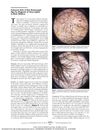
March 2011 in “Archives of Dermatology” Corkscrew hair may be a new sign for quickly diagnosing scalp fungus in black children.
December 2024 in “Journal of Coloproctology” This case report discusses the use of the Kono-S anastomosis technique in a patient with Crohn’s disease, suggesting it may offer benefits in reducing recurrence and preserving anastomosis dimensions, though further trials are needed to confirm its effectiveness.
13 citations
,
June 2012 in “European journal of medical genetics” In this study, researchers observed monochorionic diamniotic twins with discordant clinical phenotypes, where one had high-grade trisomy 12p mosaicism in certain tissues, while the other showed confined mosaicism likely due to twin-to-twin transfusion.
May 2007 in “Archives of Plastic Surgery” This study found that the Frechet flap technique provided aesthetically satisfactory outcomes for correcting the central slot defect created by scalp reduction surgery in the observed patients.
 24 citations
,
June 2012 in “BMC Research Notes”
24 citations
,
June 2012 in “BMC Research Notes” This study outlines the Human Gene Correlation Analysis tool, which classifies human genes by coexpression levels and identifies overrepresented annotation terms in correlated gene groups, with no new clinical results reported.
 June 2023 in “Clinical Case Reports”
 This report describes a woman with microcystic adnexal carcinoma who underwent successful excisional surgery and hair transplantation, which may be beneficial for treating surgical scars.
30 citations
,
February 2008 in “Journal of Investigative Dermatology” 35 citations
,
October 2021 in “Journal of the European Academy of Dermatology and Venereology” This report describes two cases where a viral vector COVID-19 vaccine was associated with the recurrence of cutaneous lymphoma conditions that had been in remission.
This study suggests that the growth arrest of nevus melanocytes is not due to oncogene-induced senescence but rather to collective cell interactions, similar to those in normal tissue size regulation.
5 citations
,
October 2023 in “International Journal on Recent and Innovation Trends in Computing and Communication” In this study, researchers developed a novel image processing method using a multi-class support vector machine that achieved an 89.3% accuracy in classifying alopecia areata and related conditions, outperforming existing models in classification accuracy.
28 citations
,
June 2003 in “Applied immunohistochemistry & molecular morphology” This study demonstrated that combining cell conditioning with mild protease digestion enhanced the visualization of versican mRNA in formalin-fixed mouse skin tissue sections compared to using either technique alone.
 11 citations
,
April 2016 in “Dermatologic Surgery”
11 citations
,
April 2016 in “Dermatologic Surgery” This study concluded that to accurately calculate the transection rate in follicular unit extraction, it's essential to account for both extracted and hidden transections, which differ based on surgeon expertise.
1 citations
,
April 2011 in “Clinical Kidney Journal” This case report describes a 70-year-old kidney transplant recipient who developed a keratoacanthoma near an arteriovenous fistula after returning to hemodialysis and stopping immunosuppression.
September 2022 in “World Journal of Advanced Research and Reviews” This study introduced a Density-Calibrated Airtouch Protocol (DCAP) that suggests customizing the Airtouch hair coloring technique based on client hair density to optimize color blend, pigment longevity, and hair health.
14 citations
,
March 1994 in “Archives of Dermatology” This article presents two cases of alopecia areata occurring simultaneously in a married couple, suggesting a potential psychosocial factor like stress rather than genetic causation.
April 2025 in “Indian Journal of Paediatric Dermatology” This case report describes an 8-year-old male with tinea capitis and Trichorrhexis invaginata, who showed significant improvement after treatment with oral micronized griseofulvin.

In this case study, researchers reported the first documented instance of malignant transformation of congenital triangular alopecia into basal cell carcinoma in a 48-year-old woman, underscoring the importance of assessing long-standing alopecic areas for malignancy.
 8 citations
,
May 2024 in “PLoS Biology”
8 citations
,
May 2024 in “PLoS Biology” This study on feather pattern formation in chicken skin found that inhibiting gap junctional intercellular communication can lead to the emergence of new feather buds in specific spatial patterns, suggesting that GJIC may facilitate Turing-type periodic patterning by propagating inhibitory signals over long distances.