 93 citations
,
November 2018 in “Carbohydrate Polymers”
93 citations
,
November 2018 in “Carbohydrate Polymers” This study demonstrated that modified montmorillonites combined with bacterial cellulose enhanced antimicrobial, wound healing, and tissue regenerative activities in a burn mice model, suggesting potential as an artificial skin substitute for burn patients.
 14 citations
,
January 2021 in “Scientific Reports”
14 citations
,
January 2021 in “Scientific Reports” This study found that "micro skin tissue columns" improved wound healing by enhancing re-epithelialization, collagen deposition, dermal remodeling, and reducing inflammation without causing long-term donor site morbidity.
2 citations
,
August 2022 in “Viruses” This study found that cutaneous squamous cell carcinomas in mice infected with murine papillomavirus preferentially arise from Lgr5+ progenitor cells, while squamous cell dysplasia does not.
166 citations
,
April 2019 in “International Journal of Molecular Sciences” The researchers reported that they predicted associations between certain components of MSC-conditioned medium and its ability to stimulate cell migration in vitro, identifying factors affecting its biological activity.
3 citations
,
January 2022 in “Burns & Trauma” This study found that CTHRC1 is crucial for sweat gland function and vascular network integrity in mice, and its administration improved sweat gland performance by reconstructing nearby blood vessels.
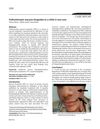 1 citations
,
October 2023 in “Journal of the Pakistan Medical Association”
1 citations
,
October 2023 in “Journal of the Pakistan Medical Association” This source describes a case of a 12-year-old male diagnosed with folliculotropic mycosis fungoides, presenting with an asymptomatic, erythematous plaque. Histology and immunohistochemistry confirmed FMF, which is typically rare in children and marked by follicular infiltration by CD4+ lymphocytes.
 1 citations
,
October 2023 in “Skin research and technology”
1 citations
,
October 2023 in “Skin research and technology” This study found that line-field confocal optical coherence tomography effectively visualized key diagnostic features of classic lichen planopilaris in real time, suggesting its potential as a valuable diagnostic tool.
 52 citations
,
March 2007 in “Dermatologic Therapy”
52 citations
,
March 2007 in “Dermatologic Therapy” This article describes the development and validation of a standardized instrument for measuring skin involvement in cutaneous lupus erythematosus, aiming to aid future clinical research and trials.
 1 citations
,
April 2025 in “Romanian Journal of Ophthalmology”
1 citations
,
April 2025 in “Romanian Journal of Ophthalmology” This study indicates that central serous chorioretinopathy linked to topical minoxidil use is rare, suggesting the need for early detection and discontinuation if it occurs.
4 citations
,
August 2023 in “Frontiers in Pediatrics” This study observed that children with multisystem inflammatory syndrome associated with COVID-19 exhibited physical intolerance and fatigue shortly after the acute phase, but significant improvements in exercise capacity, laboratory markers, and cardiac health were reported by six months post-discharge.
9 citations
,
September 2022 in “Frontiers in Physics” This study found that Mueller Matrix microscopy can accurately identify, detect, and evaluate hair follicles in mouse skin tissue, suggesting its potential for skin structure research and dermatological applications.
3 citations
,
October 2013 in “International Journal of Rheumatic Diseases” This case report found that a patient with cutaneous polyarteritis nodosa experienced rare and severe manifestations, including digital gangrene and a breast ulcer, requiring aggressive treatment and resulting in below-knee amputation.
 1 citations
,
March 2023 in “Frontiers in Cardiovascular Medicine”
1 citations
,
March 2023 in “Frontiers in Cardiovascular Medicine” A specific gene variant is linked to heart disease, increased heart muscle, curly hair, and thick skin on palms and soles.
This study found that the Arabidopsis thaliana protein Formin 2 localizes to plasmodesmata and is crucial for regulating their permeability by anchoring actin filaments, which affects virus susceptibility.
 24 citations
,
November 2023 in “Nature”
24 citations
,
November 2023 in “Nature” In this study, researchers demonstrated that the expression of the oncogene SmoM2 leads to basal cell carcinoma in the ear epidermis of mice but not in the back skin, with differences in susceptibility linked to the composition of the extracellular matrix.
56 citations
,
April 2019 in “The Plant Journal” This study found that CNGC 6, CNGC 9, and CNGC 14 are crucial for maintaining calcium oscillations necessary for normal root hair growth in plants, with mutations leading to defects like swelling and bursting.
2 citations
,
September 2024 in “Diagnostics” This study proposes a new mathematical model, the Harmonic Mean equation, for precisely quantifying nuclear pleomorphism in breast cancer grading, showing high performance with accuracy, recall, specificity, precision, and F1-score metrics.
June 2018 in “Dermatologic Surgery” This overview describes the Dermatologic Surgery journal's comprehensive focus on dermatologic surgical procedures, but it presents no new research findings.
 118 citations
,
August 2010 in “Developmental Cell”
118 citations
,
August 2010 in “Developmental Cell” This study found that the protein MIM is crucial for maintaining cilia and Sonic hedgehog signaling in mesenchymal cells by counteracting Src-mediated phosphorylation of Cortactin, impacting hair follicle formation.
1 citations
,
June 2025 in “Asian Journal of Medical Sciences” In this study, MMF plus prednisolone was found to induce remission in 81% of patients with proliferative lupus nephritis, with fewer adverse effects such as alopecia and amenorrhea compared to CYC plus prednisolone, despite similar overall remission rates.
January 2025 in “Dermatology Research and Practice” In this research, RNA expression analysis of scalp biopsies from lichen planopilaris patients revealed changes in specific genes after treatments with hydroxychloroquine, narrow band UVB, or low level laser light therapy, suggesting potential biomarkers and implicating M2 macrophages in the disease's immunopathogenesis.
 January 2025 in “JCEM Case Reports”
 In this case report, researchers described a patient with Cushing's Disease exhibiting no detectable mass, where Metyrapone therapy was effectively used to manage symptoms, suggesting a treatment option for similar diagnostic challenges.
 4 citations
,
September 2020 in “Cell division”
4 citations
,
September 2020 in “Cell division” In this study, XMU-MP-1 unexpectedly reduced cell proliferation and altered cell cycle progression in a model human hair follicle, possibly due to off-target kinase inhibition.
 January 2025 in “Journal of Materials Chemistry B”
 This abstract discusses androgenetic alopecia treatments like oral finasteride and topical minoxidil, reporting limited treatment efficacy and no new findings, and emphasizes the psychological impact on patients.
4 citations
,
October 2021 in “Journal of Clinical Medicine” This study found that individuals with heterozygous truncation-type variants in the *DSP* gene exhibit lower skin temperature and higher transepidermal water loss, with specific microscopic skin changes and pseudomonilethrix.
March 2026 in “Wound Repair and Regeneration” In this study, researchers used a mouse model to demonstrate that expression of MARCKSL1 in dendritic cells plays a crucial role in modulating fibrotic responses and scar formation during wound healing, suggesting that targeting this expression could offer new therapeutic strategies for scar prevention.
7 citations
,
May 2021 in “EBioMedicine” This study observed that aberrant DNA methylation in murine and human cutaneous squamous cell carcinoma likely contributes to the silencing of tumor suppressor genes, notably affecting the FILIP1L gene.

This phase Ib study found that combining pegylated liposomal doxorubicin and pembrolizumab was well-tolerated and effective, with durable antitumor responses and a median survival of over two years in heavily pretreated ER-positive metastatic breast cancer patients.
This study identified a 14,883 bp genomic deletion affecting the Plcd1 and Vill genes as likely responsible for the abnormal phenotype observed in snthr-1Bao mice.
September 2023 in “Journal of the American Academy of Dermatology” Recognizing IPPP is crucial to prevent misdiagnosis and unnecessary treatments.