 34 citations
,
April 2018 in “EMBO journal”
34 citations
,
April 2018 in “EMBO journal” This study found that in mouse skin, the activation of stem/progenitor cells is synchronized across different niches during growth, with the glutamate transporter SLC1A3 playing a crucial role in this process.
10 citations
,
August 2010 in “Hereditas (Beijing)” This review summarizes the role of Hoxc13 in regulating hair follicle development and growth, noting its influence on keratin and keratin-associated proteins, and reports no new experimental findings.
 3 citations
,
January 2023 in “Journal of Hard Tissue Biology”
3 citations
,
January 2023 in “Journal of Hard Tissue Biology” This study found that Wnt10a expression in odontoblasts increased with dental pulp regeneration and may be a potential non-cellular agent for inducing dental pulp regeneration with dentine-inducing capacity.
July 2025 in “Journal of Investigative Dermatology” Ritlecitinib reduces alopecia areata symptoms by blocking JAK3/TEC signaling and T-cell activity.
January 2019 in “Publisher” This study found that human basal cell and squamous cell carcinomas have distinct gene expression patterns, with specific up-regulation of zinc finger encoding genes in basal cell carcinoma.
June 2023 in “bioRxiv (Cold Spring Harbor Laboratory)” This study developed new immortalized keratinocyte cell lines lacking COL7A1 using CRISPR/Cas9 technology, providing a valuable model to explore the biology and treatment options for recessive dystrophic epidermolysis bullosa.
 18 citations
,
July 2016 in “Medicine”
18 citations
,
July 2016 in “Medicine” This study suggests that crosstalk between Wnt/β-catenin and TGF-β signaling pathways may contribute to the development of androgenetic alopecia.
 August 2025 in “International Journal of Contemporary Pediatrics”
 This case report presents a rare subtype of hypomyelinating leukodystrophy linked to a PYCR2 gene mutation, emphasizing exome sequencing's value in diagnosing undiagnosed childhood HLDs with atypical symptoms.
 23 citations
,
May 2013 in “Virology”
23 citations
,
May 2013 in “Virology” This study found that HPV16 oncogene expression in multipotent epithelial stem cells led to abnormal mobilization, altering their quiescence without affecting other stem cell markers, suggesting a distinct stem cell compartment.
 July 2024 in “PLANT PHYSIOLOGY”
 In this study on Arabidopsis, the researchers identified CIPK13 and CIPK18 as crucial genes for root hair growth, finding that deficiencies in these genes resulted in shorter root hairs and reduced growth rates due to altered calcium oscillations.
 September 2023 in “British Journal of Dermatology”
 This study found that WNT10A variants are associated with short anagen hair in children and may overlap genetically with male pattern hair loss.
November 2024 in “Journal of Investigative Dermatology” Genetic changes in specific proteins contribute to hair loss in some women of African descent.
 17 citations
,
October 2006 in “Molecular and Cellular Endocrinology”
17 citations
,
October 2006 in “Molecular and Cellular Endocrinology” This study found that the L457(3.43)R mutation in the human luteinizing hormone receptor increases phosphodiesterase activity, reducing hormonal response despite elevated basal cAMP levels.
7 citations
,
January 2025 in “Journal of Experimental & Clinical Cancer Research” This study found that PRMT5 inhibitors showed potent anti-tumor activity in models of adenoid cystic carcinoma and that combining these inhibitors with lenvatinib may have additional growth-inhibitory effects.
151 citations
,
August 2011 in “The EMBO Journal” The enzyme PA-PLA1α is important for proper hair follicle development.
2 citations
,
August 2022 in “World Journal of Clinical Cases” In this study, researchers found multiple somatic mutations and copy number variations in a patient with Cronkhite-Canada syndrome, providing novel insights into its potential genetic mechanisms.
5 citations
,
September 2013 November 2022 in “Journal of Investigative Dermatology” This study found that ILC1-like cells can induce alopecia areata in healthy human hair follicles, challenging the traditional belief that the disease is primarily driven by CD8+ T cells.
 201 citations
,
November 1964 in “Journal of neurophysiology”
201 citations
,
November 1964 in “Journal of neurophysiology” The cuneate nucleus has two main neuron types: relay neurons and interneurons.
 11 citations
,
September 2011 in “British Journal of Dermatology”
11 citations
,
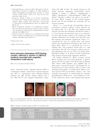
September 2011 in “British Journal of Dermatology” New ABCA12 gene mutations were linked to a skin condition with scaling and hair loss, and a treatment helped with hair loss in a related case.
February 2026 in “Biophysical Journal” March 2026 in “Journal of the American Academy of Dermatology” In this study, patients with active lymphocytic cicatricial alopecia showed significant improvement using a three-stage treatment regimen involving Tofacitinib, Apremilast, and Crisaborole, with 93.5% experiencing marked improvement and only three mild adverse events reported.
 118 citations
,
August 2010 in “Developmental Cell”
118 citations
,
August 2010 in “Developmental Cell” This study found that the protein MIM is crucial for maintaining cilia and Sonic hedgehog signaling in mesenchymal cells by counteracting Src-mediated phosphorylation of Cortactin, impacting hair follicle formation.
 September 2022 in “bioRxiv (Cold Spring Harbor Laboratory)”
 This study found that the deletion of Med1 in dental epithelia causes a shift from dental to hair tissue development, suggesting the importance of Med1 in maintaining tissue-specific lineage.
 January 2023 in “Indian dermatology online journal”
 This case report describes a novel NECTIN4 gene mutation linked to ED-syndactyly syndrome 1 in a young girl, contributing to the understanding of this rare ectodermal dysplasia.
46 citations
,
November 2019 in “Journal of Integrative Plant Biology” This study found that calmodulin 7 (CaM7) inhibits the calcium channel CNGC14 in root hairs, affecting their polar growth by controlling calcium signaling.
July 2024 in “Journal of Investigative Dermatology” ATR12-351 ointment safely delivers LEKTI protein to the skin, reducing enzyme activity in Netherton syndrome.
20 citations
,
April 2009 in “Cell Biology International” This study demonstrates that bulge KSCs from hair follicles can transdifferentiate into corneal epithelial-like cells under specific conditions, which could support bioengineered cornea development.
 June 2010 in “Melanoma research”
 This study found that LDE225, a novel Smo antagonist, shows potential as a topical treatment for basal cell carcinoma due to its high affinity binding and effective inhibition of tumor growth in preclinical models.

This study identified the TALE homeodomain transcription factor Meis2 as a crucial regulator for the maturation and end-organ innervation of certain mechanoreceptors in mice, with its absence leading to altered sensory neuron structure and impaired touch sensitivity.