 December 2021 in “Research Square (Research Square)”
 This study found that repeatedly collecting hair follicles from individuals with fragile X syndrome is feasible for measuring FMR1 and FMRP levels in both home and office settings.
 January 2010 in “Journal of The American Academy of Dermatology”
 The document provided instructions for completing a CME exam on diagnosing and managing hair loss.
4 citations
,
June 2017 in “Annales de dermatologie et de vénéréologie” This prospective study in Morocco reported on 20 cases of frontal fibrosing alopecia, finding that dermoscopy played a key role in diagnosing and managing the condition, which can increasingly affect premenopausal women.
 8 citations
,
September 2011 in “European Journal of Dermatology”
8 citations
,
September 2011 in “European Journal of Dermatology” This study reports that most cases of frontal fibrosing alopecia did not show significant improvement with available treatments, and effective management remains unproven.
2 citations
,
July 2025 in “Journal of the European Academy of Dermatology and Venereology” This study involved 69 hair experts using a Delphi process to achieve consensus on treating frontal fibrosing alopecia, finding strong agreement on disease monitoring but less on physical and systemic therapies, indicating the need for more research.
 April 2016 in “The Journal of Sexual Medicine”
 This research overview discusses Post-Finasteride Syndrome, presenting data from an FDA database, but it does not report any new clinical findings.
 September 2024 in “Journal of the American Academy of Dermatology”
 This study found that a new compounded topical solution for alopecia was clinically tolerable and did not cause irritation, while also showing potential to enhance hair growth through fibroblast proliferation and gene expression.
 2 citations
,
April 2023 in “Cutis”
2 citations
,
April 2023 in “Cutis” This systematic review discusses the treatment characteristics and outcomes for frontal fibrosing alopecia specifically in Black patients with skin of color, addressing a gap in clinical evidence due to underrepresentation in studies.
23 citations
,
October 2008 in “Journal of medicinal chemistry” This study suggests that PF-0998425 is an effective androgen receptor antagonist for sebum control and androgenetic alopecia with rapid metabolism reducing the risk of systemic side effects.
 September 2017 in “Journal of Investigative Dermatology”
 This study found that infrared thermography might be a useful non-invasive tool to help diagnose frontal fibrosing alopecia by identifying active phases of the disease.
 2 citations
,
January 2020 in “Elsevier eBooks”
2 citations
,
January 2020 in “Elsevier eBooks” The document concludes that individualized Facial Feminization Surgery plans and comprehensive care are crucial for successful outcomes.
April 2026 in “Therapeutic Advances in Drug Safety” This study developed a new clustering model to improve detection of drug-induced cognitive disorder risk signals, finding that it identified drugs with moderate risk signals, like Carbidopa/Levodopa, missed by traditional methods, enhancing clinical assessment comprehensiveness.
 20 citations
,
January 2014 in “Journal of the European Academy of Dermatology and Venereology”
20 citations
,
January 2014 in “Journal of the European Academy of Dermatology and Venereology” This article includes no new results; it discusses ongoing treatment approaches for frontal fibrosing alopecia and lichen planopilaris.
April 2025 in “Australasian Journal of Dermatology” This report presents the first Australian case of familial frontal fibrosing alopecia involving a mother and daughter and seeks to differentiate clinical features between familial and sporadic cases.
 4 citations
,
January 2019 in “Skin appendage disorders”
4 citations
,
January 2019 in “Skin appendage disorders” This study found that Follicular Maps, derived from trichoscopic images, remained consistent over time and unaffected by hair cycling or noncicatricial alopecia, offering a precise tool for diagnosing and monitoring hair and scalp conditions.
 6 citations
,
June 2016 in “Experimental Dermatology”
6 citations
,
June 2016 in “Experimental Dermatology” This article reviews the pathogenesis of frontal fibrosing alopecia, highlighting the potential genetic and environmental contributions, particularly the use of sunscreens, and calls for further research into effective treatments.
April 2026 in “Journal of Dermatological Treatment” This study concluded that in female pattern hair loss patients, CGF and i-PRF treatments were more effective than PRP in increasing target area hair count, with i-PRF having the lowest adverse event rate.
January 2014 in “China Surfactant Detergent & Cosmetics” This study established a method using reversed-phase high performance liquid chromatography to determine finasteride concentration in hair cosmetics, showing a strong linear relationship with mass concentration and recoveries between 90.3% and 102.0%.
 8 citations
,
October 2018 in “Journal of The American Academy of Dermatology”
8 citations
,
October 2018 in “Journal of The American Academy of Dermatology” This study evaluated treatments for frontal fibrosing alopecia and found hydroxychloroquine and 5a-reductase inhibitors to be most effective, with 70-72% of patients experiencing stabilization or improvement, but limitations in treatment consistency and assessment methods remain.
8 citations
,
July 2020 in “Clinical, cosmetic and investigational dermatology” This review hypothesizes that excessive facial photo-protection may contribute to frontal fibrosing alopecia by disrupting immunological homeostasis through the aryl hydrocarbon receptor-kynurenine pathway, but it reports no new clinical results.
August 2018 in “Journal of the American Academy of Dermatology” 4 citations
,
August 2023 in “Biomedicine & Pharmacotherapy” This study found that in noise-exposed FVB/NJ mice and cell models, ivacaftor reduced oxidative stress and hearing damage by maintaining CFTR function and increasing Nrf2 expression, suggesting its potential for treating noise-induced hearing loss.
 1 citations
,
January 2019 in “Acta dermato-venereologica”
1 citations
,
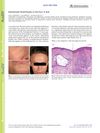
January 2019 in “Acta dermato-venereologica” The woman's skin and hair symptoms were confirmed as frontal fibrosing alopecia, and while facial papules are common in such cases, there's no effective local treatment, but systemic treatments can help.
 April 2023 in “World Journal Of Advanced Research and Reviews”
 This study in Morocco found that all women with frontal fibrosing alopecia presented frontotemporal hairline recession, with trichoscopic features such as perifollicular erythema and follicular hyperkeratosis being indicative of the condition, and suggested a potential link between cosmetic products or emotional factors and the disease.
 September 2017 in “Journal of Investigative Dermatology”
 This study found that certain circulating miRNAs in skin and plasma may serve as potential biomarkers for distinguishing frontal fibrosing alopecia from control cases, highlighting the need for further validation in larger cohorts.
 May 2015 in “Journal of the American Academy of Dermatology”
 Certain drugs and supplements may contribute to hair loss in the frontal hairline in older women.
February 2007 in “Journal of Clinical Dermatology” 3 citations
,
June 2025 in “Journal of Cosmetic Dermatology” Using combined fat and growth factors can effectively treat hair loss after facial fillers.
 23 citations
,
October 2012 in “ChemistryOpen”
23 citations
,
October 2012 in “ChemistryOpen” This study found that capped mesoporous silica nanoparticles conjugated with antibodies selectively released a dye when exposed to finasteride, with low detection limits and stable performance even after storage.
 16 citations
,
January 2007 in “Actas dermo-sifiliográficas/Actas dermo-sifiliográficas”
16 citations
,
January 2007 in “Actas dermo-sifiliográficas/Actas dermo-sifiliográficas” This review discusses frontal fibrosing alopecia and reports no clinical results; the authors note that no therapeutic options tested, including corticosteroids, finasteride, and minoxidil, have shown clear benefits.