75 citations
,
July 2016 in “New phytologist” This study found that RSL4 in Arabidopsis thaliana regulates genes necessary for root hair elongation by controlling proteins involved in cell signaling, cell wall modification, and secretion.
 153 citations
,
October 2007 in “Cell Stem Cell”
153 citations
,
October 2007 in “Cell Stem Cell” New research suggests that skin cell renewal may not require a special type of cell previously thought to be essential.
 21 citations
,
October 2013 in “Molecular Biology of the Cell”
21 citations
,
October 2013 in “Molecular Biology of the Cell” This study found that the protein CCN2 in dermal papilla cells is a physiologically relevant suppressor of hair follicle formation by destabilizing β-catenin, which may help maintain stem cell quiescence.
 146 citations
,
June 2012 in “PLoS ONE”
146 citations
,
June 2012 in “PLoS ONE” This study observed that quiescent label-retaining cells in the intestine, identified by Paneth cell markers, can switch to a proliferative state and activate Bmi1 expression during tissue injury, contributing to tissue regeneration.
 April 2016 in “Journal of Investigative Dermatology”
 This study found that disrupting Sdf1-Cxcr4 signaling promoted tissue regeneration in wild-type mice, hinting at potential strategies to induce such regeneration in mammals.
 341 citations
,
November 2009 in “The FASEB Journal”
341 citations
,
November 2009 in “The FASEB Journal” This article reviews the multifunctional roles of calreticulin outside the ER and highlights its impact on wound healing in animal models, but reports no new clinical results.
 24 citations
,
September 2005 in “Journal of Cellular Biochemistry”
24 citations
,
September 2005 in “Journal of Cellular Biochemistry” This study found that all-trans and 9-cis retinoic acids increase steroid sulfatase activity in HL60 cells through mechanisms involving RARα/RXR heterodimers and multiple signaling pathways.
 April 2019 in “Journal of Investigative Dermatology”
 This study found that BRG1 is crucial for keratinocyte migration during skin wound healing, as its suppression impairs wound closure by inhibiting migration without affecting cell proliferation or apoptosis.
15 citations
,
November 2020 in “Development” This study found that the ocular surface epithelium in mice contains distinct stem cell populations with unique cell division dynamics that change behaviorally in response to different levels of injury.
 3 citations
,
June 2013 in “Genes & development”
3 citations
,
June 2013 in “Genes & development” In their research, Yucel and colleagues found that CaV1.2 is expressed in hair follicle stem cells, facilitating anagen re-entry in a way not dependent on calcium flux.
21 citations
,
April 2008 in “Toxicologic Pathology” This study found that CI-1033 caused skin lesions in rats that resemble effects seen in humans receiving EGF receptor inhibitors, suggesting this animal model can help explore the mechanisms behind this cutaneous toxicity.
This study found that the Arabidopsis cation chloride cotransporter CCC1 is critical for regulating pH in the trans-Golgi network/early endosome, impacting plant growth and stress response.
November 2025 in “Journal of Investigative Dermatology” KLHL24-mutant stem cells help understand skin and heart disease.
October 2020 in “Faculty Opinions – Post-Publication Peer Review of the Biomedical Literature” This study discovered a novel mechanism by which germ stem cells exit their niche in C. elegans, involving thin membranous protrusions from adjacent somatic gonad cells.
 May 2024 in “Animal genetics”
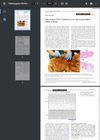
 The researchers investigated a Maine Coon cat with suspected classical Ehlers-Danlos Syndrome and discovered a heterozygous deletion in the COL5A1 gene, underscoring the value of whole-genome sequencing for precise veterinary diagnostics.
2 citations
,
July 2024 in “International Journal of Molecular Sciences” In this study, researchers found that knocking down the transcription factor Csdc2 inhibited the proliferation of dermal papilla cells in cashmere goats, and identified its regulatory relationship with the gene Robo2, providing insights into the genetic mechanisms influencing cashmere fiber growth.
 1 citations
,
January 2022 in “Research Square (Research Square)”
1 citations
,
January 2022 in “Research Square (Research Square)” This study found that CRISPR/Cas9 efficiently edited two cellulose synthase-like genes in spinach, significantly altering root hair growth patterns and suggesting potential for large-scale genome editing in this crop.
7 citations
,
October 2016 in “Cellular and Molecular Bioengineering” This study demonstrated that an automated algorithm can effectively track epithelial cell movement within clusters, revealing that partial knockdown of E-cadherin reduces electrotactic potential in breast epithelial cells, particularly in free-moving clusters, and suggesting an adhesion-independent role of E-cadherin in regulating cell electrotaxis.
11 citations
,
September 2023 in “Nature Communications” In this study, researchers found that the cell surface protein Lrig1 plays a crucial role in regulating the suppressive function of regulatory T cells, suggesting it as a potential target for treating autoimmune diseases, as evidenced by experiments in mouse models.
January 2014 in “eScholarship (California Digital Library)” This dissertation reports that Lrig1 and Lgr6 mark distinct stem cell populations in mouse hair follicles, playing roles in tissue regeneration and tumor development, with Lgr6 regulating Wnt signaling and restraining epidermal lineage commitment.
In this study, conditional inactivation of the Mad2l1 SAC gene in mice led to aggressive and lethal acute lymphoblastic leukemia and hepatocellular carcinoma, demonstrating a link between chromosomal instability and cancer development.
In this study, researchers observed that oncogenic HrasG12V in single murine epidermal cells leads to an initial increase in progenitor cell renewal, but ultimately results in balanced cell fate choices that limit clone growth.
 April 2016 in “Journal of Investigative Dermatology”
 This study reported that the absence of Lsh in skin led to significant epidermal hyperplasia and altered gene expression, suggesting its crucial role in regulating epidermal proliferation, differentiation, and wound healing.
This study found that a cell therapy product, RCS-01, was well tolerated in aged skin and led to significant increases in gene expression related to extracellular matrix homeostasis, although the small cohort size limited further efficacy analysis.
22 citations
,
July 2021 in “Journal of Investigative Dermatology” 28 citations
,
January 2009 in “Journal of Investigative Dermatology” Stem cells in eccrine glands could be used for regenerative medicine.
This study found that in early retinal neurogenesis in mice, the transcription factor Lhx2 regulates Sonic Hedgehog signaling by controlling expression of pathway genes like the co-receptors Gas1 and Cdon.
July 2025 in “Journal of Investigative Dermatology” 77 citations
,
April 2005 in “Journal of Investigative Dermatology” Repetin is a protein involved in skin and hair development, binding calcium and compensating for other proteins when needed.

In this case report, a 48-year-old woman with kerion celsi showed improvement with a regimen including antifungal, bacterial, and adjunctive treatments, though the specific role of mesenchymal stromal cell secretome could not be isolated from the other therapies.