 35 citations
,
May 2008 in “Journal of Clinical Oncology”
35 citations
,
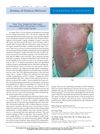
May 2008 in “Journal of Clinical Oncology” A cancer patient died from a severe skin reaction after taking the drug cetuximab.
10 citations
,
December 2015 in “International Journal of Dermatology” This study suggests that basal cell carcinoma and trichoblastoma may share differentiation toward the hair follicle, as indicated by strong positivity in CK 15, follistatin, and Bmi‐1 markers.
January 2010 in “Journal of Animal Science” This study demonstrated that transcutaneous vaccination via cyanoacrylate skin surface stripping effectively induced both CD4 and CD8 T cell responses in humans, offering a promising alternative to intramuscular injection.
3 citations
,
April 2021 in “Oncology Times” This study reports that sacituzumab govitecan achieved a 33.3% overall response rate in patients with metastatic triple-negative breast cancer who had prior treatments, with a median response duration of 7.7 months.
November 2025 in “The Journal of Immunology” This study observed that in human scalp hair follicles, BTNL2 expression is lower in stressed conditions, which correlates with increased cytotoxic activity by gamma/delta and CD8+ T cells, suggesting a possible role for BTNL2 in controlling immune responses relevant to alopecia areata.
421 citations
,
September 2003 in “Development” This study concluded that label-retaining cells in mouse epidermis differ in their sensitivity to proliferative stimuli, influencing their division and potential transdifferentiation without consistently depleting their population.
4 citations
,
January 2014 in “The Journal of urology/The journal of urology” This study found that folliculin deficient renal cancer cells were more sensitive to irradiation due to increased autophagic cell death, suggesting a potentially enhanced therapeutic approach when combined with autophagy inducers like rapamycin.
 155 citations
,
May 2016 in “Nature communications”
155 citations
,
May 2016 in “Nature communications” This study found that mouse skin CD4(+) memory T cells are in equilibrium with the circulation under steady state but increase in specific clusters in response to infection or inflammation.
1 citations
,
October 2023 in “European Journal of Dermatology” This study found that combining hair transplantation with platelet-rich plasma led to significantly better outcomes, such as reduced hair loss area and increased hair regeneration, compared to hair transplantation alone in patients with androgenic alopecia.
 November 2022 in “The journal of investigative dermatology/Journal of investigative dermatology”
 This study found that conditional deletion of CD271 in mouse epidermis led to significant disorganization and increased thickness, suggesting CD271's crucial role in regulating skin differentiation and structure.
 4 citations
,
September 2019 in “Biomedical Papers/Biomedical Papers of the Faculty of Medicine of Palacký University, Olomouc Czech Republic”
4 citations
,
September 2019 in “Biomedical Papers/Biomedical Papers of the Faculty of Medicine of Palacký University, Olomouc Czech Republic” This study found that CD2 could be a potential new therapeutic target for treating patchy-type alopecia areata, suggesting the need for further research into its role.
 15 citations
,
July 2023 in “EClinicalMedicine”
15 citations
,
July 2023 in “EClinicalMedicine” This review discusses the toxicities associated with antibody-drug conjugates in breast cancer treatment and proposes strategies for monitoring and managing these adverse effects, but it reports no new clinical results.
September 2025 in “OPAL (Open@LaTrobe) (La Trobe University)” This study found that topical treatment with 7DHC and BM15766 reduced hair growth in mice compared to those treated with Ethanol/DMSO, and hair did not recover after treatment ceased, alongside increased apoptotic cells and decreased expression of specific genes.
23 citations
,
July 2023 in “Proceedings of the National Academy of Sciences” In this study using a mouse model and human data, researchers found that CD8+ T cells are central to driving alopecia areata, while regulatory T cells offer some protection, highlighting CD8+ T cells as key targets for future therapy development.
May 2025 in “BMC Genomics” This study found that circ 0020938 suppresses hair follicle stem cell proliferation by interacting with the miR-142-5p/DSG4 axis, which aids in the hair follicle cycle's proper progression.
 April 2023 in “Journal of Investigative Dermatology”
 This case study reports an unusual presentation of primary cutaneous diffuse large B-cell lymphoma–leg type occurring on the upper lip of an 81-year-old woman, highlighting the need for timely recognition of atypical manifestations.
11 citations
,
June 2016 in “Stem Cell Research” This study found that a multicolor panel of four surface markers can identify new stem cell populations in mouse hair follicles, providing insights into stem cell diversity and gene expression discrepancies during tissue culture.
June 2020 in “Faculty Opinions – Post-Publication Peer Review of the Biomedical Literature” This study found a specific T cell receptor that may be key in carbamazepine-induced Stevens-Johnson syndrome and toxic epidermal necrolysis, suggesting potential therapeutic targets.
July 2017 in “Cancer Research” This study identified a radio-resistant population of Krt15+ stem cells in the mouse small intestine that can initiate tumors, suggesting potential targets for colon cancer therapy.
25 citations
,
October 2005 in “PubMed” This study found that keratin 19 and nuclear galectin-1 binding can transiently express in interfollicular epidermal cells after adhesion, suggesting keratin 19 should not be solely used as a stem cell activity marker.
 August 2023 in “bioRxiv (Cold Spring Harbor Laboratory)”
 This study found that TLR2 is crucial for maintaining hair follicle health and regeneration, and its stimulation by the metabolite CEP may promote hair growth, while decreases in TLR2 and CEP in aging and obesity may hinder hair growth.
June 2026 in “Journal of Investigative Dermatology” This study reported that the anti-γc antibody hC2 restored hair follicle homeostasis and suppressed hair loss in an AA-like mouse model by inhibiting autoreactive T-cell activity, suggesting that hC2 may offer a safer and more effective treatment for alopecia areata compared to current Jak inhibitors.

This study found that TLR2 and its ligand CEP are crucial for maintaining hair follicle health and stimulating hair growth, with deficiencies observed in aging and obesity potentially reducing regeneration.
July 2024 in “Journal of Investigative Dermatology” INTASYL is a promising, adaptable RNAi technology for treating skin cancers.

This study identified distinct immune differences in patients with alopecia areata, particularly those with atopic backgrounds, and highlighted the OX40 axis as a potential therapeutic target for the condition.
60 citations
,
October 2020 in “Nature Communications” This study found that small molecule AP-1 inhibitors may selectively target SMO inhibitor-resistant basal cell carcinoma cells characterized by specific markers, potentially enhancing combinatorial cancer therapies.
This study observed two distinct groups of alopecia areata lesions based on PD-1 expression in T cells from biopsied skin samples, suggesting potential differences in subtypes or stages of the disease that warrant further investigation.
 97 citations
,
March 2002 in “Molecular and cellular biology”
97 citations
,
March 2002 in “Molecular and cellular biology” This study found that mice with a mutant CDP/Cux protein lacking the homeodomain showed severely impaired growth, high postnatal mortality, and reduced fertility, highlighting CDP/Cux's role in developmental regulation.
February 2020 in “Oncology Times” This article reviews antibody drug conjugates for cancer treatment, describing their mechanism, recent approvals, and ongoing research efforts, but reports no new clinical results.
November 2025 in “The Journal of Immunology” This study found that CD80 expression in wound-activated hair follicle stem cells induces Foxp3 expression in effector T cells, facilitating wound repair by converting them into regulatory T cells.