 December 2023 in “Sains Malaysiana”
 In this study, researchers used in silico mutagenesis to identify key calcium-binding sites influencing the stability of Rand protease from Bacillus subtilis, potentially enhancing its application in industries like leather dehairing by improving stability and eliminating the need for additional metal ions during the process.
1 citations
,
January 1993 in “Skin Pharmacology and Physiology” This study found that an extracellular calcium binding site gradient exists in mouse vibrissa and human scalp follicles, but is not significantly affected by hair growth-altering drugs or epidermal growth factor.
22 citations
,
September 2001 in “Journal of Investigative Dermatology” S100A8 and S100A9 proteins help form hair shafts during growth.
50 citations
,
February 2004 in “Genomics” This study identified a missense mutation in the rat Desmoglein 4 gene, causing abnormal hair shaft development in lanceolate hair mutant rats by disrupting a critical calcium binding site.
 31 citations
,
December 2002 in “Biochimica et biophysica acta. G, General subjects/Biochimica et biophysica acta. General subjects (Online)”
31 citations
,
December 2002 in “Biochimica et biophysica acta. G, General subjects/Biochimica et biophysica acta. General subjects (Online)” This study identified two types of calcium in human scalp hair, with one type highly variable between individuals, potentially impacting the analysis of environmental and medical factors related to hair calcium.
13 citations
,
March 2010 in “International Journal of Cosmetic Science” This study used nanoscale secondary ion mass spectrometry to locate where calcium and copper are concentrated in colored hair, finding these metals particularly in the cuticle's sulfur-rich regions.
 83 citations
,
December 2001 in “Journal of Investigative Dermatology”
83 citations
,
December 2001 in “Journal of Investigative Dermatology” Minoxidil boosts hair growth by targeting adenosine and possibly sulfonylurea receptor 2B.
81 citations
,
March 2006 in “Journal of Investigative Dermatology” Mutations in the DSG4 gene cause specific hair and scalp issues.
 38 citations
,
November 2005 in “Epilepsia”
38 citations
,
November 2005 in “Epilepsia” This study discusses levetiracetam's role as an alternative treatment for idiopathic generalized epilepsies, highlighting its potential effectiveness, especially for patients unsuitable for valproate.
 72 citations
,
June 2001 in “Journal of Investigative Dermatology”
72 citations
,
June 2001 in “Journal of Investigative Dermatology” This study suggests that S100A4 and S100A6 proteins may play key roles in activating stem cells for hair follicle regeneration in mice.
 17 citations
,
December 2002 in “Biochemical and biophysical research communications”
17 citations
,
December 2002 in “Biochemical and biophysical research communications” This study reports on the biochemical characteristics of S100A3 protein in human hair cuticle, notably finding its N-terminal methionine is acetylated and has a slightly lower isoelectric point compared to the recombinant version.
 2 citations
,
February 2023 in “Shiraz E-Medical Journal”
2 citations
,
February 2023 in “Shiraz E-Medical Journal” In this study, low-level laser therapy significantly improved the mechanical strength of bone at tooth extraction sites in rats, while neither platelet-rich plasma alone nor combined with laser affected mechanical strength or calcium content.
40 citations
,
April 1999 in “Journal of Histochemistry & Cytochemistry” In this study, the researchers identified the specific subcellular localization of the protein S100A3 in the endocuticle and cortex of human hair shafts.
 277 citations
,
July 2002 in “Molecular Endocrinology”
277 citations
,
July 2002 in “Molecular Endocrinology” In this study, homozygous VDR null mutant mice exhibited nonfunctional vitamin D receptors, leading to growth abnormalities and revealing the limited physiological importance of vitamin D pathways outside the classical receptor.
37 citations
,
January 1993 in “Journal of Investigative Dermatology”  28 citations
,
May 2020 in “BMC plant biology”
28 citations
,
May 2020 in “BMC plant biology” This study concluded that GLCAT14A-C genes are crucial for the function of glucuronic acid transfer to AGPs in Arabidopsis, affecting various growth and reproductive traits such as seed germination and root hair growth.
 18 citations
,
February 2015 in “Acta Crystallographica Section D: Structural Biology”
18 citations
,
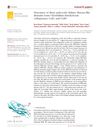
February 2015 in “Acta Crystallographica Section D: Structural Biology” This study reports that Ca 2+ binding alters the dynamics and surface properties of PKD-like domains in Clostridium histolyticum collagenases, enhancing their stability and potentially aiding in collagen-targeting vehicle development.
18 citations
,
November 2009 in “Calcified tissue international” A genetic mutation caused severe rickets and alopecia in an Indian patient, but high-dose calcium and phosphate treatment improved their condition.
21 citations
,
January 2023 in “International Journal of Molecular Sciences” This review discusses the role and interactions of the calcium-binding protein S100A6 in cellular processes and its association with various diseases, highlighting the need for further research to fully understand its biological impact.
62 citations
,
December 2007 in “Journal of biological chemistry/The Journal of biological chemistry” This study found that enzymatic conversion of Arg-51 in S100A3 protein to citrulline promotes homotetramer assembly, potentially increasing Ca²⁺ binding required for hair cuticular barrier formation.
 August 2026 in “Journal of Molecular Histology”
 Targeting S100 proteins may help treat hair loss.
107 citations
,
March 2014 in “BoneKEy Reports” This abstract reviews hereditary vitamin D-resistant rickets, a rare genetic condition causing severe early childhood rickets, and reports no new results; effective treatment typically requires high doses of calcium to address hypocalcemia and secondary hyperparathyroidism.
17 citations
,
January 2013 in “International Journal of Cosmetic Science” This study found that individuals who perceive their hair health as poor tend to have higher levels of metals on their hair, emphasizing the impact of environmental metal exposure.
 106 citations
,
April 2010 in “ACS Nano”
106 citations
,
April 2010 in “ACS Nano” This study found that about 80% of known fullerene-binding proteins rank in the top 10% of scorers for C60 docking sites, confirming the accuracy of the predictive model used.
 July 2026 in “bioRxiv (Cold Spring Harbor Laboratory)”
 In this study, researchers found that the efflux of calcium in root hairs of Arabidopsis thaliana, particularly through the ER-localized ACA2 and ACA7, is crucial for modulating cytoplasmic calcium signals and enabling proper root hair growth, with disruptions leading to impaired elongation.
12 citations
,
December 2011 in “Journal of Dermatological Science” This study suggests that the C-terminal of AHF is crucial for its binding to keratin bundles and modulating the keratin meshwork in hair follicles.
 8 citations
,
April 2014 in “Anti-Cancer Drugs”
8 citations
,
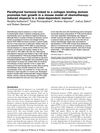
April 2014 in “Anti-Cancer Drugs” In this study, PTH–CBD displayed dose-dependent effects in reducing hair loss and enhancing hair regrowth in a mouse model of chemotherapy-induced alopecia.
![Distribution of 1,25-Dihydroxyvitamin D3[22-Oxa] In Vivo Receptor Binding in Adult and Developing Skin](/images/assets/d9b990e6-6243-4abe-b868-68801a5844f7/small/35023.jpg) 15 citations
,
January 1995 in “Archives of dermatological research”
15 citations
,
January 1995 in “Archives of dermatological research” In this study, OCT showed strong nuclear binding in certain skin cells, suggesting similar genomic effects to vitamin D with potential therapeutic benefits due to its lower calcaemic effect.
March 2008 in “Faculty Opinions – Post-Publication Peer Review of the Biomedical Literature” This study found that a positive feedback loop involving RHD2, reactive oxygen species, and calcium ions helps maintain root hair growth sites and influences cell shape in Arabidopsis thaliana.
April 2024 in “International journal of molecular sciences” This source reports that for treating keloids and hypertrophic scars, combination pharmacotherapy targeting multiple sites is generally more effective than using a single drug, though outcomes of individual therapies vary and the development of satisfying treatments is ongoing.